
Election Campaign Primaries
Angelika We find ourselves once again in the middle of an election campaign. Although presidential elections are not until November 2012, the American system of primaries (Rundbrief 02/2008) has kicked off their election campaign. In the primaries, party members themselves decide who will be sent into the presidential race for their party. The first primaries will take place at the beginning of 2012. Since everything is already set with the Democrats, as only Obama is running and his nomination is just a formality, all the focus is on the Republican candidates. The Republican base is concerned with only one thing: Who can succeed in defeating Obama?

Mitt Romney is considered to be the candidate with the best chances, at least when it comes to the general presidential election and not the primaries. Of course, this prediction is of no use to him if he doesn't win the primaries. Herein lies the dilemma: To reach the White House in the USA, one must appeal to the political center, meaning garnering votes from so-called Independents. These voters do not feel affiliated with any party and may vote for either Republican or Democratic candidates, depending on their own mood or the mood in the country. Generally, independent voters do not hold extreme views and tend to penalize candidates with overly left or right political slogans. However, to win the Republican primaries, Romney must also appeal to the more extreme elements within his party in today's climate, such as the religious right and the Tea Party movement.
Romney held the office of Governor of Massachusetts from 2002 to 2007 and helped introduce universal health insurance in his state. The model in Massachusetts is very similar to the Obama model. But since almost all Republican candidates are strictly against the health reform initiated by Obama and even want to roll it back, Romney is now under pressure to explain himself. He also quickly adapted his previously moderate views on abortion and the equality of homosexuals, opinions too moderate for some Republicans, to improve his chances of winning. Many now accuse him of always changing his stance with the prevailing winds. On the plus side, many see that Romney was a successful businessman before he showed political ambitions, leading some companies out of trouble and bringing the 2002 Winter Olympics to Salt Lake City. Many hope that he will be able to tackle the national debt and high unemployment. However, Romney has little experience in foreign policy. His opponents also repeatedly bring up the fact that Romney is a Mormon. However, this seems to carry less weight than it did in 2008, when Romney ran before but McCain emerged as the winner in the primaries.

Another dazzling personality is Herman Cain, who initially was not given any chances by anyone, but is now performing relatively well in polls. The former CEO of "Godfather's Pizza" is known for his pragmatic approaches and is considered a charismatic speaker. A man of the people, coming from very humble beginnings, who has made something of himself. Americans love such stories. His much-quoted proposed tax reform "9-9-9," which experts consider completely unfeasible, is nevertheless appealing to many, because Americans hate the complicated, convoluted tax laws with their associated exceptions. Herman Cain's Plan includes a flat tax rate of only 9%, hence the name. Everyone pays 9% income tax, a national sales tax of 9% is introduced, and businesses are also taxed at 9%. However, Cain currently has other problems, as the press dug up an old story from the 1990s when he was the head of the National Restaurant Association and three women filed complaints against him for sexual harassment in the workplace. He paid a settlement to one of the affected individuals at the time. Sexual harassment in the workplace is handled quite strictly in America, and it can range from inappropriate jokes among colleagues to more serious offenses. This is also typical of American election campaigns: the press and the opposition dig into the candidates' lives until they find something that can harm the candidate and cost them votes.
The Texan Rick Perry would like to follow in the footsteps of George W. Bush once again, as he took over the office of Texas governor from Bush in 2000 and now hopes for the presidency. The son of a cattle rancher often boasts that he initiated a true economic boom in Texas by creating jobs despite an economic downturn in the rest of the country. However, Texas is a unique place, and what works well there doesn't necessarily work in the rest of the country. In the first debates, Perry stepped into several pitfalls, as he often mixed up facts and spoke freely without thinking about what he was saying beforehand. He strictly opposes Obama's healthcare reform, which leads Perry's critics to repeatedly point out that under his leadership, Texas set the unfortunate record of having the highest percentage of uninsured citizens at 26%.
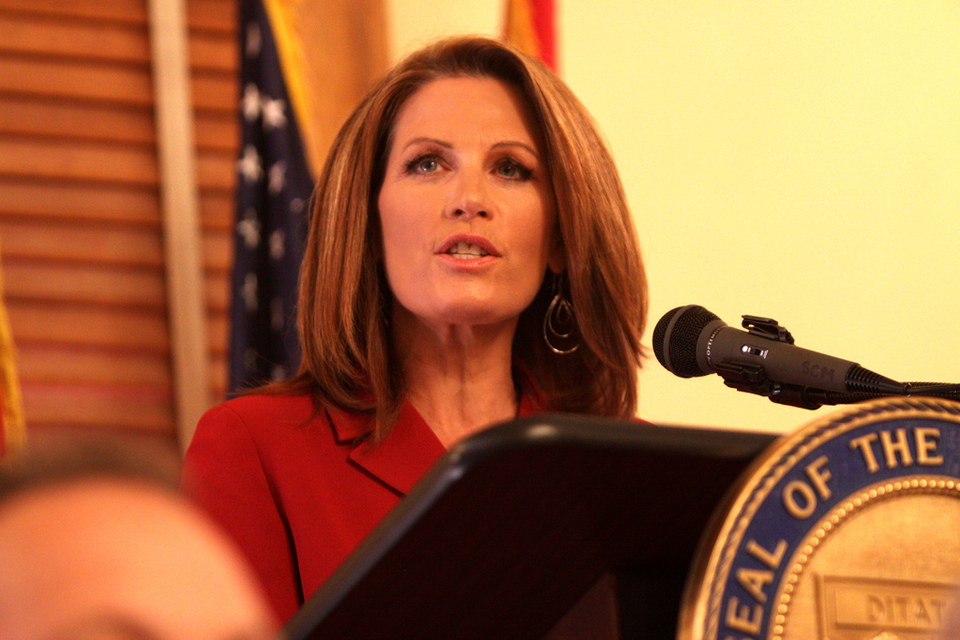
Michele Bachmann was long considered the second Sarah Palin and received a lot of attention from the press before Rick Perry announced his ambitions for the presidency. This was likely also because, like Palin, she often throws around conservative political platitudes. She advocates for low taxes, limited government, is against healthcare reform, against same-sex partnerships and marriages, and believes that climate change is a myth. She is affiliated with the Tea Party movement and has been serving in the U.S. House of Representatives since 2007 as one of the representatives from the state of Minnesota.
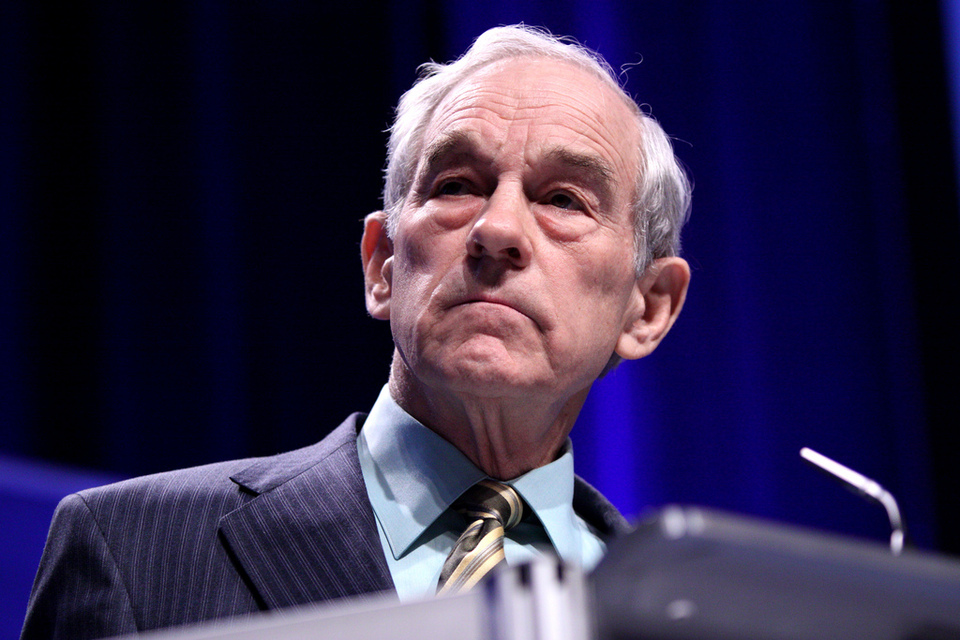
Ron Paul is a doctor and a Texas representative in the House of Representatives. He is considered a free thinker with principles that seem somewhat utopian. His goal is to strictly adhere to the principles of the nation's founding fathers. He wants to keep the government as small as possible, believes in self-governance and deregulation, the simplification of the tax system, the abolition of the Federal Reserve, a significant reduction of the American military, and a foreign policy of non-intervention. Many see him as a pioneer of the Tea Party movement, although not all of his principles align with the movement. He has loyal followers who do not only come from the right-wing camp, but he is considered an outsider, as he is unlikely to become president with these principles, even in extreme America. However, the man is consistent. For example, he stubbornly refuses to accept the pension payments available to Congress members at a certain age and after years of service.
Jon Huntsman may be the only Republican who could also find support among Europeans. He is considered a moderate (at least by American standards and in comparison to the other candidates) and is the only candidate with foreign policy experience. Most recently, he served as the U.S. Ambassador to China from 2009 to 2011, under the Obama administration. He worked in various roles under Ronald Reagan, George H.W. Bush, and George W. Bush and was an extremely popular governor in Utah. Like Romney, he is also an openly practicing Mormon.
Newt Gingrich had his best political years in the mid-1990s, when he played a significant role in helping the Republicans gain a majority in the U.S. House of Representatives in 1994 after a long dry spell. From 1995 to 1999, he served as the Speaker of the House. He is considered an extremely polarizing politician with a not entirely spotless personal record, which is a thorn in the side of many of his party colleagues. He is married for the third time and, while he was pushing for Bill Clinton's impeachment over the Lewinsky affair, he himself had an extramarital affair with a staff member, whom he later married.
Some candidates are now considered completely without a chance and often do not even appear in political debates: Rick Santorum, a former senator from Pennsylvania; Buddy Roemer, a former Democrat who not only switched parties but also served as governor of Louisiana and sat in the House of Representatives; and the former governor of New Mexico, Gary Johnson, who attempted to legalize marijuana in New Mexico. A surprisingly liberal move for a Republican.
There is no shortage of candidates. However, when the actual primaries finally begin, the wheat is quickly separated from the chaff, because election campaignsare expensive, and many candidates only make it to the primaries in the initial states. Candidates find it difficult to raise campaign funds if they are not leading in the primaries. Two other candidates, Thaddeus McCotter and Tim Pawlenty, already dropped out in August and September for this reason.