
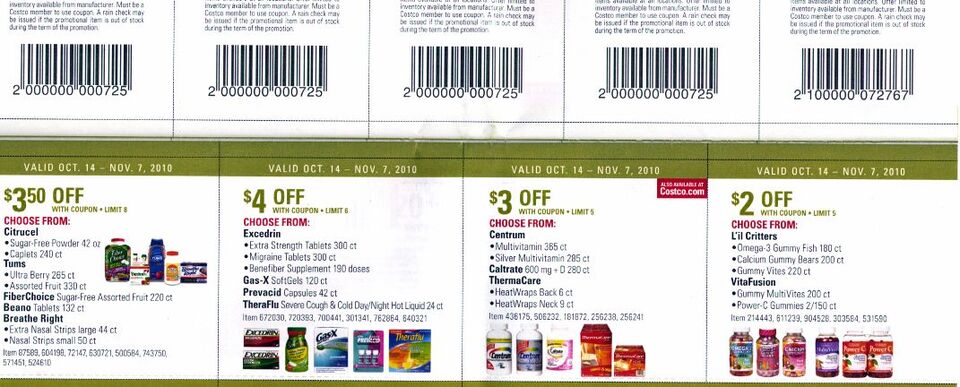
Michael In Germany, special offers and discount points are more the domain of older people and penny-pinchers who search for savings and thrift tips on sites like geizhals.de. In America, however, you can also see well-earning people at the checkout handling coupons, which the cashier then scans. If the coupon is valid, the register immediately deducts the discount amount.
What's amusing about the coupons in the booklet from the giant supermarket Costco is that they all have the same barcode number. So if you buy toilet paper and give the cashier the coupon for designer perfume, the register correctly deducts the toilet paper discount. Often, the Costco staff simply scan a sign hanging at the register that has the same code and, by clicking multiple times, apply the discount to all purchased products. However, it seems that the management and the advertising industry don't like this very much, and sometimes the Costco staff suddenly become strict, and the outraged customer has to fumble out the appropriate coupons from the booklet individually. By the way, the Costco headquarters once removed me from their mailing list, and I no longer received a coupon booklet. I promptly called them and demanded the immediate postal delivery of a replacement booklet!

Even with club cards from major supermarkets, you can save a lot of money. At Safeway, for example, you can quickly save 10% on a larger purchase. I've now gotten into the habit of asking for a club card even at chains where I've never shopped before. Recently in San Diego, for example, we bought groceries for $50, and I didn't have a club card for the "Kroger" chain because they don't exist in San Francisco. At the checkout, I asked the cashier for a form to apply for a card, but she saw that I was on vacation and quickly scanned a guest code from a booklet under the register, which also gave me club prices. Amount saved: more than $10.
Recently, the coupon business experienced a groundbreaking turnaround: Websites like groupon.com now offer personalized electronic coupons tailored to the local area. That's amazing! For example, I recently received an email from bloomspot.com, another coupon website where I had registered my email address. For a payment of $4 via credit card, they offered a voucher worth $14 for the Whole Foods supermarket branch just around the corner from us. I jumped at the chance, and after two weeks, a voucher card arrived in the mail, which I used over three visits because I only buy a few really good things like bread at that overpriced store.
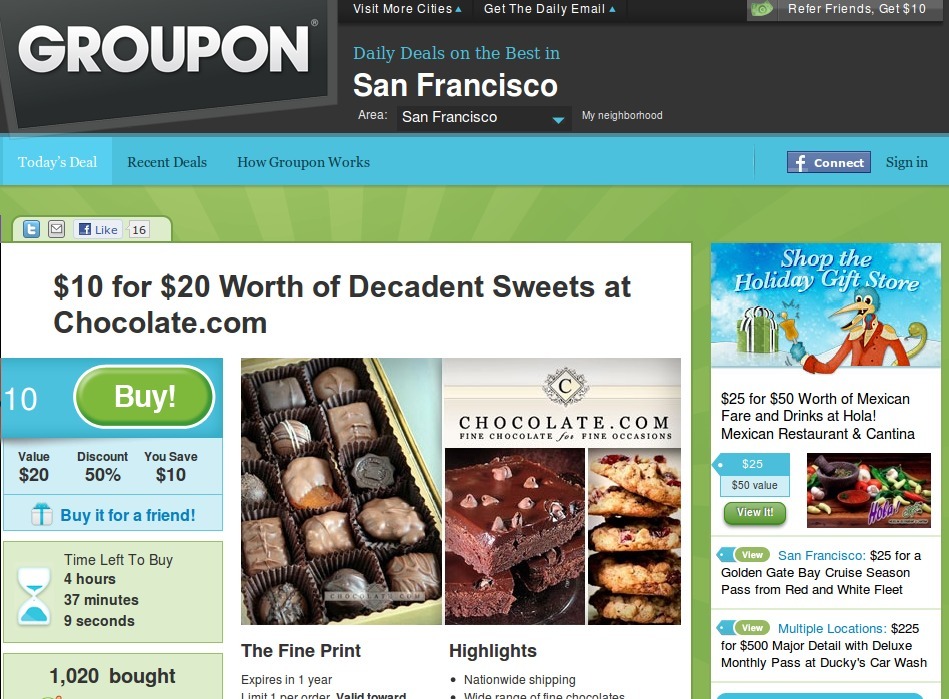
Locally specialized coupon websites currently seem so lucrative that Yahoo recently offered over two billion dollars and Google supposedly later offered three billion dollars for Groupon! For a small discount company like Groupon, this is, of course, an absurd amount, but it seems we are already in the next internet bubble, where analysts determine the value of dubious companies by projecting their annual profits over the next decade. Some people never learn.
Regarding the discount: The in Rundbrief 01/1999 I had reported that many companies no longer issue mail-in rebates as checks, but send a Visa card instead. This card then has, let's say, $20 on it, but how do you fully redeem it? It's hard to plan ahead because, due to odd prices and the sales tax added later, you never end up with a round amount. Don't worry: I usually buy something for about $25 at Target and tell the cashier to charge $20 from the card and that I'll pay the rest in cash. Works perfectly.