
Angelika The other day I wanted to take the J streetcar home from the Powell Station downtown. While underground, I was digging through all my loose change to toss it into the fare gate slot for access to the tracks. A friendly passerby pointed out, however, that the gates no longer accept coins. I must have looked pretty bewildered, because for years and years that had been our favorite way to get rid of annoying loose change—including pennies (Rundbrief 12/2005).
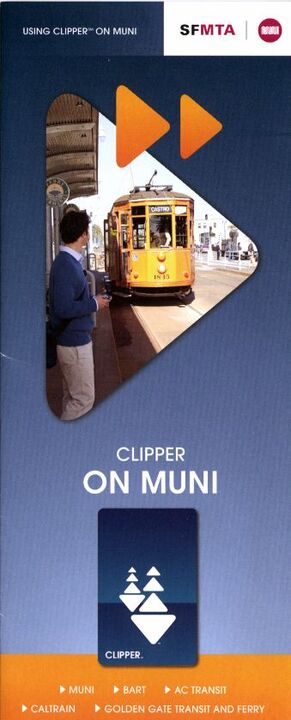
The public transportation systems in San Francisco have switched to an electronic payment system called the "Clipper Card." You can load either cash or a monthly pass onto the plastic card. When you use public transportation, you simply hold the card up to the card reader, and the appropriate fare is deducted from the Clipper Card. In the case of a monthly pass, the machine recognizes it as valid and opens the gate.
The system is supposed to be so smart that it independently calculates discounts or doesn't deduct any money at all because the customer only transferred from the bus to the tram within the allowed window in time. Passengers can top up the Clipper Card either online or at machines, for example, at underground stations. Stores like the drugstore chain "Walgreens" also offer the Clipper Card for sale.
The Clipper Card is intended to simplify the system, as customers can use the card as a means of payment across various transportation systems. And it's about time, because until now we needed different tickets to use the various systems: for the subway (BART), for buses and streetcars (Muni), for the cable car, and for the ferries on the San Francisco Bay. However, it will certainly take some time before the entire system is converted. The monthly pass for adults is the first one that, since November, can only be loaded onto the Clipper Card. The other monthly passes are expected to follow at the beginning of 2011.
Funnily enough, the whole thing still doesn't work perfectly, as usual. It often happens that the card reader malfunctions and doesn't recognize that the passenger, for example, has a monthly pass. If the bus driver is in a bad mood, they may insist that the passenger pay the two dollars for the ride or get off, which is said to have already led to tumultuous scenes.