
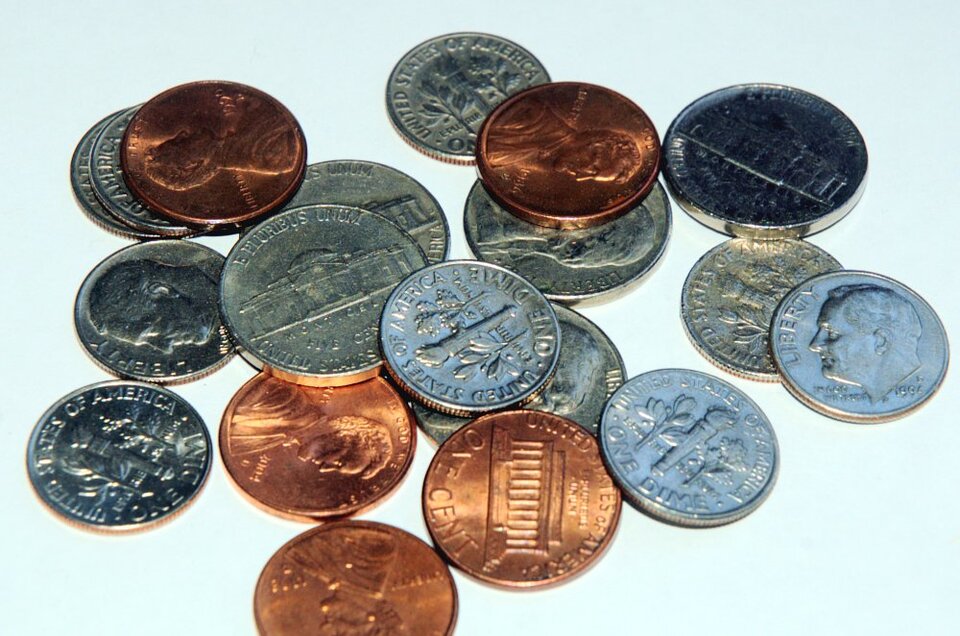
Michael American coins used in everyday life consist of 1-cent, 5-cent, 10-cent, and 25-cent coins. The copper 1-cent coin is commonly referred to as a "penny." The 5-cent piece is also called a "nickel" because the coin is made from a copper-nickel alloy. This always reminds me of the Dilbert-Cartoon where the Unix guru with a bushy beard flicks a 5-cent-coin to the obviously Microsoft-obsessed department head, saying, "Here's a nickel, kid. Buy yourself a better computer."
The 10-cent coin is called a "dime," derived from the French word "disme," which means "a tenth," because 10 cents is exactly 1/10 of a dollar. Interestingly, the dime is much smaller and thinner than the nickel, which regularly confuses logically minded people like me.
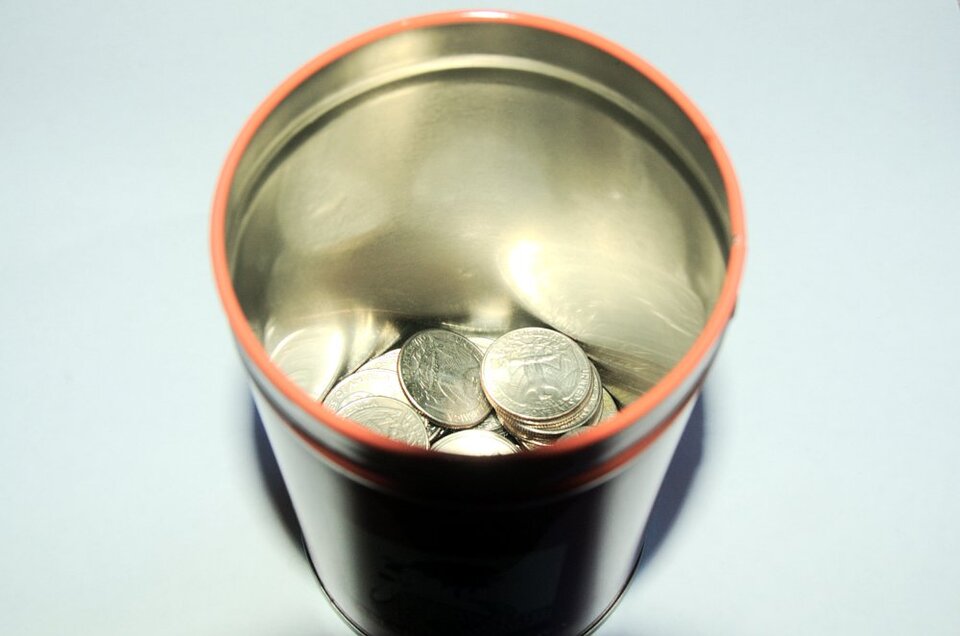
The also silver "Quarter," the 25-cent coin, indicates on the reverse side the state that produced it, which is why there are 50 different kinds in circulation. Often, small children (or adults who behave like children) try to collect all 50. They are supported in this hobby by the numismatic industry, which offers all sorts of coin holders and maps with circular cutouts for sale.
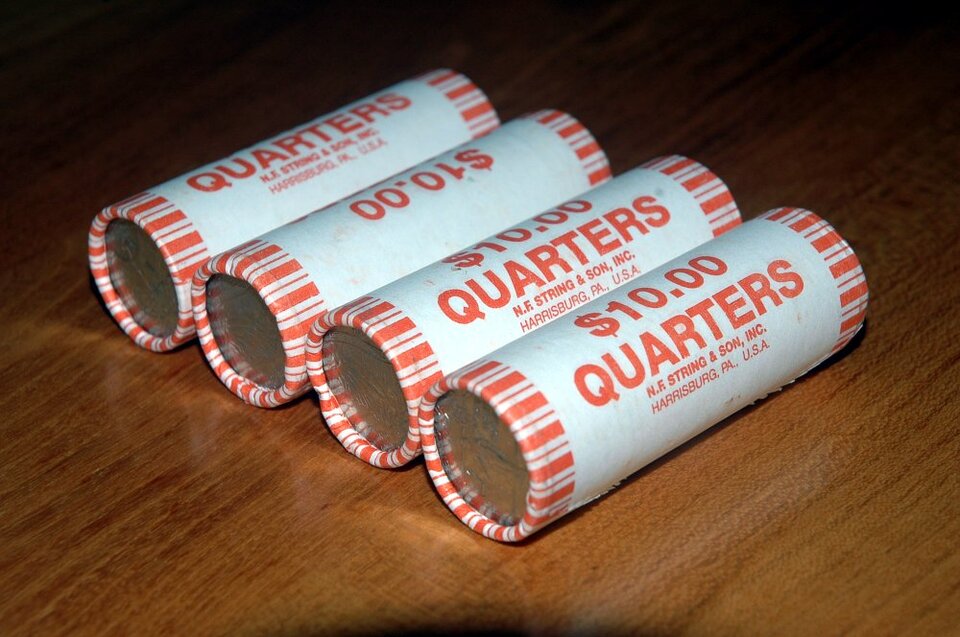
The communal washing machine in our apartment building eats up tons of quarters, as a wash cycle costs $1.50 and the corresponding dryer cycle also costs $1.50. With two loads per week, that's $6, so we need 24 quarters! We usually don't have that many, but fortunately, Angelika discovered some time ago that you can walk into a branch of our bank, slap a hundred dollars on the counter, and ask for quarters, which the bank employees then provide in coin rolls free of charge.

Reversely, you can also get wrappers there for coins accumulated elsewhere at home. If a penny-pincher later carefully counts and rolls stacks of coins and takes them back to the bank, the employees measure the length of the wrapped rolls with a ruler and can precisely determine if a coin is missing.
Constantly carrying small change in your pocket is really annoying, but it accumulates involuntarily when you pay small amounts in cash and don't want to spend minutes at the checkout rummaging through your wallet. As mentioned once before in Rundbrief 12/2005, using the underground Muni stations near city center are pretty much the only way to pay with a bag of pennies without attracting unwanted attention.
Now, many Americans seem to have coins burning holes in their pockets, because the company Coinstar has developed a business model around the problem and professionalized the coin exchange process.
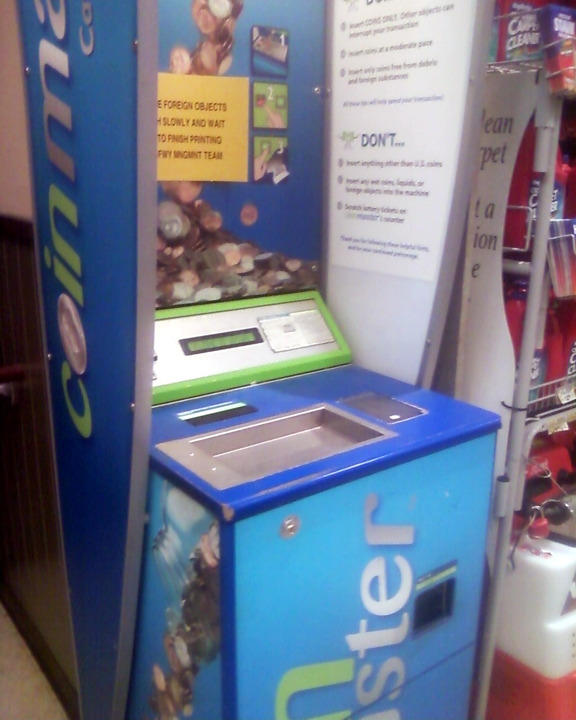
Service-oriented Americans empty their sack of coins into the collection funnel of a Coinstar machine, which is sometimes located at the exit of busy supermarkets like Safeway. Coinstar keeps 9.8 cents per dollar as a fee and returns 90.2% of the money in exchange. In supermarkets, however, the machine only dispenses a voucher, which can be redeemed at the checkout. If you then pay for your groceries later, for odd amounts, however, you end up receiving coins again.