
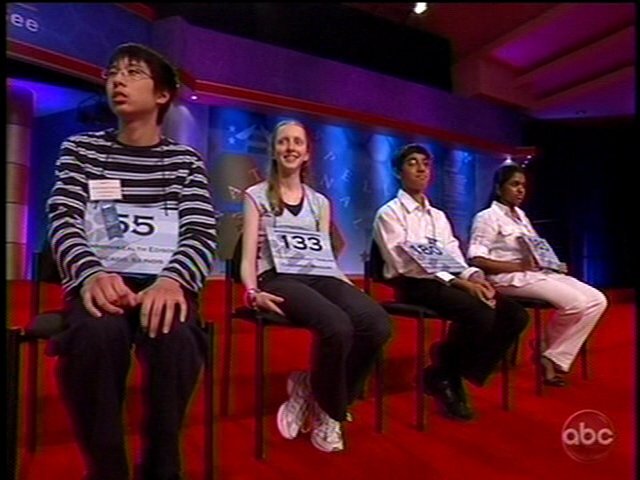
Angelika I find it fascinating how quickly and how willingly Americans spell complicated English words (Rundbrief 05/2003). As a native German speaker, I still have to focus very hard when spelling, because "e" in English is pronounced like the German "i". Who would have thought that I would become a fan of spelling competitions ("Spelling Bee")? Just recently, I was once again glued to the TV to watch the US Championship, the "National Spelling Bee," which takes place once a year in Washington D.C. Only the best of the best compete there, and in the end, the winner takes home a prize of 30,000 dollars.
To participate in the final competition in Washington, participants must win regional contests. Almost every school organizes spelling competitions, often starting with classes competing against each other. Anyone who is not yet 16 years old and is still in the 8th grade is allowed to participate in the final competition. 80% of the participants are between 12 and 14 years old. Since 1978, students from other countries have also been allowed to participate. Thus, some candidates come from Canada, New Zealand, as well as South Korea and Japan.
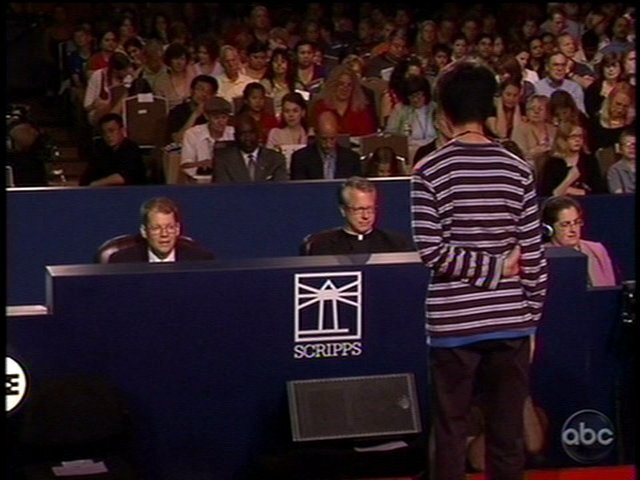
Since 1925, the US Championships have been held at the end of May or the beginning of June. By the way, "Bee" not only means "bee" but also, in old usage, "a gathering to do something specific." Now you might be wondering if it's not incredibly boring to watch 273 spelling-enthusiastic children on television, but the fascinating part is the contestants, their enthusiasm, and their quirks. It takes a special kind of person to immerse themselves in dictionaries for hours. Critical voices often claim that the monotonous spelling of words that almost no one uses in everyday language does not advance students linguistically. Those who want to delve deeper into why someone participates in the spelling competition should watch the very well-made documentary "Spellbound", in which a filmmaker accompanied eight participants to the 1999 US Championships.
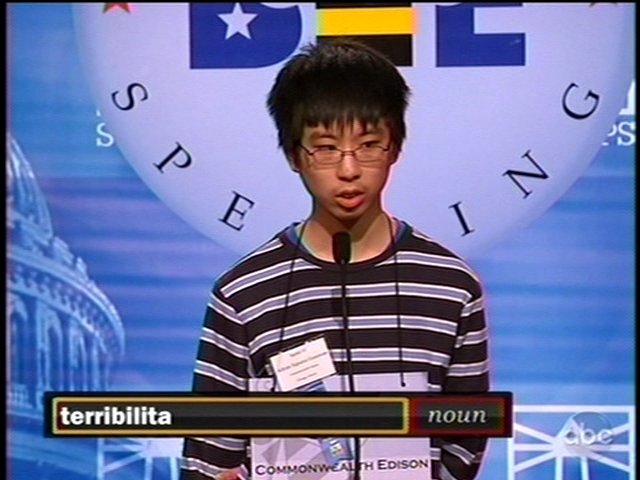
The chief judge, Dr. Jacques Bailly, who won the competition himself in 1980, first pronounces a word to be spelled correctly. The contestants may then ask Bailly for the following predetermined aids: the definition of the word, whether it can be pronounced differently, and the language from which the word originally comes. They can also ask Bailly to use the word in a sentence. Webster's Third International Dictionary, the American equivalent of the Duden, serves as the reference. After the word is called out and pronounced correctly by the judge, the contestants have 2.5 minutes to spell the word correctly. Participants often fill the time with the allowed questions: Can you pronounce the word again? Can you use the word in a sentence? From which language does the word originate? What is the definition of the word? Can I hear the correct pronunciation again? Jacques Bailly always responds in the same calm voice.
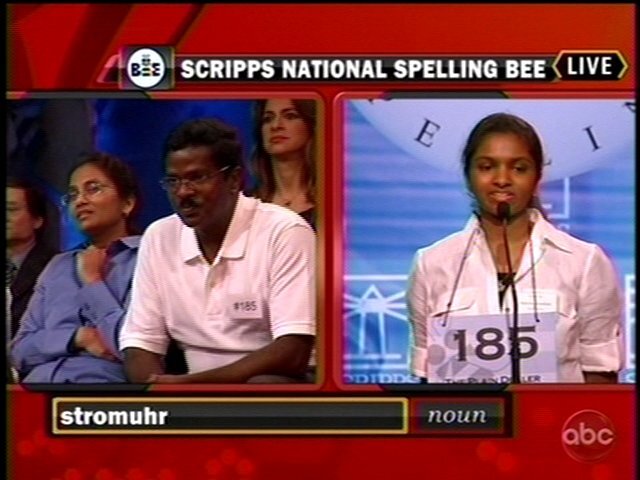
In this year's competition, the winner was 14-year-old Anamika Veeramani from the state of Cleveland. The final word: "Stromuhr". The word originates from German and refers to a medical device designed in 1867, the so-called capillary thermometer, which the doctor uses to measure the strength of blood flow in arteries and veins.
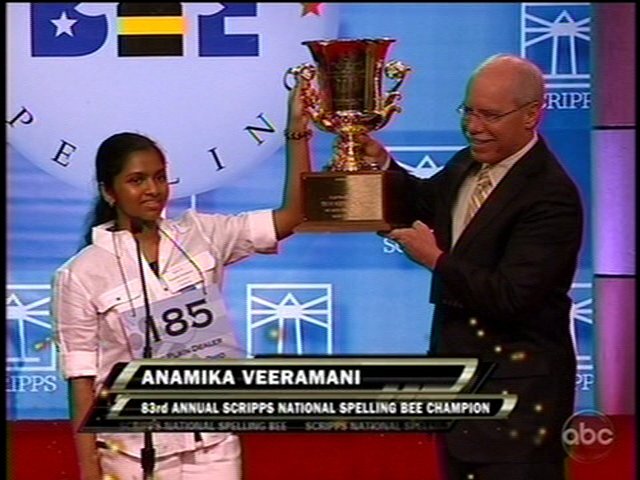
And don't let the foreign-sounding names of the successful participants confuse you: The children come almost exclusively from the USA. You should know that children of Asian and Indian immigrants often rank among the top students in American schools. American children sometimes look enviously at the good grades of these "foreigners" with US passports, but it's no secret that a strict regime prevails in Asian immigrant families, and the parents relentlessly push their children to study.