

Angelika Train travel in America is known to be less suitable for getting from point A to point B as quickly as possible, since the infrastructure is built around cars and, for longer distances, airplanes. High-speed trains like Germany's ICE or the Japanese Shinkansen are nowhere to be found in the USA. Instead, train travel here is enveloped in an aura of nostalgia. We therefore decided to take the train from Anchorage to Fairbanks. The train route is considered one of the most beautiful in Alaska, as the train passes by Denali National Park as a bonus. In the depths of Alaska's winter, it runs only once a week and takes a leisurely 12 hours to cover the 580 kms.

In summer, by the way, it takes just as long. At first, I was a bit skeptical about whether the train would be running reliably, because Alaska has harsh winters, but the friendly lady from Alaska Railroad assured me over the phone that in the four winters she has been working for the railway company, the service had been only canceled once due to bad weather. The train is pulled by robust diesel locomotives, which are not easily affected by a bit of snow and cold.
In Anchorage, we checked into a hotel near the train station the night before so that we could walk to the train the next morning. However, this turned out to be more difficult than expected, as apparently no one in Alaska considers it necessary to clear the streets and sidewalks of snow. As a result, our rolling luggage occasionally got stuck in the snow. We also had to arrive at the station an hour before departure, to be granted our seat reservations, and check in our luggage.
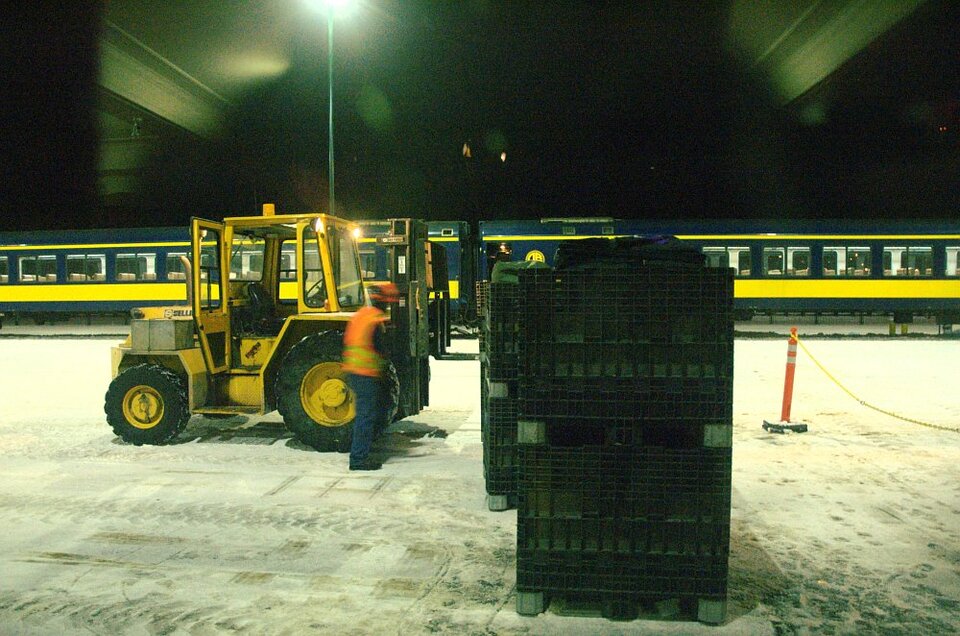
The luggage is placed in a separate luggage car on the train and is not put on luggage racks above the seats. We were quite surprised by how many people were waiting to board the train. The group was a colorful mix: tourists and locals. Incidentally, residents of Alaska receive a 20% discount when they use the Alaska Railroad. Many hotels also offer Alaskans discounts, an interesting practice in an otherwise capitalistic America. We particularly noticed a high number of Japanese tourists, but Alaska in winter is a popular honeymoon destination for Japanese people. This might surprise you, but newlyweds come to see the Northern Lights. According to a Japanese legend, children conceived under the Northern Lights will be particularly successful in life. And Fairbanks, the final stop of the train, is considered the Mecca of the Northern Lights. More on that later.
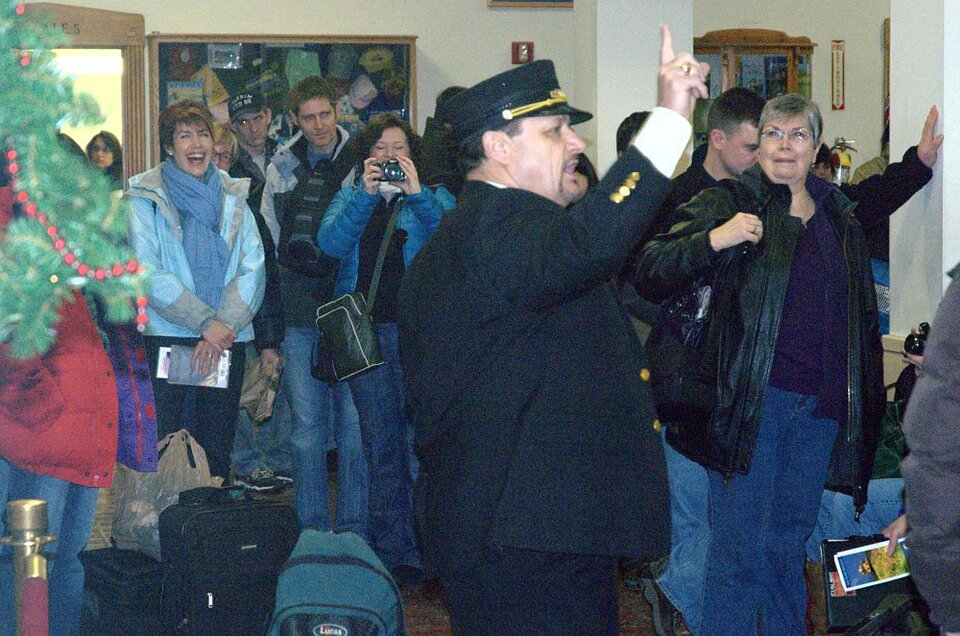
In the waiting hall of the station, the conductor, who introduced himself as "Steve," greeted all the train passengers. A veteran with 30 years of service at Alaska Railroad, he gave us a brief introduction to the upcoming journey. The man not only checked our tickets but also entertained us during the train ride with all sorts of anecdotes.
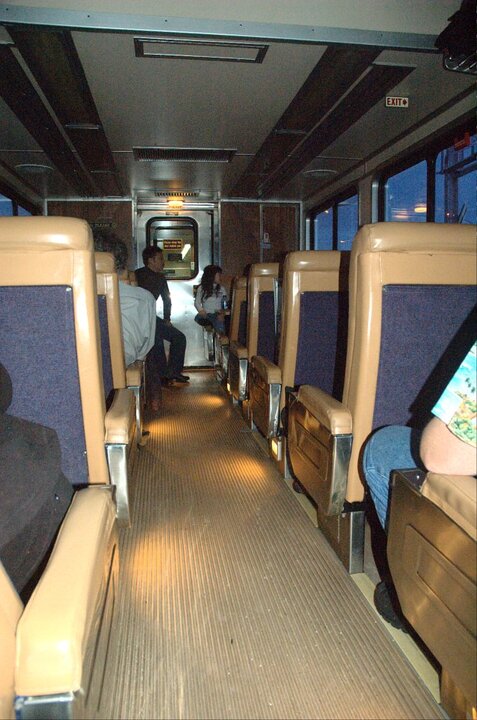
Steve never tired of pointing out landmarks and roaming animals along the side of the path. He had also set up a small personal museum on a train seat. This included, in addition to a personal photo album with all sorts of photos of various train routes, trains, his cabin in the woods, and his children, real skulls of small animals. Steve also knew the route like the back of his hand and knew exactly who lived in which cabin along the track.
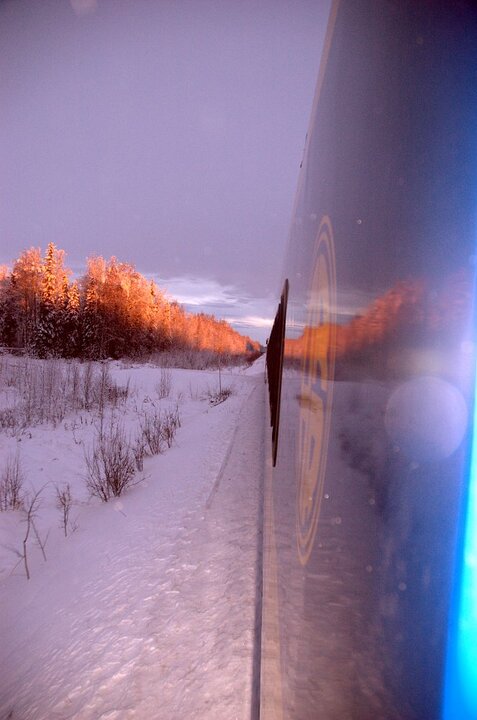
In Alaska, there are log cabins everywhere, where eccentric outdoorsmen live in the wilderness. Often, these cabins can only be reached on foot or in winter by snowmobile. By the way, Alaskans refer to the wilderness as the "bush" and to the snowmobile as a "snow machine," because "mobile" sounds like a mobile or a toy, and therefore is probably not masculine enough, at least according to conductor Steve.
About halfway up to Fairbanks, the train temporarily slowed to a snail's pace because Steve had to drop off some newspapers for one of the cabin residents near the railroad tracks. By the way, this particular railroad is one of the few in the USA that still offers a so-called "Flag Stop" service, meaning you can stop the train in the middle of the route to get on or off by wildly waving your arms or swinging a white T-shirt over your head. A white flag works too (hence the name "Flag Stop"), but not everyone has one readily available. However, this service is only available between the towns of Talkeetna and Hurricane.
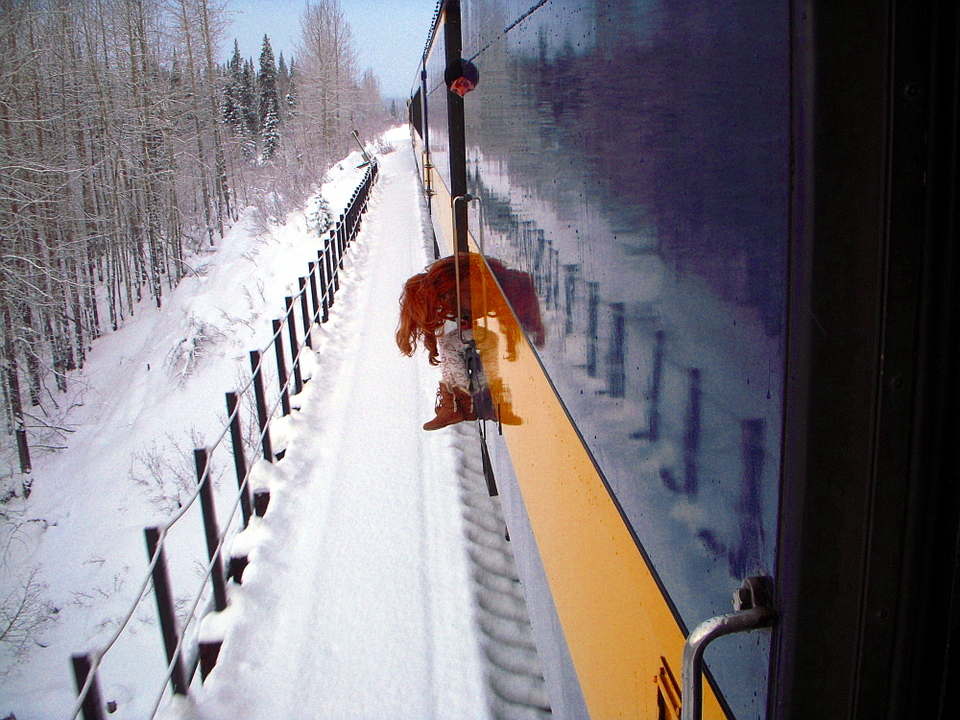
The train also offered several other tourist-friendly perks. For example, there were exterior doors between the cars that were split in two vertically, allowing the upper half to be opened for looking out and taking photos. Interestingly, these doors are called "Dutch Doors" in American English. However, we had to dress warmly for this, as the wind from the moving train blew right through us.
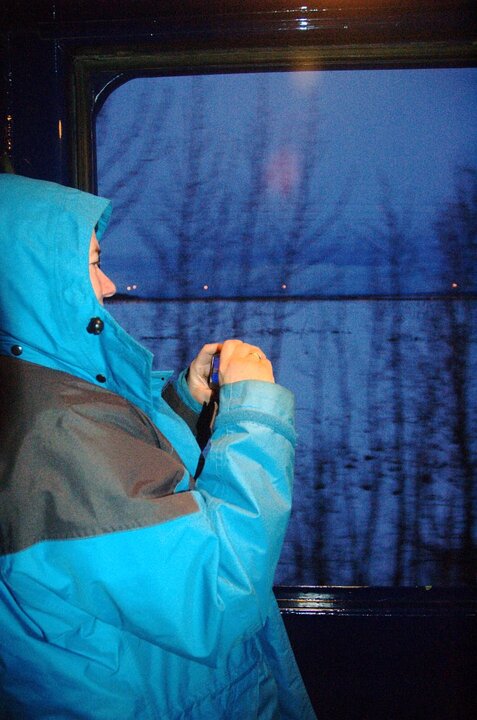
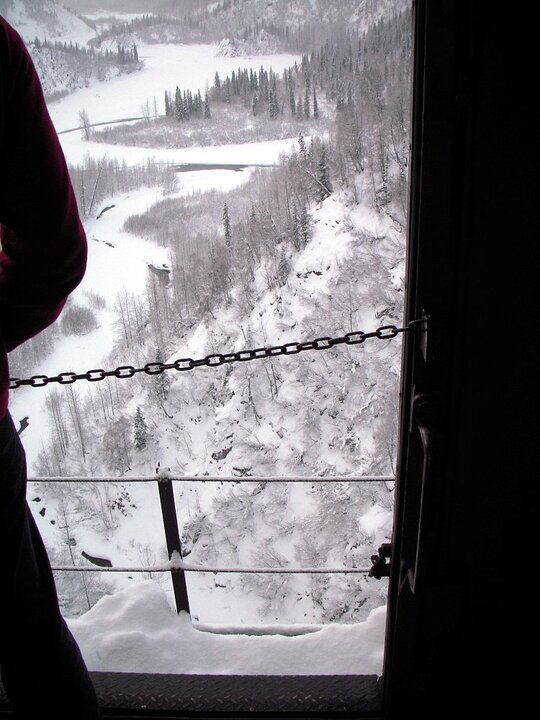
We were also allowed to go into the luggage car, which, like in movies, traveled with an open door. As mentioned, this was only possible because the train wasn't racing through the landscape at a crazy speed. But, naturally, the passengers adapted to the more leisurely pace. People were reading books or kept gazing out the window for hours to admire the solitary winter landscape. In the dining car, board games were brought out, and only rarely did someone use a cell phone, which was also due to the fact that the reception along the route was only moderate.
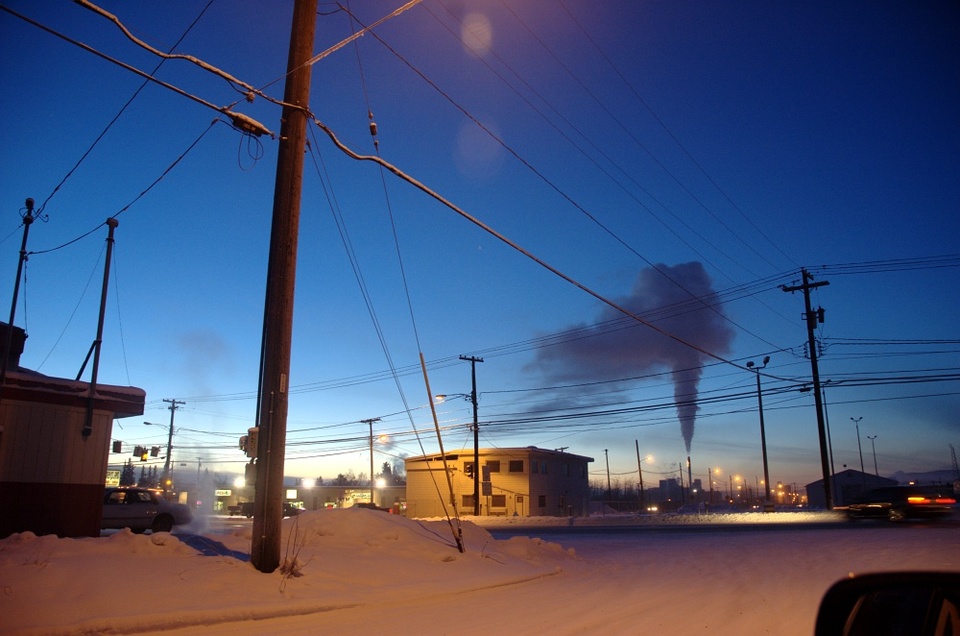
When we arrived in Fairbanks, we were immediately hit by an icy cold, as the place is much further north than Anchorage and is known for its freezing winters. But conductor Steve had walked through the train beforehand and ordered a taxi for everyone who needed one right at the station, so we didn't have to stand in the cold for long. That's what I call service.