
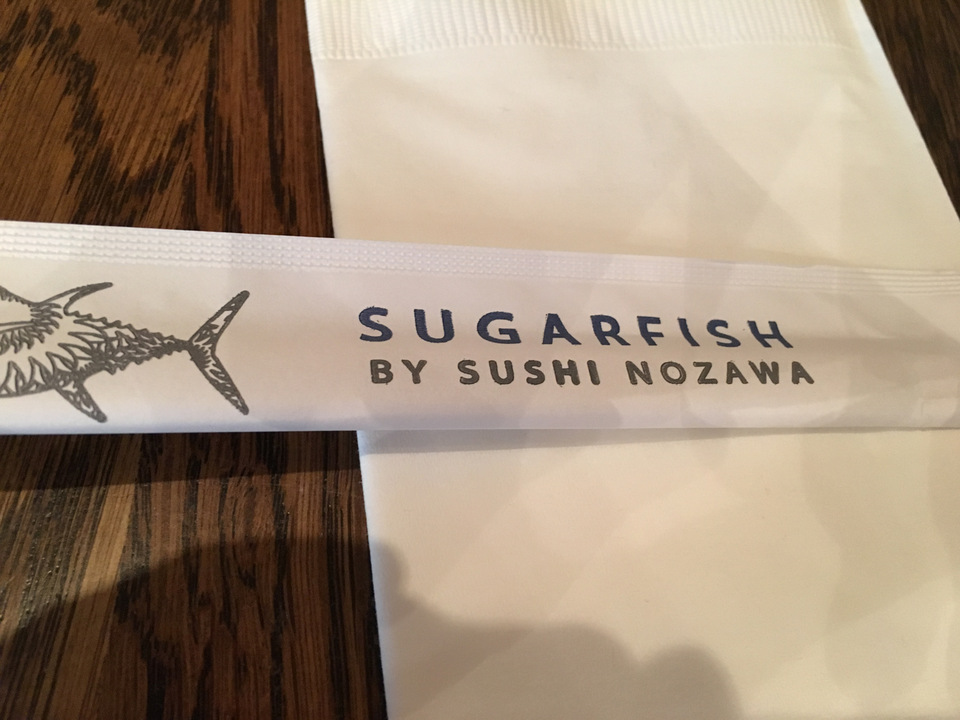
Michael If you're visiting Los Angeles, you must not miss the chance to visit the top-notch sushi restaurants there. One of our favorite spots is "Sugarfish" in Santa Monica. We always drive there from Venice Beach, and always at odd times, like three in the afternoon, because otherwise, the place is packed, and you have to wait in line for hours. Over the decades, we've found that on weekday afternoons, you either get a table immediately or have to wait at most ten minutes. We routinely park in the municipal garage 100 meters away for the bargain price of two dollars (beware, the parking garage right next to it is private and more expensive).
Good sushi is, as already mentioned in Rundbrief 09/2013, far more than just placing pieces of fish on lumps of rice. First of all, cooking rice is not that simple. Japanese sushi chefs spend their entire first year of training just learning how to cook rice. The master only lets them handle the fish after that, if they haven't already given up in frustration. At Sugarfish, they use extra hard rice, which they have to cook for an extra long time, one of the employees there once told me, and it tastes quite extraordinary. I usually don't like rice that much, but sushi rice (which is seasoned with vinegar) and especially the Sugarfish rice, I could shovel into myself endlessly.
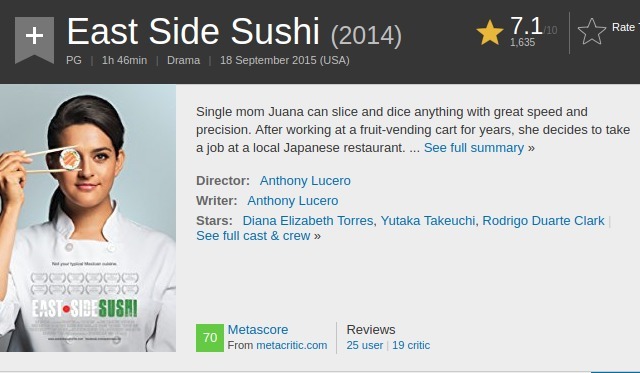
Then, of course, the fish must be freshly caught and is not simply cut open unmodified for preparation, but only after it has been massaged in all possible ways, slowly gently warmed, and subjected to various secret rituals. It is served at room temperature, incomparable to supermarket sushi from the refrigerated shelf. Japanese restaurants sometimes follow truly absurd traditions that should actually be banned in a modern country like America. Firstly, only Japanese people work behind the counter in traditional sushi restaurants. It is practically unheard of to find non-Japanese sushi chefs in expensive sushi places, with a notable exception being a very good restaurant around the corner from us in San Francisco, where a South American arranges fish on appetizer plates among Japanese chefs. However, I believe he is (still) not allowed to make sushi rolls. Furthermore, there are virtually no female sushi chefs because the Japanese believe that women have a higher body temperature than men and supposedly ruin the raw fish by touching it. No kidding, they really believe that! I got it from the film "East Side Sushi". The story is about a South American cook who desperately tries to find a job in a Japanese restaurant and is constantly rejected until she finally succeeds through immense perseverance.
I further categorize sushi enthusiasts into three groups: those who think that "California rolls" are sushi, the popular American maki rolls with avocado and snow crab. Then there are those who have ventured into eel (Unagi) with teriyaki sauce, and like Hamachi (yellowfin tuna) or Toro (the fattier tuna belly). And finally, the experts who order fish roe in various forms (Tobiko, Ikura), as well as monkfish liver (Ankimo), and finally the queen of expert sushi, made from the gonads of sea urchins, called Uni (Figure #1).
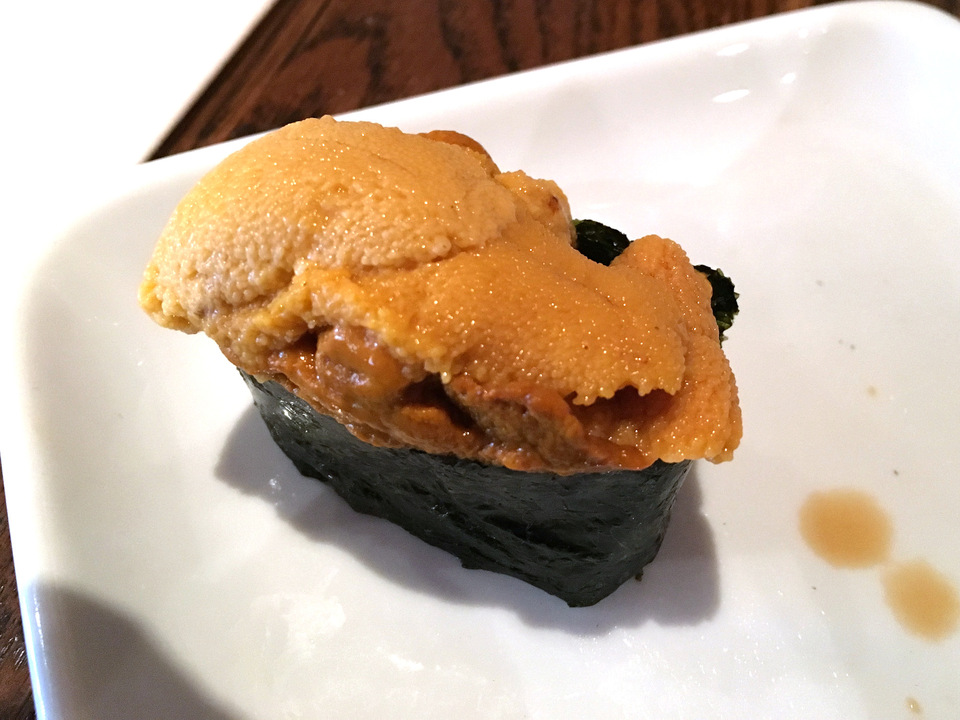
Uni tastes very unusual, somewhat earthy like the mud on the shores of the San Francisco Bay at low tide, a bit like an oyster but very creamy and much more intense. The taste lingers for a very long time, sometimes for hours, which is why a portion (i.e., two pieces) of uni, which costs about $15 at Sugarfish, should always be consumed at the end of an opulent meal. It is best washed down with a neutral-tasting Japanese beer (Sapporo, Asahi, Kirin) or alternatively with lukewarm or cold sake.