
Michael In restaurants, we like to order a dozen oysters as an appetizer, "On the Half Shell," as Americans call the opened and raw oysters, which are served with great fanfare on ice chips on large silver platters on one foot high stands. It's a nice pastime, but not exactly cheap, as a dozen oysters in the restaurant can easily cost $35.

At a birthday party some time ago, we learned that you can also buy oysters at the wholesale market and, with a bit of practice, open and serve them yourself. So one Saturday morning at ten, I quickly drove 10 minutes to the Bayview neighborhood to buy a dozen raw oysters. Beforehand, I had purchased the necessary safety equipment on Amazon: two oyster knives and an iron glove "Made in Germany", that latter for the exorbitant price of almost 100 dollars. Since I have to type a lot and quickly for my job, my hands are my capital, and I didn't want to take any risks. Additionally, I had watched a series of videos on YouTube where experienced "oyster shuckers" demonstrated how it's done correctly.
Upon arriving at "J.R. Seafood," I initially thought the store was closed, but the door was open. Although there was no one in the sales area, I heard a few figures bustling around in the walk-in freezer. I realized that restaurants naturally stock up on fresh seafood as early as 6 a.m., and apparently, no one but me sleeps in on a Saturday and then shows up at 10 a.m. to buy oysters.

I cheerfully said hello and was greeted in Spanish, but since I don't speak Spanish, I continued merrily in English, asking if I could have a dozen oysters, preferably ones that would be easy to open. "All of them are easy to open," laughed the man from the freezer, returned with a plastic bag, and I gave him the $11 in cash as listed on the board in the salesroom. That's how simple it is!
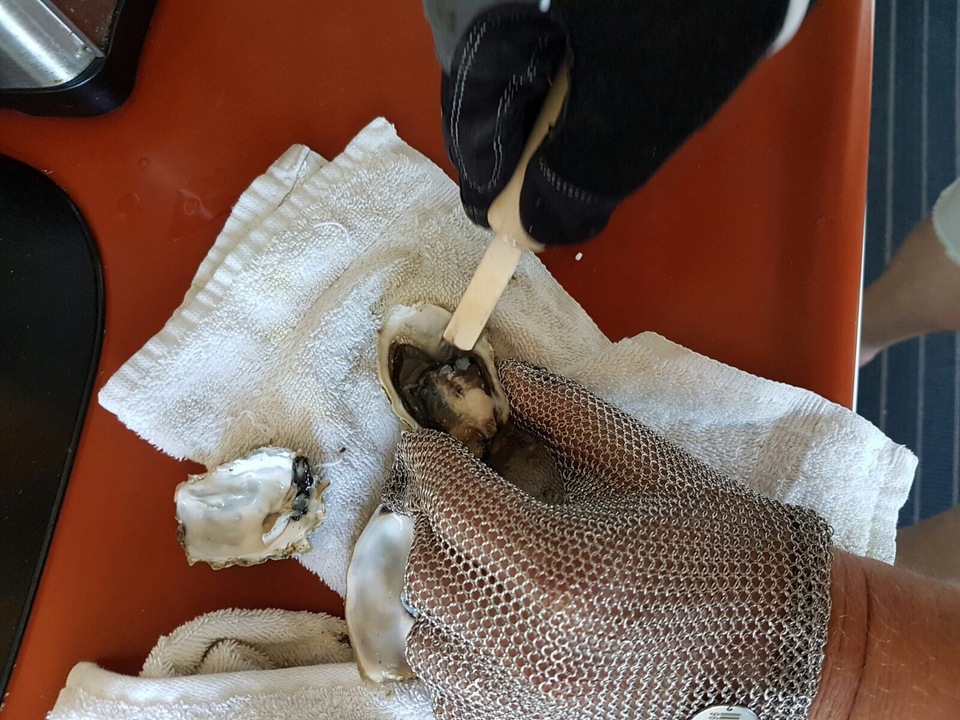
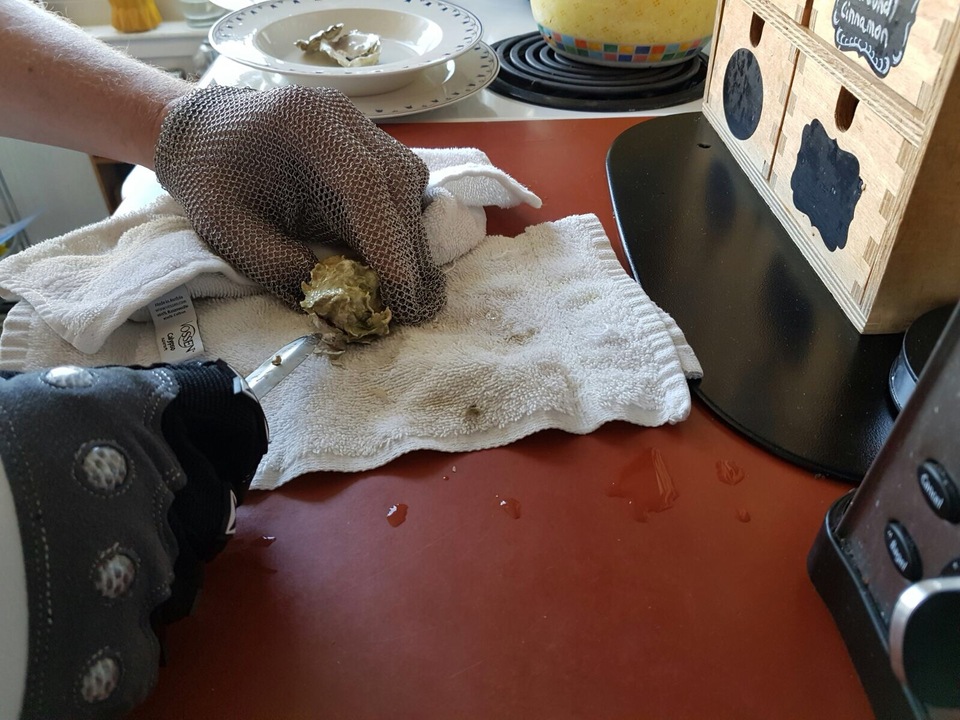
At home, I placed the oysters individually with the rounded side down on a towel, inserted the oyster knife into the narrow hinge at the long end, as seen in the YouTube videos, while holding the oyster firmly with my armored left hand. You have to insert the knife forcefully, but you must not let the opening shatter, otherwise, you'll end up with a mouthful of small shell fragments when eating the oyster later. Then you go around and pry the oyster open sideways. Then run the knife blade blindly to the upper end on the inside, and cut the upper adductor muscle, trying not to damage the meat of the oyster. After that, the top shell can be easily removed, and once you've separated the oyster meat from the shell on the rounded lower side with the knife, you place it on the ice in the serving dish, and it's ready!
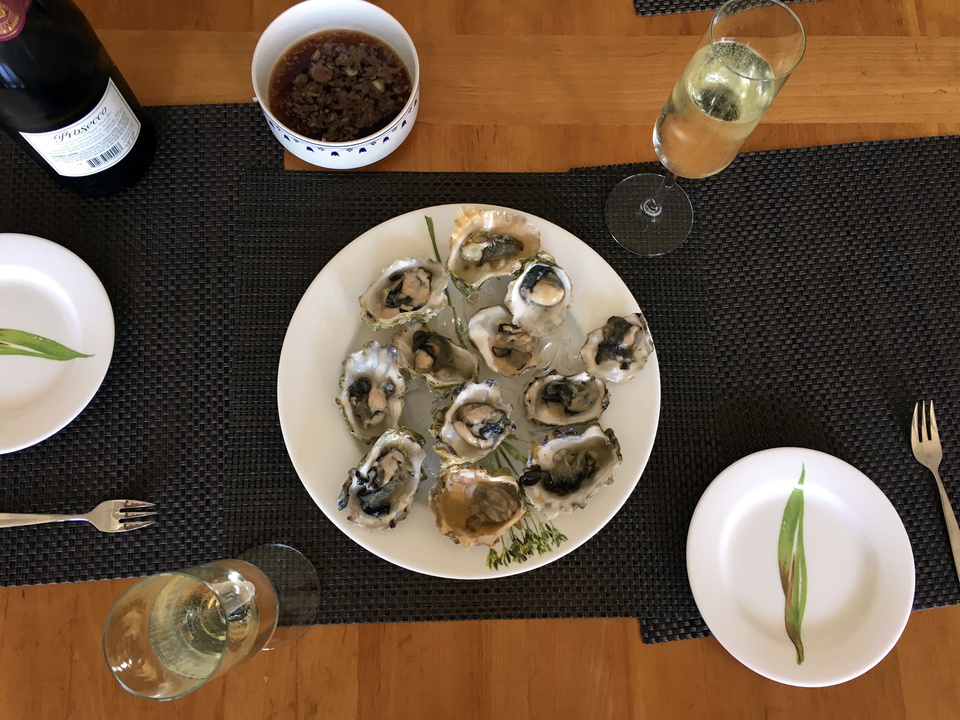
The whole procedure for a dozen oysters was completed in five minutes; it goes surprisingly smoothly once you get the hang of it. When buying, make sure that the oysters are hermetically sealed; an already opened oyster is dead and should not be eaten. We weren't exactly sure how long you could store the oysters in the ice bag, so we ate them at 11 a.m. with a glass of champagne and homemade sauce made from vinegar and onions, very delicious!