
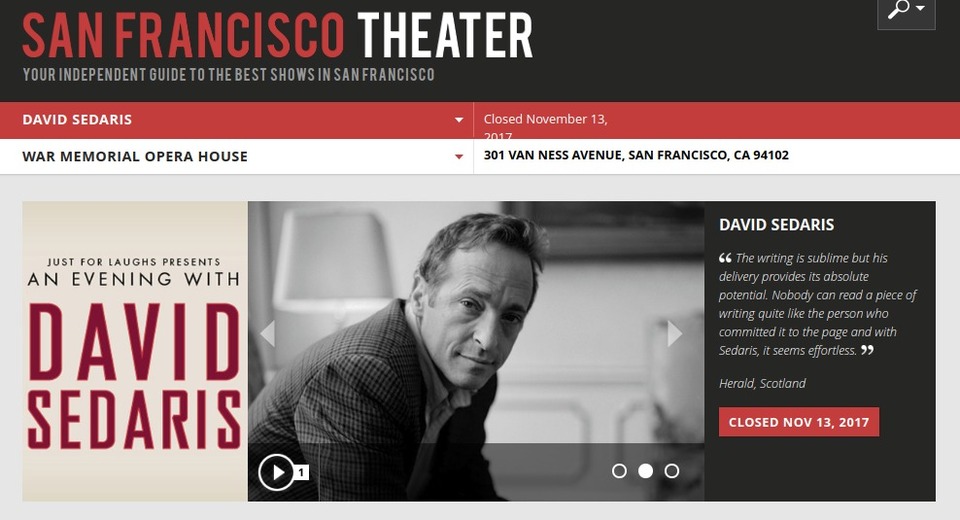
Angelika Michael is very difficult to buy gifts for because he always buys what he needs for himself. It has happened several times that I bought something for him, and the next day he came home beaming with the same item. Therefore, I have now started creating so-called experience gifts. For his birthday in November this year, I got him tickets to a reading by David Sedaris.
The event took place at the San Francisco Opera House, which initially surprised me because the opera house has almost 3,150 seats. Would an author who writes humorous essays fill such a large venue for a reading? And, lo and behold, the house was sold out. I discovered David Sedaris many years ago because a colleague mentioned him as her favorite author. He also frequently writes short stories for the weekly magazine "The New Yorker," which I've been subscribed to for many years. However, I prefer listening to him.
He narrates his own books when they are released as audiobooks. He has a unique high-pitched voice and reads the stories from his life so humorously that I have often laughed to the point of tears while listening. His stories incorporate a lot of autobiographical elements: his childhood in Raleigh, South Carolina, where he grew up with five siblings in an American-Greek family; his homosexuality, his drug use, the many crazy jobs he took on to make ends meet before he became well-known. I could listen to the short stories about his experiences in various airports and airplanes or at the dentist in Paris over and over again.
The evening at the opera in San Francisco also delighted us. Sedaris conducted the approximately 90-minute reading at the lectern and read, among other things, excerpts from his new book "Theft by Finding," which is a compilation of his diaries that he has been keeping since 1977. We had good seats, which I snagged on the online portal StubHub. The tickets were issued in the name of the original buyer and were sent via email. On-site, the printouts were scanned and accepted without any issues, although I was a bit nervous.
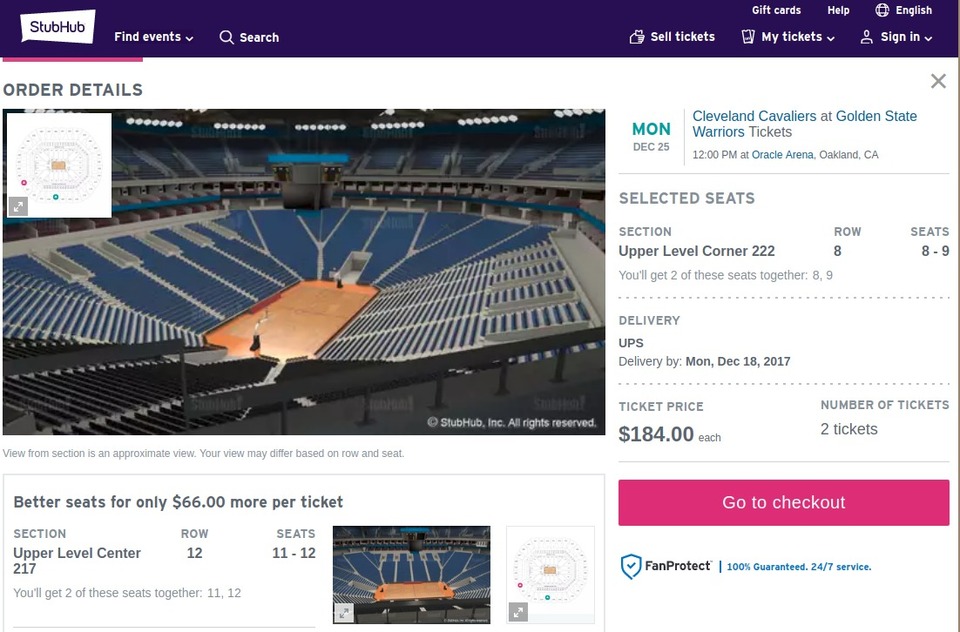
What's Stubhub? People who bought tickets from the official organizer sell them auction-style to the highest bidder on a platform (an eBay company). The ticket remainder that remains with the viewer after the ticket taker removes a part is called a "stub," and a "hub" in this context is the platform where the tickets are traded. Selling concert tickets in this manner is called "scalping" in the USA and is officially prohibited on-site just before the event begins. Nevertheless, before every concert or sporting event, you can always find "scalpers" excitedly waving tickets and illegally selling them to interested parties on the access routes. In 38 of the 50 American states, however, selling tickets from private individuals to private individuals is allowed as long as it doesn't happen at the event venue itself, and StubHub fills this gap online. The business model is controversial because many tickets circulate at inflated prices this way, and businesspeople who buy tickets on a large scale make a profit at the expense of concertgoers. In 2016, the Obama administration passed a law called the "Better Online Ticket Sales" (BOTS) Act, which stipulates that only individuals are allowed to buy tickets online and prohibits operators from using software bots.