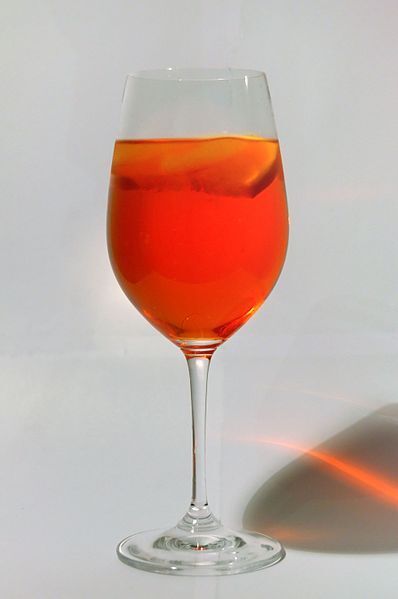
Angelika We did not visit Germany this time in the depths of winter as usual, but in June, and this had the advantage that we could visit beer gardens and comfortably sit in street cafes. We immediately noticed that an astonishing number of people were drinking an orange-colored beverage in wine glasses.
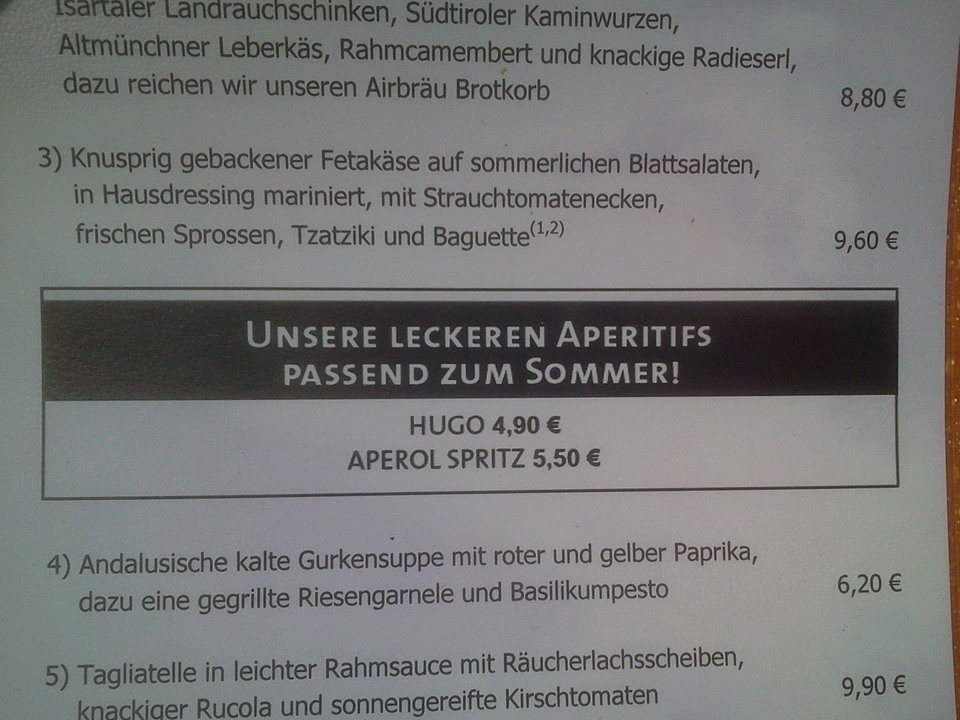
We realized that we have truly become foreigners in Germany because friends laughingly informed us that it was the well-known mixed drink. Aperol Spritz is the nameof a popular Italian cocktail. It doesn't have a direct translationto English, as it is a proper noun. The drink is typically made withAperol, prosecco, and a splash of soda water. The drink consists of Aperol liqueur, white wine or Prosecco, ice cubes, and mineral water. It is a mystery to me that this drink has not yet taken the attractive men's scene in our neighboring district of Castro by storm.
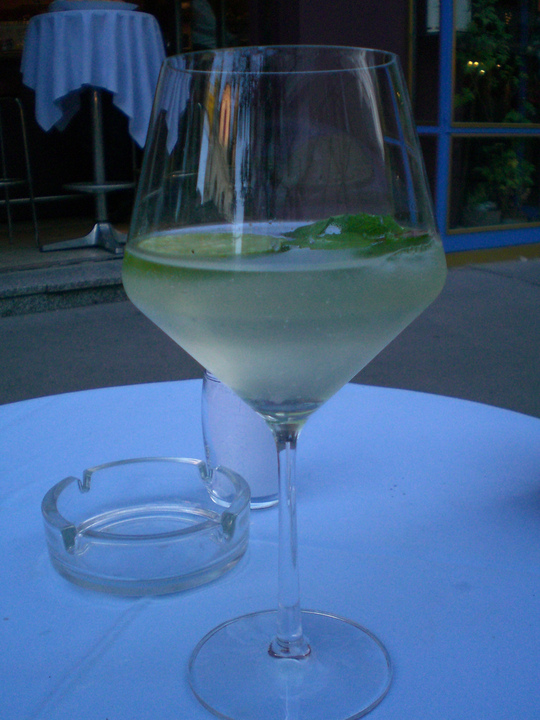
However, according to our friends, the Aperol Spritz would already be old news this summer. The so-called... Hugo ..had now surpassed him. We learned that the Hugo consists of white wine or Prosecco, ice cubes, mineral water, and mint leaves, and of course, the most important ingredient, elderflower syrup, must not be missing. Since I am a big Prosecco fan, both drinks were a hit. In the meantime, Prosecco is also becoming more well-known and popular in America, at least in our area. We will definitely present the imported hits from Germany at our next party. @Z: Zipper method
Michael How disciplined the Germans drive! When the number of lanes is reduced at a construction site, almost everyone drives up to the narrowing as prescribed and then merges alternately from the right and left, in accordance with the regulation issued by the Ministry of Transport. Although the drivers reduce their speed, there is usually no stopping or traffic jams.
In California, with its millions of citizens completely incapable of driving motor vehicles, nothing often moves at these bottlenecks, and traffic jams stretching for kilometers occur. The reason for this is that "late merging," meaning driving up to the bottleneck and squeezing in there, is considered rude and often provokes aggressive reactions.
In the book "Traffic - Why We Drive the Way We Do," the problem is described along with many other facts about the American madness in traffic. The "polite" drivers change lanes well in advance depending on their level of politeness and then refuse to let "late mergers" in front of them. Ugly exchanges of words and unfriendly hand gestures are commonplace, and another traffic jam ensues.
Or did you know that cars in America drive around with two different side mirrors? The side mirror on the driver's side has no curvature, so it is flat and its reflection is therefore undistorted. The right side mirror, on the other hand, is convex, meaning it provides a kind of wide-angle reflection and helps to minimize the blind spot on the passenger side. However, this leads to objects, such as cars zipping by on the side, being closer than the mirror with its wide angle suggests (and yes, in America, you are allowed to overtake on the right).
To prevent American drivers from immediately going to court with million-dollar lawsuits for quickly changing lanes even though someone is already approaching in the right lane, every right side mirror in the USA has the warning: "Objects are closer than they appear." In contrast, Europe equips all cars with... zwei The translation to English is: "Wide-angle mirrors. Warnings are unnecessary.