
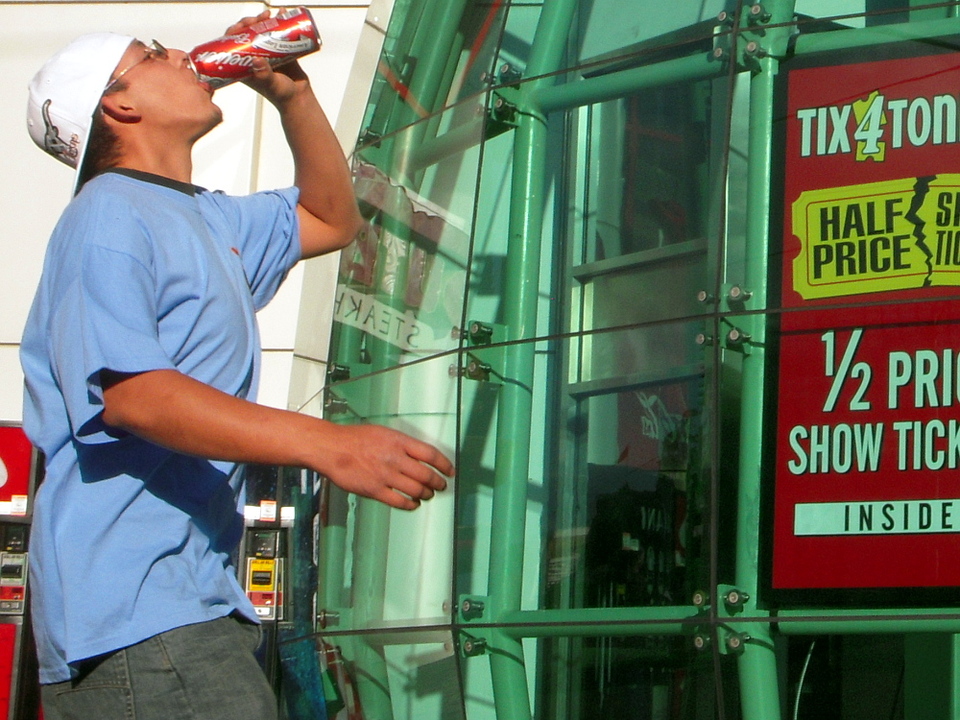
Michael We are back in San Francisco! One of the most absurd laws in the USA prohibits young adults under the age of 21 from consuming alcohol. Just imagine: a twenty-year-old adult can buy a house, join the army, or purchase a weapon, but cannot buy a beer at the supermarket. However, like all absurd laws, it is constantly circumvented.
When I was traveling in America a good twenty years ago, my college buddy Huber and I arrived in a small town where Huber knew an exchange student. As far as I can remember, this connection opened up some cheap accommodation options for us, so we went there. Hardly had the first handshakes of greeting been exchanged when our contact person, in a conspiratorial voice, presented a request: Could we quickly drive by the gas station with our car and buy some beer?
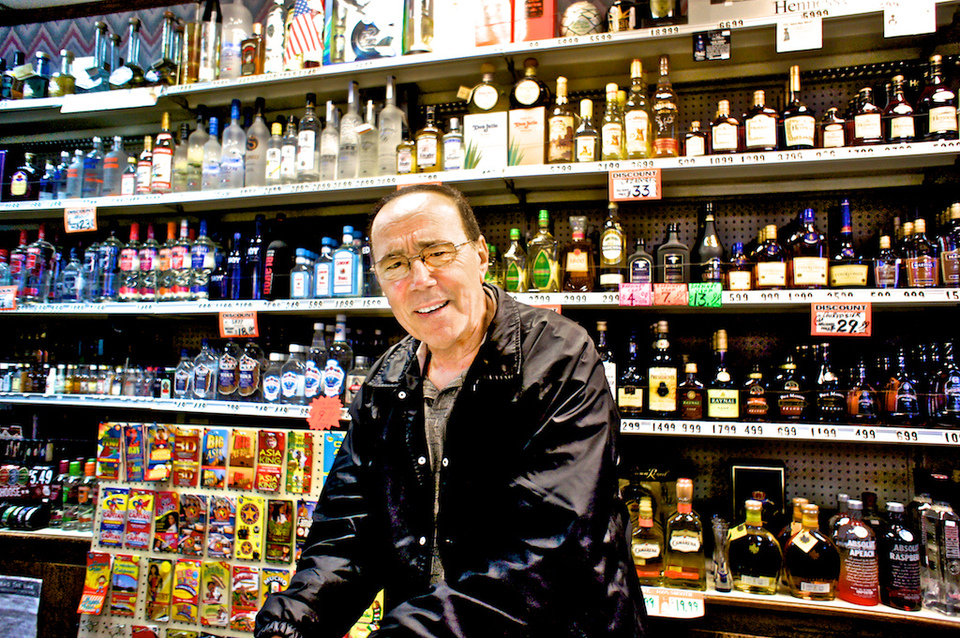
I was just 21 at the time and was handed a beer without any issues at the drive-through, which our acquaintance eagerly opened and gulped down like a camel dying of thirst in the desert as soon as we left the liquor store. Huber and I looked at each other questioningly, but then we were told that the sale of alcohol to people under 21 is not allowed in the USA, and young adults go to great lengths to get it anyway.
Conversely, adults are prohibited from providing access to alcohol to those under 21, and some overly zealous law enforcement officers even send teenage decoys into the local corner store to see if they are being sold alcohol there. If the store owner does not ask to see a driver's license to verify age, they receive a citation and a hefty fine. In the case of a repeat offense, their license to sell alcohol is revoked.
Recently, as usual on hot summer weekends, we were hanging out at the beach in Pacifica and settled down next to a group of people who looked about 18 years old. They were clearly having fun taking turns drinking from a two-liter soda bottle filled with a suspiciously clear, non-carbonated beverage. Judging by the behavior of the young people, it was most likely vodka that had been transferred into a disguise bottle beforehand.
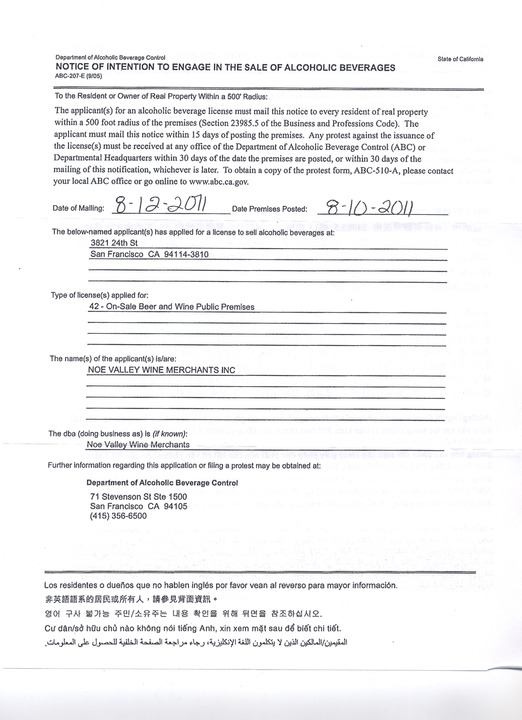
If a store selling alcoholic beverages or a bar with a liquor license wants to start off in a neighborhood, the "Department of Alcoholic Beverage Control" sends forms to all neighbors within a radius of 500 feet (180 meters). Illustration 4 shows the notice that landed in our mailbox when the owner of the wine shop around the corner changed, and the new owner apparently needed a renewed license to sell alcoholic beverages. The text states that one can protest against the store, and to do so, one must request another form, specifically ABC-510-A, on which one can present their concerns about the wine shop to the venerable control board. Of course, we have nothing against it; we would even fill out an extra form so that the good man can sell his wine.
The moral of the story? Just like in the times of Prohibition, from 1919, when the production, distribution, and consumption of alcoholic beverages were banned throughout America, the state became embroiled in a battle it could not win. Instead of educating young adults on the responsible use of intoxicants, it labeled them as criminals who violated absurd laws as a national pastime. As is known, the government finally ended prohibition in 1933. The The Twenty-First Amendment to the Constitution finally approved free access to alcoholic beverages -- after 14 years of state alcohol prohibition, during which the black market flourished and gangsters like Al Capone controlled the lucrative distribution business.