
Michael The more uninhabited areas of Vancouver Island are work areas for lumberjacks -- rough types who, still in their work gear, head to the village pub in the evenings and, as it seemed to me, havn't seen the inside of a dentist's office in a long time. In a dive bar on the edge of nowhere, we once had a very good dinner, and when I went to the counter to settle the bill, as is customary in Canada, a lumberjack was paying his tab before me. The visibly tipsy man also received two pallets of Budweiser beer cans and two large bags of ice cubes, paid about $150, and even asked the waitress if he could take her out to dinner, which she briefly considered but then politely declined. Let's hope he only had a short drive home!
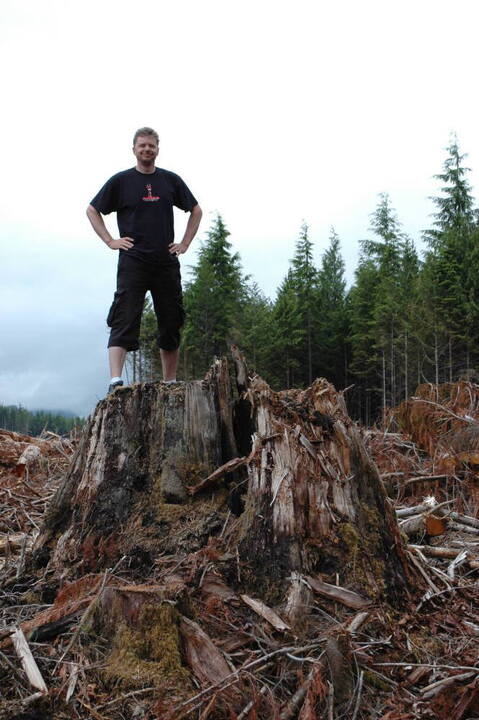
Lumberjacks often stay overnight in cabins in the forest during the week because access roads to the logging sites are unpaved and riddled with potholes. Some workers drive an hour into the forest every day with four-wheel-drive pickup trucks and back out again in the evening, but they have to buy the thickest tires available and always carry two spare tires with them. This is because when driving at 60 km/h over a bumpy road, sharp stones can sometimes cut the tire rubber.
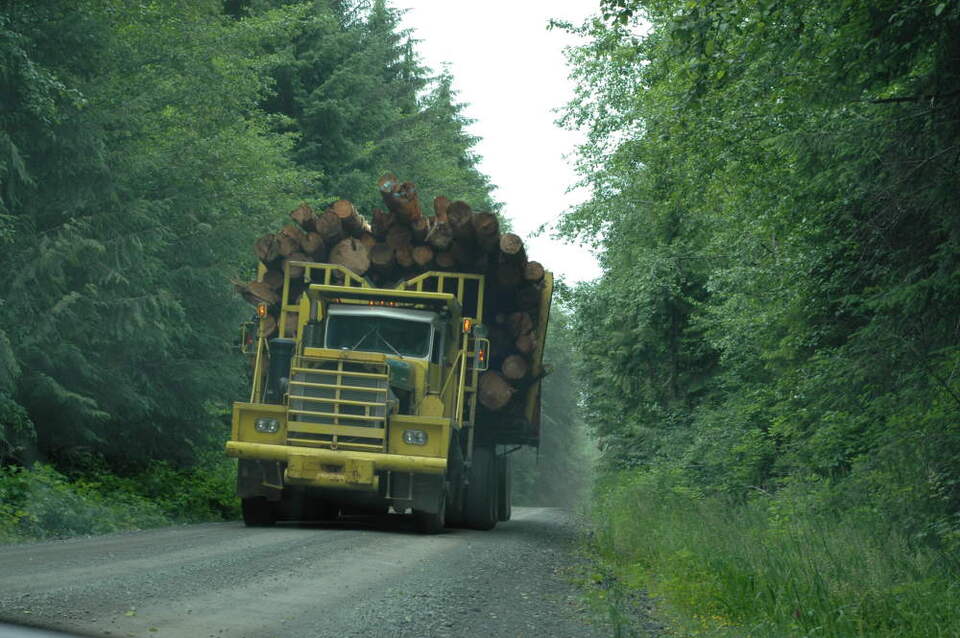
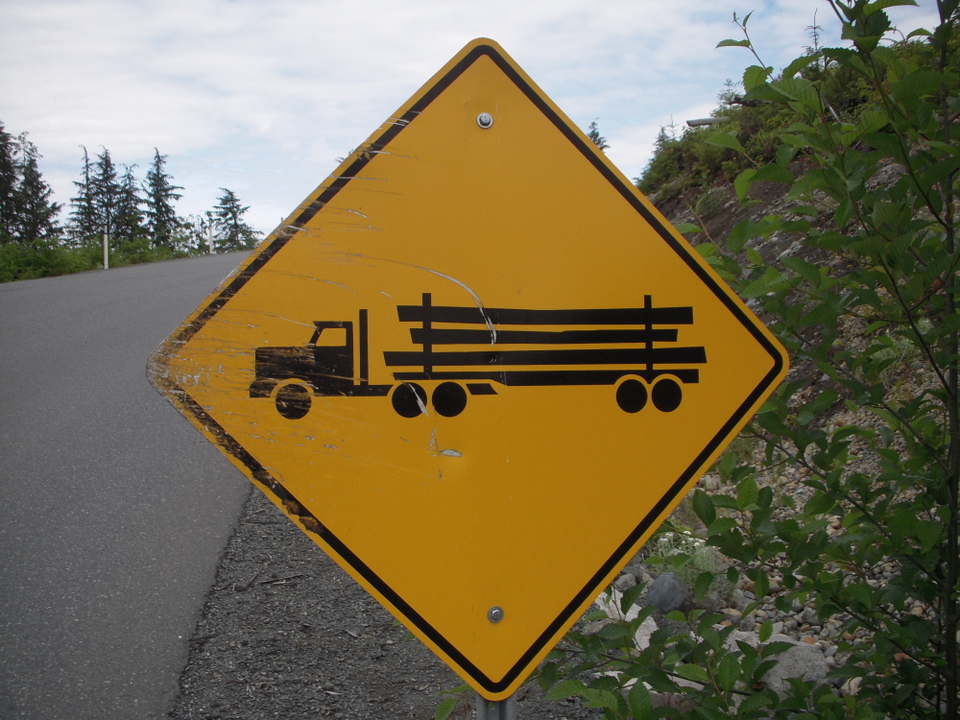
Once we were driving on an access road, and from a distance, we saw an oncoming, fully loaded logging truck. Fortunately, I quickly found a space to pull to the side, stopped, and we ducked our heads. Logging trucks carry about 100 tons of wood per load, are almost twice as wide as a normal vehicle when loaded, and travel quite leisurely at about 30 km/h over the bumpy roads in the forest. A few wooden bridges over small streams were actually constructed to sustain this enormous load.
The truck took up almost the entire width of the road, it was moving very slowly (about 25 km/h), and we were told that the drivers use CB radio to warn each other about tourists and to be considerate. Our lumberjack even waved!
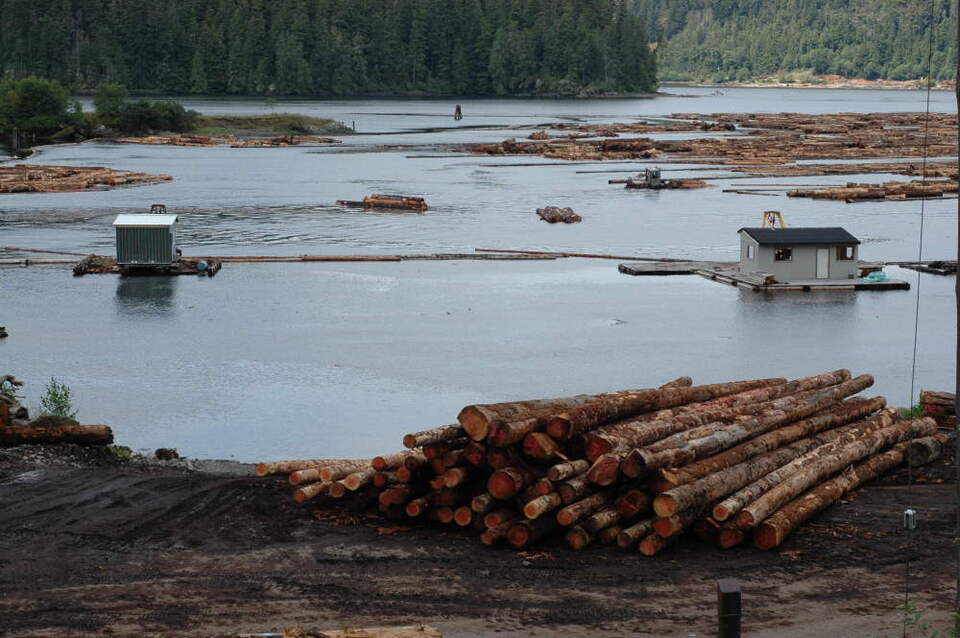
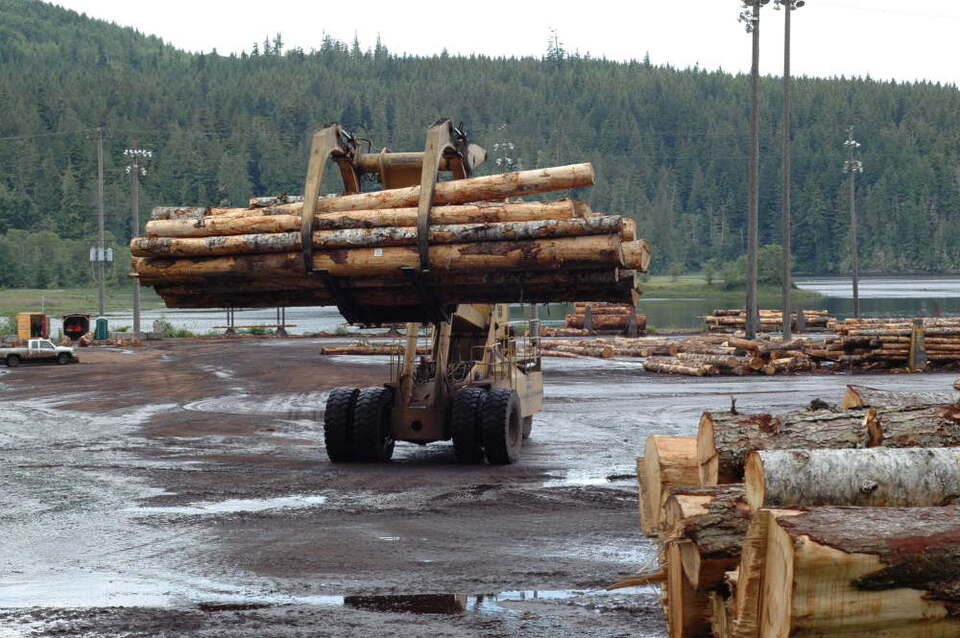
The tree trunks are cut down with chainsaws and transported by trucks on forest roads to a collection point, where they are thrown into the water and towed by tugboats to the next processing location.