
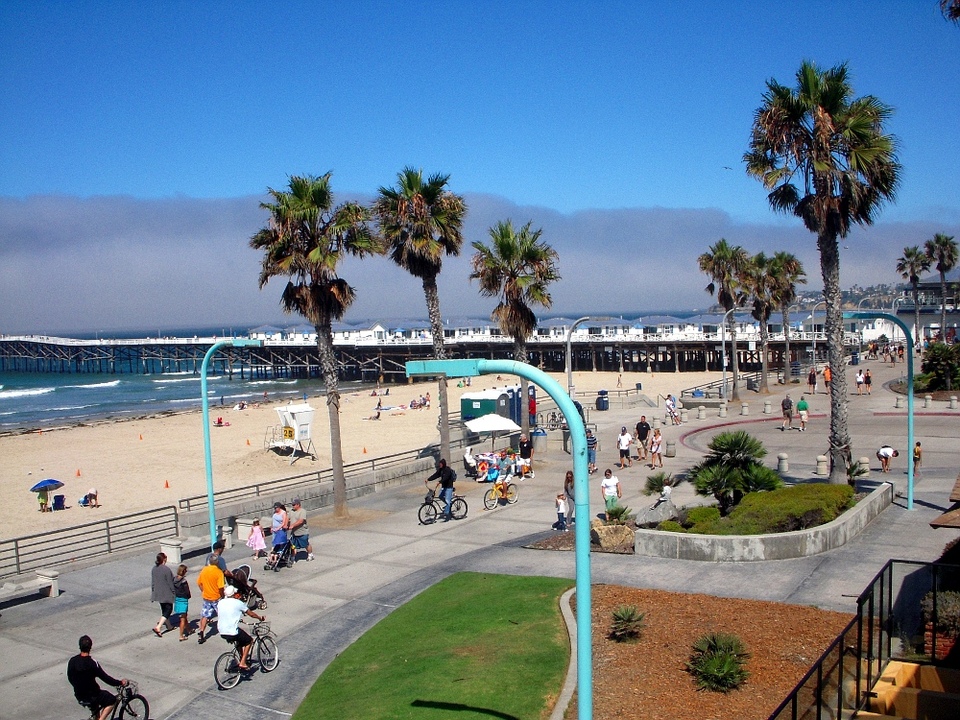
Michael Over Labor Day weekend, we zipped down to San Diego to test the ocean's water temperature, which was about five degrees warmer there (a more acceptable 18 degrees instead of 13). At a surf shop, we rented hippie bikes to leisurely ride along the boardwalk for two hours. After the tour, we returned the bikes and discovered that the shop also offered surfing lessons. For $80, you could spend an hour and a half learning the art of surfing with an experienced surfer, including a wetsuit and surfboard.

Angelika was somewhat skeptical, but I signed up right away for the next day at 11 o'clock. My surf instructor was from Barbados, a Caribbean island near Puerto Rico, and spoke just like Ali G" in the eponymous TV series, a hiliarous kind of Jamaican English. After a theoretical introduction to the history of surfing (Hawaiians invented it) and board knowledge (long boards are easy to paddle and stable, short ones are only for experts), we headed out to the beach for dry practice: Lying lengthwise straight on the board, pulling the arms alternately and close to the board through the imaginary water, then grabbing the front side edges of the board and jumping into a squat in one motion. Tried it three times, then it was off into the water.

The wave god was kind that day, as consistent 1.5-meter waves rolled in every 30 seconds. I stretched out on the board, the surf instructor turned me towards the shore, shouted "Paddle, paddle, paddle!" and I started paddling.
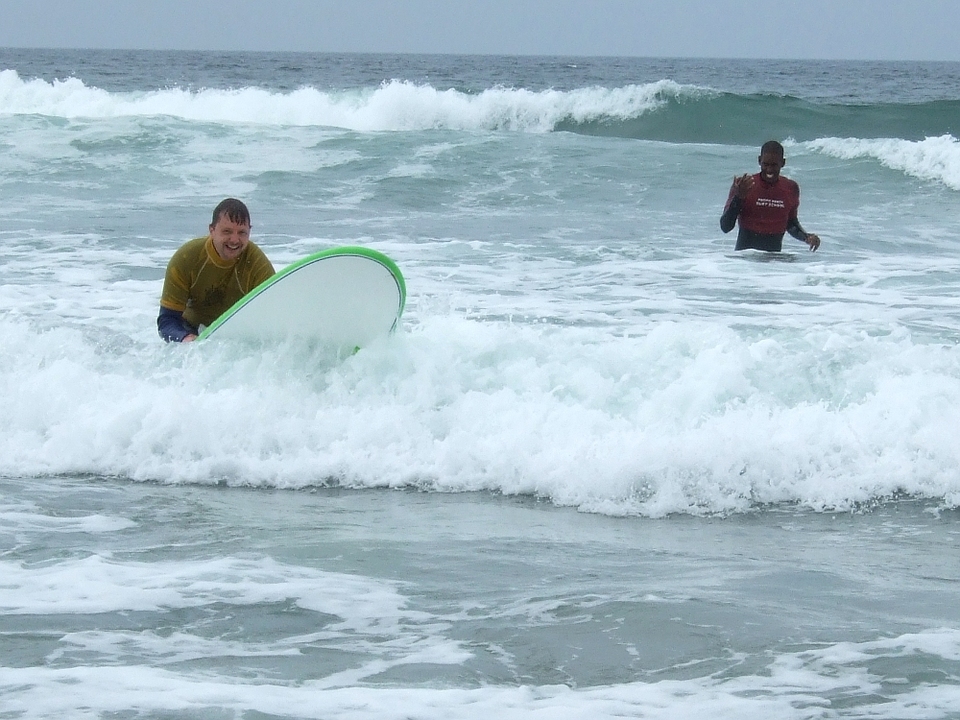
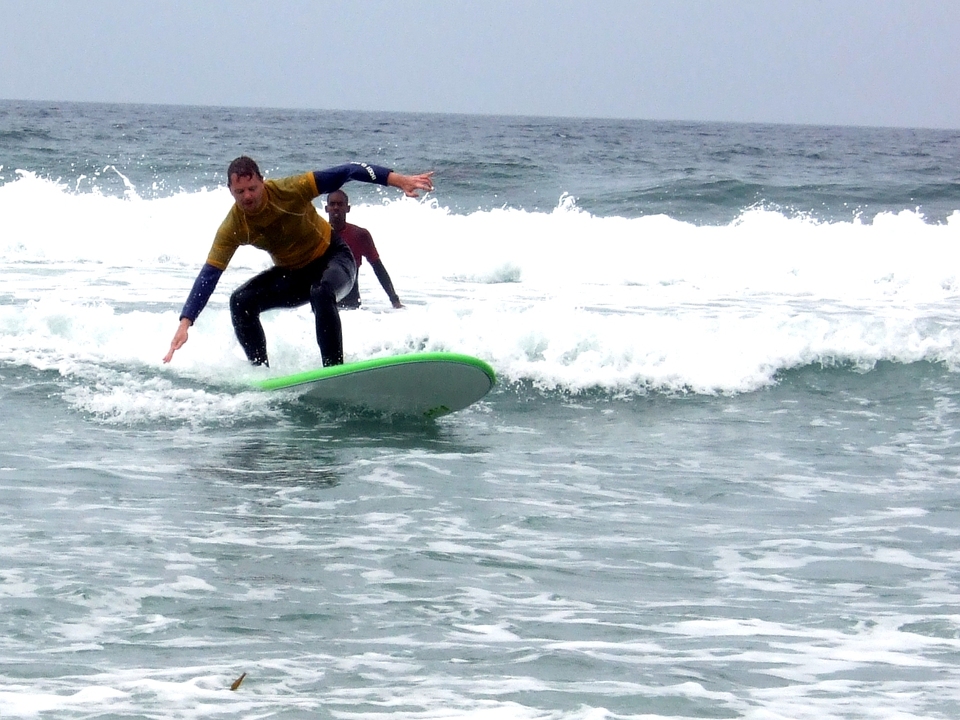
The wave, which was already breaking, caught the board shortly afterward, accelerated it surprisingly well, and I first crouched down and then stood up, riding a few meters on the receding wave. Angelika hadn't even set up the camera yet. Then there were many failed attempts with spectacular falls into the water, but after a while, it worked reliably.
With a wetsuit on, you can comfortably stay in the ocean water in San Diego (at least in September). Wearing only swimming trunks, it takes about 10 minutes to immerse yourself more than halfway, as the cold shock is quite intense. When you first dive in, it feels like a jolt. Once you start jumping around in the waves, it's bearable, but after 20 minutes, your legs start to go numb. A wetsuit, on the other hand, allows only a thin layer of water between the neoprene of the suit and your skin, which your body can easily warm up. Additionally, the sun heats up the black suit, allowing you to splash around in 18-degree Celsius water for hours.

In the summer, temperatures in San Diego remain close to 30 degrees Celsius well into the night. As is common in cities with pleasant climates, many homeless people settle in San Diego and hang around the beach. The authorities, of course, do not like this because too many homeless people can deter tourists. Therefore, uniformed officers patrol all day in electric cars and move the homeless along if about two hours have passed. In San Francisco, parking enforcement officers draw a chalk line on the tires of parked vehicles to determine, in areas without parking meters, who has just arrived and who has already exceeded the maximum parking duration of two hours. Perhaps the officers moving the homeless use a similar method, but unfortunately, we haven't figured it out.