
Angelika In the age of emails, Twitter, Facebook, mobile phones, and electronic greeting cards, we hardly get any handwritten letters in the mail anymore. Letter writing seems to be on the brink of extinction, just like vinyl records and film photography.
Now, I am absolutely not an email grouch, but I have always enjoyed writing and receiving letters. In my tender youth, for example, I had various pen pals, and even when Michael and I had just met, we exchanged letters at least once a week because we lived in different cities, there was no internet yet, and Michael hated talking on the phone. I also belong to the crazy ones who never throw away a proper letter, and over the years, various boxes have accumulated. Much to Michael's dismay, I also print out all emails that have a letter-like character. It's so nice to read old letters!
I even enrolled in several courses on the subject of mail art (postal art) at the "Center for the Book" for this reason (Rundbrief 04/2007). In the conventional sense, mail art means that artworks and objects are sent using the postal service: letters, cards, objects -- and even the envelope itself -- become works of art.
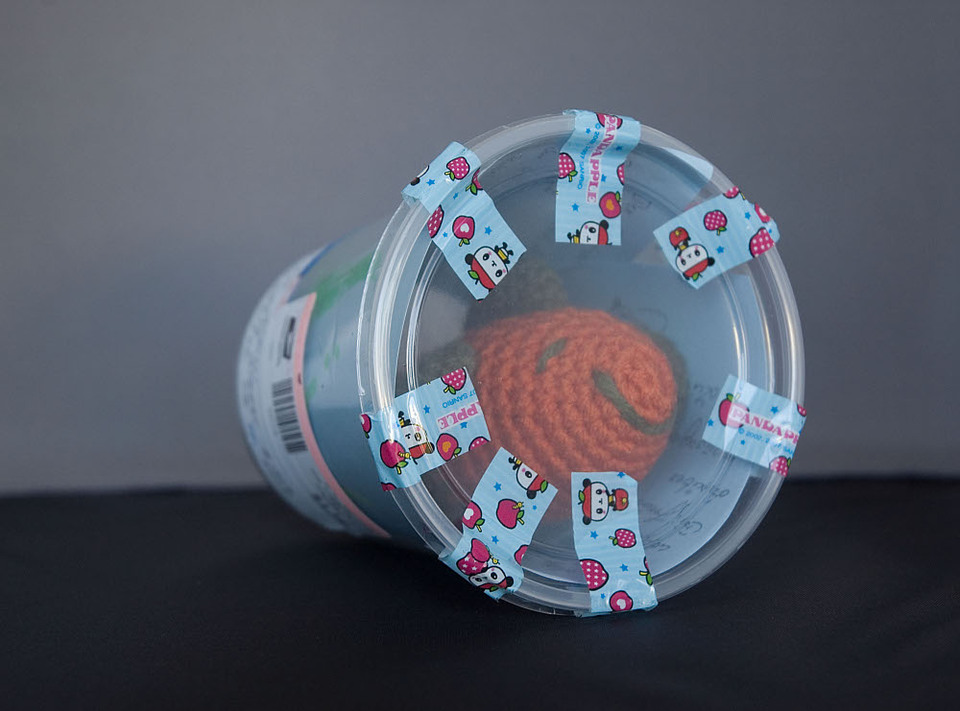
Many mail art enthusiasts love to test what crazy things can make their way through the postal system. This is a particular challenge in the age of terror fears and ever-advancing automation, with scanners, sorting machines, and conveyor belts doing the work. For example, my friend Conny sent me a kitchen sponge sealed in plastic wrap and a large plastic cup with a homemade, crocheted fish. The American postal service didn't hold back and delivered everything properly. Our mailman even rang the doorbell because the so-called "aquarium" didn't fit in our mailbox. By the way, he thought the idea was absolutely brilliant. One of the golden rules of mail art is to get along well with your mail carrier and your post office.
The mail art movement, much like the early days of the internet before it was used by everyone, has almost anarchic traits. Commercial interests are frowned upon, as mail art is understood as a counter-movement to the art and gallery scene. Anyone can engage in mail art. There is no committee that decides who belongs to the circle of mail artists and who does not. The sender has no expectations of the recipient, although it is considered good etiquette for the recipient to send something back to the sender.
With the so-called mail art calls Someone sets a theme and calls on mail art enthusiasts to create and submit mail art related to that theme. Example themes include: ham, view from the window, self-portraits, flying. These calls come from both individuals and museums or galleries. However, the following rules apply: there is no jury, no fees are charged, and submissions are not returned. If an exhibition takes place, everyone who submits something is automatically included in the exhibition. The organizer of the "mail art call" then sends a documentation of the project in the form of a small catalog or booklet to all participants, which is also an unwritten rule.
Mail art is, of course, not just an American phenomenon but is practiced worldwide. However, the American collage artist Ray Johnson is considered the founding father of mail art. As early as the late 1950s, he sent art projects to friends and acquaintances with instructions to add to them, further develop them, and then send them back or pass them on.
Two other American artists have become known for their own creations of postage stamps: Michael Thompson and Michael Hernandez de Luna. Both not only produce stamps with highly political or controversial content but also stick them on letters, hoping that the postal service won't notice and will deliver them. Franking mail with fake stamps ("faux postage") is, of course, illegal, and the two artists are therefore on the American postal service's blacklist. There are many mail art artists who design their own stamps, but most of them also attach the real stamps alongside the fake ones to avoid running afoul of the law.
Greetings from the city of noble arts:
Angelika und Michael