
Michael In California and most other states, as is well known, the police do not simply set up speed traps to then greedily send out payment notices for fines by mail. Instead, the officer conducting the radar measurement boldly turns on the light bar and siren of their Ford "Crown Victoria," revs the engine, and chases after the speeder to force them to stop. When the speeder pulls over to the right on the shoulder, the officer parks their car just behind, gets out, usually approaches the passenger window, and asks for "License and Registration," meaning driver's license and vehicle documents. Tip: Never forget your driver's license at home. If you can't show it, the officer is allowed to have the car towed immediately! However, they will only do this in exceptional cases, because if it later turns out that the vehicle was driven by a legitimate license holder, the police department must reimburse the costs. After the uniformed officer has identified the driver, he then proceeds to ask questions, and manually fills out a "ticket" form in a process that takes about 15 minutes.
If a driver is operating the vehicle within the traffic regulations and the vehicle is in perfect condition, police officers are actually prohibited from stopping the car. That's why all the drunk drivers tend to drive a bit slower than the speed limit, which you can often witness late at night on Freeways 101 and 280. If a siren starts wailing behind you, you can assume that something is up. However, police officers are very creative when it comes to finding a reason to stop a vehicle. A broken brake light is enough, and in some Hollywood movies, the officer might even break the headlight: "Which brake light? Oh, that one (crash) there!" But, of course, you shouldn't believe everything you see in the movies.
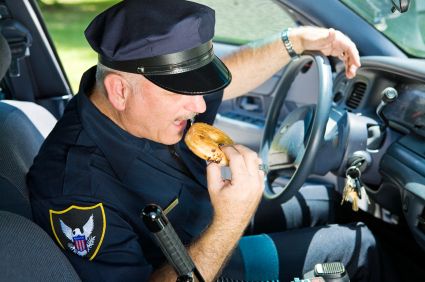
In America, people commonly refer to police officers as "cops." This is by no means presumptuous or offensive; in fact, police officers often refer to each other this way. However, the official term for those who drive patrol cars is "officer," and if you want to be very polite, you should address them as such. You should never call a police officer "sir," as this is considered sycophantic and might make them suspicious. On the other hand, the police officer will address the person they have stopped as "sir" or "madam." So, if you want to ask for the nearest donut shop, you simply say, "Officer, can you direct me to the next donut shop?" and hopefully, the officer will point you in the right direction.
Okay, this question might come across as somewhat provocative, because practically all American cop jokes start with a law enforcement officer eating these American donuts. We happen to live directly across from a 24-hour donut shop, and I can confirm that this is by no means a clichee: American police officers are absolutely fond of these sweet little things.

Another note: The derogatory term "Bulle" in Germany doesn't have the same effect in America, because Americans associate bulls with strength and endurance. A strong stock market rally is called a "bull market," and basketball teams like the Chicago Bulls choose this name intentionally. Americans are truly unaware of the connotations of brute force and stupidity associated with the term in the German language.
No, to insult an American police officer, one uses the word "pig." This is not even punishable, as the American Constitution grants citizens almost unlimited freedom of speech (Rundbrief 12/2000). However, the offended police officer might then employ all legal, semi-legal, and sometimes illegal means to get back at the offender. Just take a look at the secretly filmed video of a skateboarder arrested in San Francisco to catch a glimpse of the aggressiveness of American police officers.
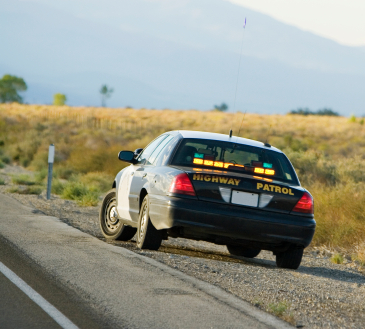
A "ticket" falls into one of three categories: a "Parking Violation" (a harmless parking ticket that you simply pay), a "Notice to Appear," or a "Notice to Correct." If a cop catches a speeder with their radar gun, they issue a "Notice to Appear," which is a summons to appear in court. You heard correctly, every so-called "Moving Violation" (this includes running a stop sign or making an illegal turn) is adjudicated in traffic court. You don't always have to appear there, but more on that later.
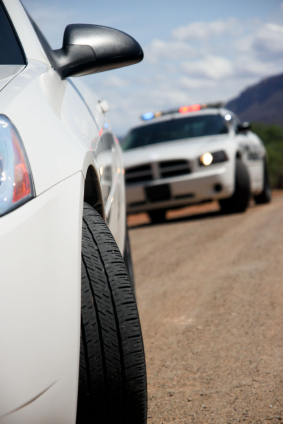
If the police officer stopped the car only because a brake light was broken, the driver receives a "Notice to Correct," commonly known as a "Fix-it Ticket." This requires the driver to repair the broken light within a specified period. After completing the repair, the driver also pays the penalty fee, and then there is no further legal action.
Once the police officer has finished writing the ticket, he asks the driver to sign it on the spot. By signing, the driver does not admit any guilt but merely agrees to appear in court. Caution: Anyone who refuses to sign will be promptly arrested and may have to spend the night (and possibly even the weekend) in custody. This is because when the traffic officer turns on his siren, he is effectively placing the speeder under arrest. Instead of arresting harmless speeders, filling up jails, and incurring costs, the "ticket" system was created to expedite the legal process from arrest to sentencing. The driver does not have to pay bail to remain free until the court hearing, but by signing, he confirms his agreement to appear on the scheduled date.
The fine to be paid later consists of a base fine and a penalty assessment, with the latter adding a multiple to the actual fine. With this surcharge, municipalities officially support police training, contribute money to the state, and finance the construction of courthouses and prisons. For example, if you drive 85 where 65 is allowed, the base fine is $50, but with all the surcharges, it quickly becomes $290. In return, the new courthouse gets a first-class white paint job, and hordes of new police trainees undergo training to become radar gun operators.
Here it comes: Technically speaking, this fine is the bail in a summary proceeding! If the driver does not contest the ticket afterwards, they simply do not schedule a court date, but instead pay the fine and leave this "bail" with the court by not appearing at the non-existent court date. This effectively concludes the "proceedings."
If you actually want to contest the ticket, you call the phone number listed on the fine notice and request a court date. At this date, the driver must then appear, failing to do so would be a serious offense. The proceedings usually take place months later at the "Superior Court" closest to the location of the offense.
In court, a ticket is only valid if the driver acted either intentionally or with gross negligence (criminally negligent). The police officer, who also appears in court, must prove this. If the police officer does not appear at the scheduled court date, the defendant is automatically acquitted. Various rumors are circulating on the internet, claiming that police officers often do not appear in court because it cuts into their time off, or that some clever traffic offenders call the police station to inquire about the officer's vacation times and then request to reschedule the hearing to that date--but supposedly, all of this is nonsense.
To expedite legal proceedings, some cops try to create a friendly impression even while writing a ticket. They have been thoroughly trained to elicit confessions from stopped drivers without their knowledge. The facts they gather are noted on the ticket during the traffic stop to establish an airtight case in court later.

Experts warn: "A police officer with a ticket book in hand is never your friend!" A typical question is: "Do you know how fast you were going?" If you respond with, "Well, a bit faster than allowed," the officer will immediately start scribbling into their book, as the driver has just admitted to speeding and cannot deny it later in court. It is supposedly better to simply answer the question with "Yes, I do." If the cop presses further and you plan to outsmart him in court, you should politely but firmly say, "I don't want to talk about it." This is, of course, a balancing act, as angering the officer could lead to significant trouble. As mentioned earlier, American police officers can become very aggressive if you mess with them. The same applies to the question, "Have you been drinking?" Most drivers respond with, "Just one or two beers, no more." According to expert advice, this is wrong if you have indeed drunk too much. In such a precarious situation, it is also supposedly better to say you don't want to talk about it.
And under no circumstances should you inform the police officer that you plan to contest the ticket in court, because then he will make sure to document the situation very precisely and memorize every detail, so that he can later provide the correct answers in court as if on cue. If you say nothing, the officer often issues hundreds of tickets by the time the court date is scheduled months later and probably only vaguely remembers a single one. If he then gets the facts mixed up in court or contradicts himself, the judge often acquits the speeder.
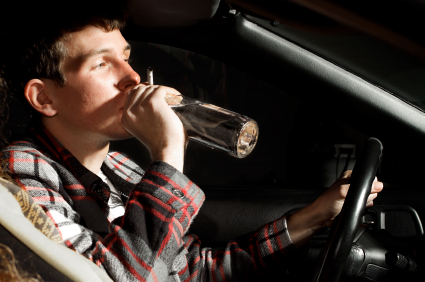
A police officer is not allowed to search the car, by the way. However, if there is a lit joint in the ashtray or an empty beer can on the passenger seat, he is allowed to collect these as evidence. In general, California traffic law does not permit any open containers with alcoholic beverages in the driver's compartment. If the officer smells something suspicious, he will ask if the driver consents to a search. If the driver says "No," the officer may only search if he has "probable cause" to believe that there are weapons or illegal items inside the car.
Here are some facts from the world of the California Highway Patrol: The police vehemently deny that there are monthly quotas for officers regarding the number of tickets to be issued. Rumor has it, however, that law enforcement becomes particularly busy at the end of the month because, like all Americans, they tend to procrastinate on fulfilling their duties until it absolutely can't be delayed any longer. Whether or not the quotas officially exist, every officer is evaluated, and a radar operator who issues fewer tickets than their colleagues will undoubtedly be dismissed at some point. There is certainly a deadline by which the supervisor writes evaluations, so there are also periods when officers are more diligent in issuing tickets than usual.
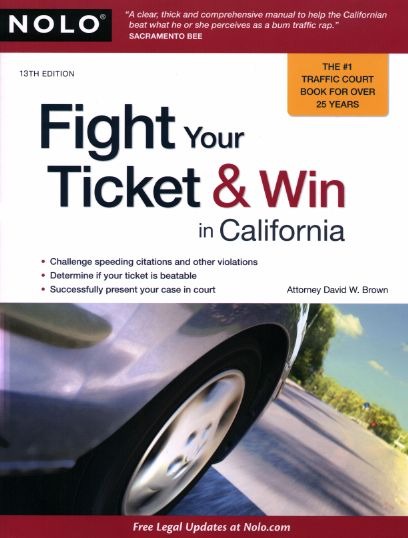
You might be wondering how do I know all this? In the book. Fight your Ticket and Win in California (Figure 8), a lawyer specializing in traffic law describes the laws and the unwritten rules. I also recommend the website highwayrobbery.net which warns against the scams of speed camera operators and provides information on how to contest their exorbitant fines.
By the way, I personally have never received a ticket for speeding. When 65 mph (105 km/h) is allowed, I usually set the cruise control to 80 mph (130 km/h) and focus on keeping the car in the lane and observing the scenery both ahead and through the rearview mirror. Since ancient times, the Ford company has been supplying police regiments with the "Crown Victoria" model for traffic control. Of course, they install quite a powerful engine in the standard model so that police officers can easily keep up with speeders. With some practice, you can recognize the model from a distance in the rearview mirror, even at night, because the headlights have a distinctive shape. Other models of police cruisers do exist, but they are relatively rare in our area.
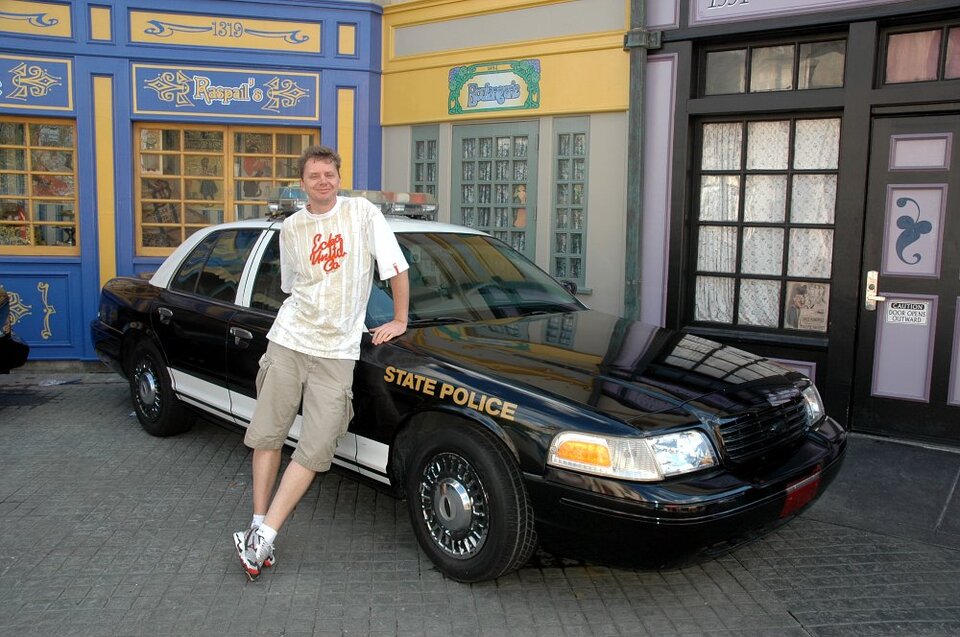
Not all radar cops position themselves on the side of the road. Sometimes a police car approaches much faster from behind than the rest of the traffic, which immediately catches the eye in the rearview mirror. And be careful: some police officers also drive in the far-right lane, slightly slower than the speed limit. They are waiting for someone to zoom past five lanes over to the left at breakneck speed. You have to be as watchful as a hawk--but that's always a good idea in traffic. Many Americans are already fully occupied with driving straight and fail to maintain this all-around awareness--and blindly speed into speed traps.
With my method, I reach my destination faster than most speeders, can practically see all speed traps kilometers in advance, and the probability of being pulled over for going 15 mph over the limit is maybe 50/50. By the way, the other day I sped past an exceptionally well-hidden speed trap on Freeway 101 at 82 mph (132 km/h), but the cop was probably waiting for bigger offenders, as he didn't make a move.