
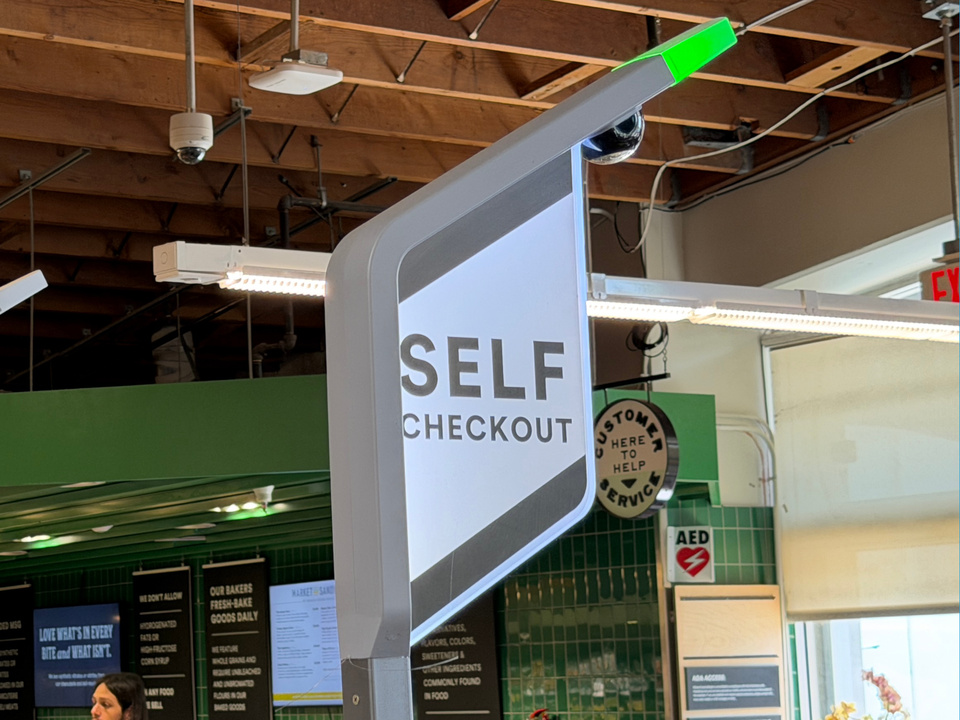
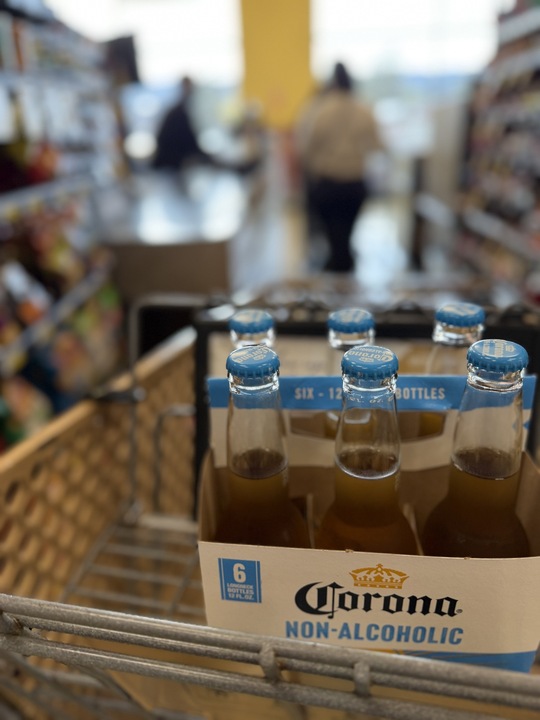
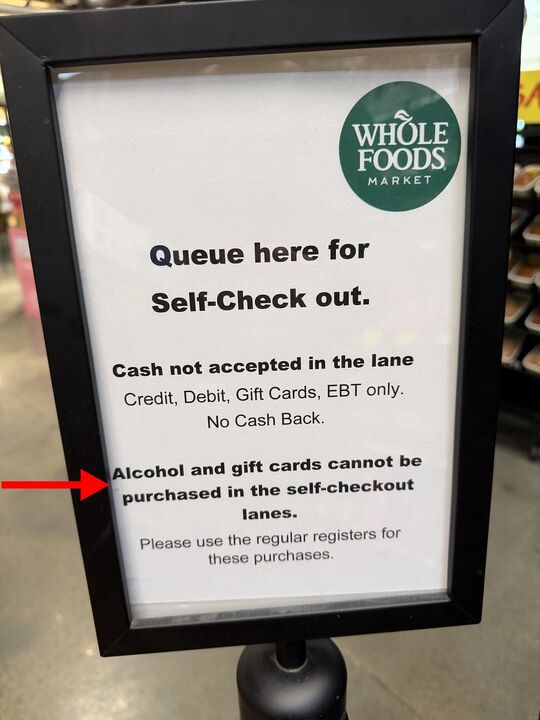
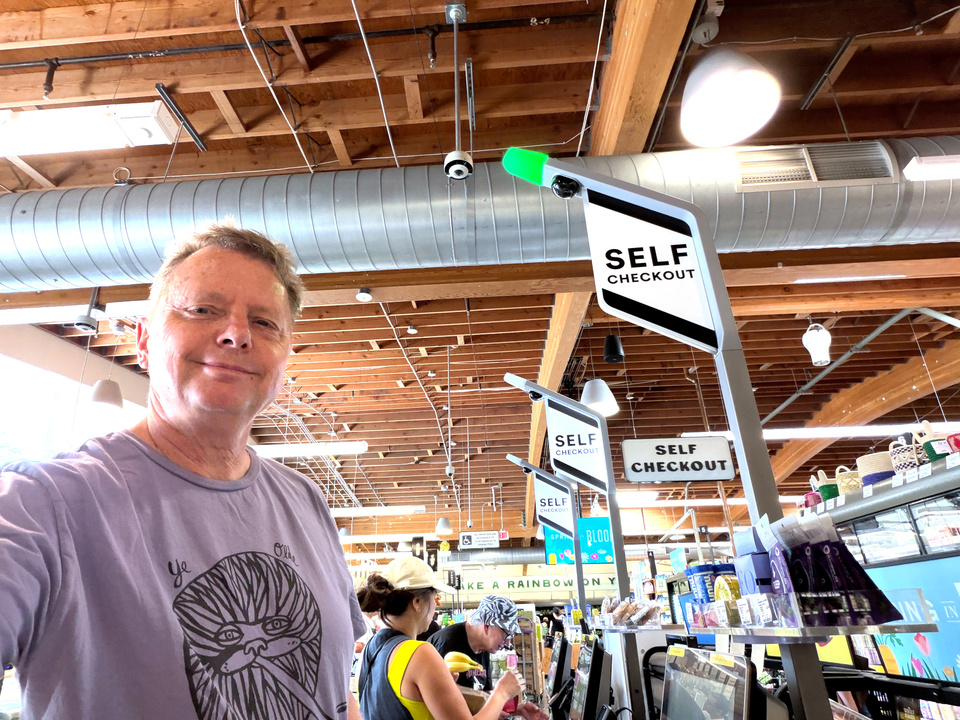
Michael As newsletter readers, you are all incredibly well-educated and surely know that you cannot buy alcoholic beverages anywhere in the USA if you are under 21. And since even non-alcoholic beer usually contains traces of alcohol, it's not available for the young whippersnappers either. But how does this work at the now ubiquitous self-checkout lanes in supermarkets? For example, at our local Whole Foods, there's a sign next to the scanners (illustration 4) stating that if you have alcohol in your cart, you need to go to the regular staffed checkout. And I have personally tested that this also applies to non-alcoholic beer. The self-checkout machine locked up, and an employee came running to direct me to the staffed checkout.
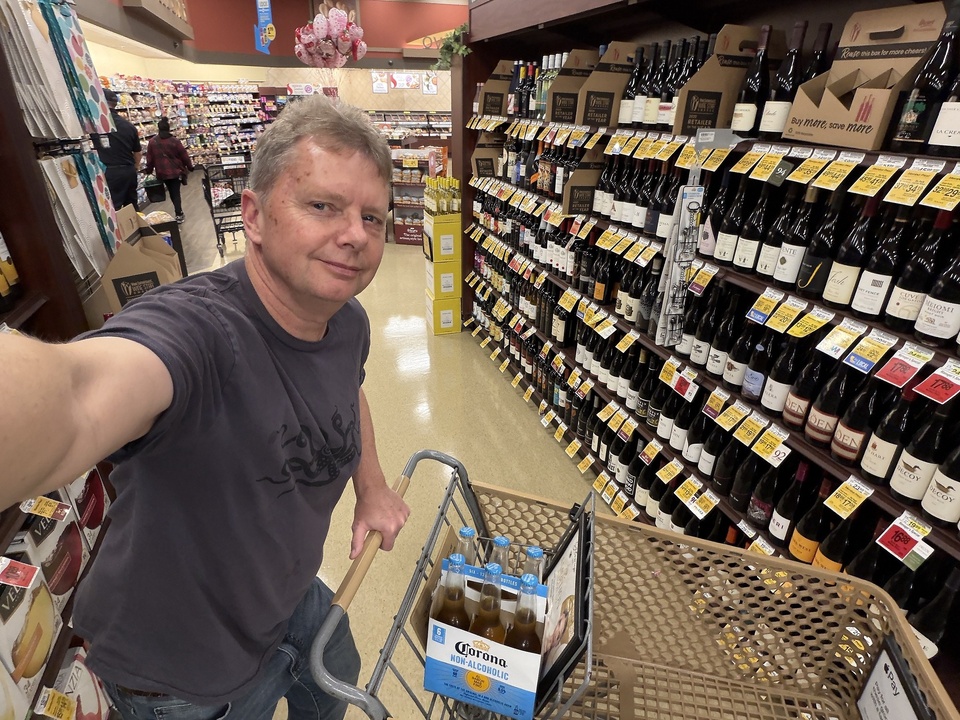
While on vacation in Hawaii, there was one time when I wanted to purchase a six-pack of beer at a supermarket, and an employee pointed out that instead of waiting in the long line at the staffed checkout, I could go over to the self-checkout. Puzzled, I asked if that was possible with beer, and he confirmed it, explaining that the self-checkout would trigger a notification, prompting an employee to come over and verify my age. And indeed, when I scanned the six-pack, a prompt appeared, and an employee came over, gave me a quick look, apparently deemed me old enough (outrageous!), and entered a code so that the scanner could proceed with the payment process.
Sensing a good story, I began to investigate at home. And, indeed, California had already in 2011 via Assembly Bill 183 Section 23394.7 passed a law, which generally prohibited the sale of alcohol at self-service checkouts. The reasons given were that otherwise, young people could more easily obtain alcohol, that people who are already extremely drunk could indulge further without human intervention, and that this would open the door to alcohol theft.
Two years later, in 2013, some supermarket operators thought to themselves, "Darn it, but we can also conduct checks in the self-service area, it has nothing to do with the cash registers," and filed a lawsuit. But, no, the California District Court of Appeal was stubborn and decided that alcohol in California should fundamentally only be sold at manned checkouts, and all supermarkets which started operating self-service checkouts with human age verification when needed would have to cease this immediately.
In this example, you can see that in California, it is not enough to have a law prohibiting the sale of alcohol to those under 21. Rather, the state must explicitly ensure through legislation that it is technically impossible for supermarkets to violate existing laws. This also explains why California is seen as a "nanny state" in the rest of the USA, and why our governor, Gavin Newsom, who is aiming for the presidency in 2028, will have a hard time gaining traction outside of California.