
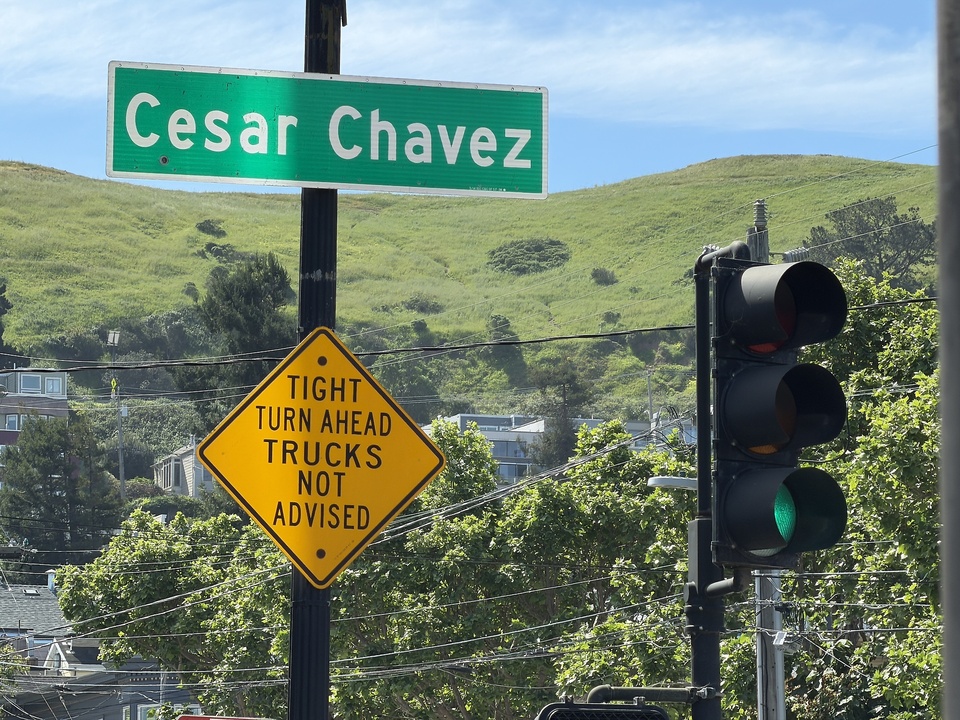
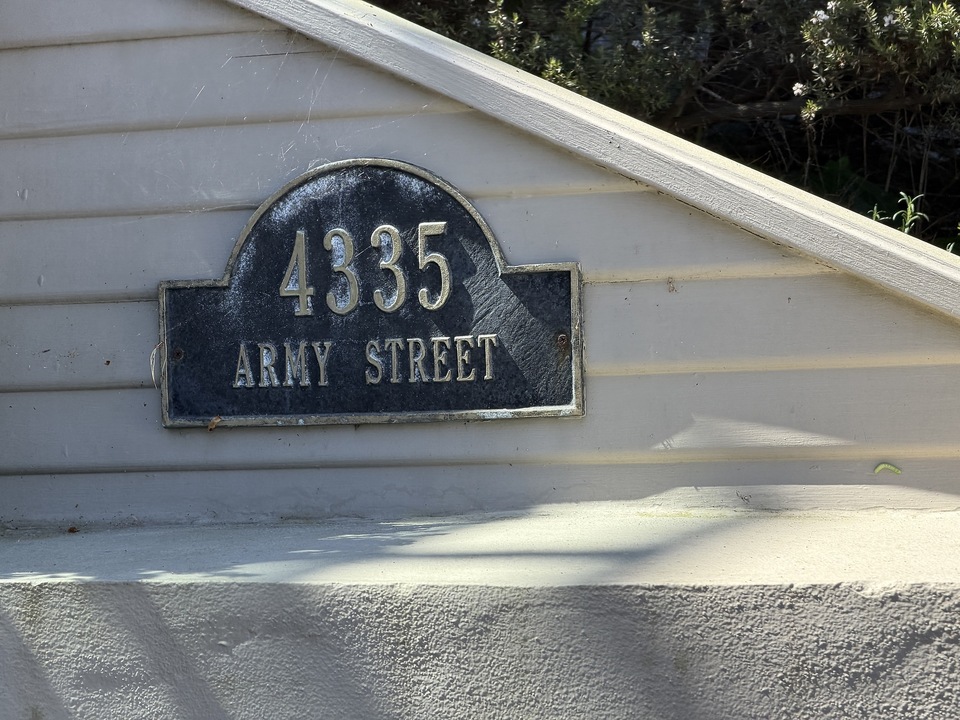
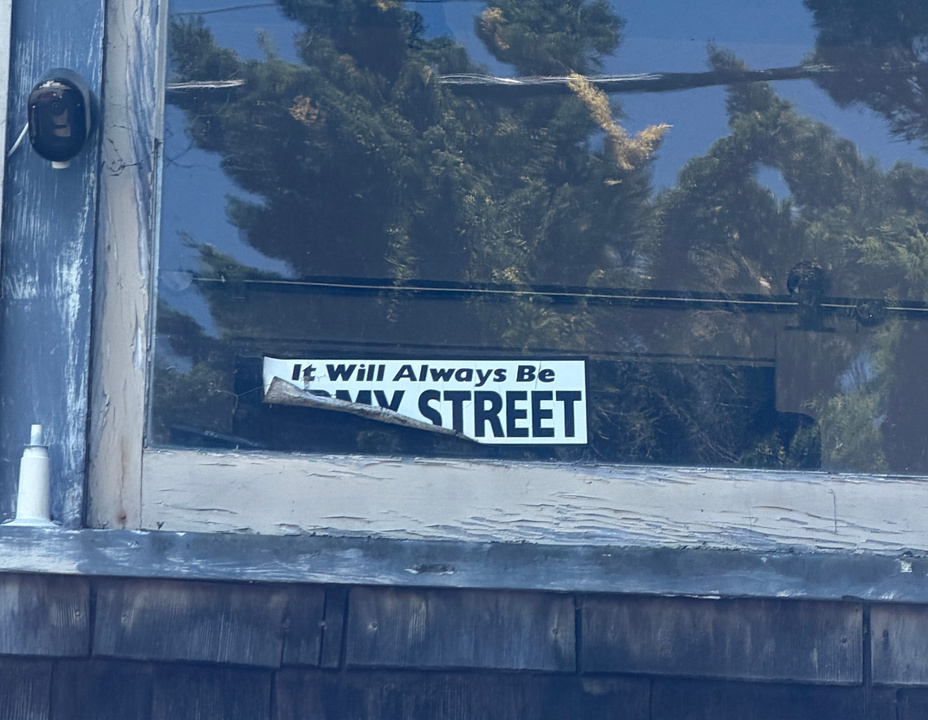
Angelika I must confess that before our time in San Francisco, I was not familiar with Cesar Chavez. However, the name quickly caught my attention. I still remember how confused I was when I first drove along Cesar Chavez Street. At that time, the street actually had two names. Under "Cesar Chavez," it said "Army Street" in parentheses. That seemed somewhat strange to me. Soon I learned that the street had been renamed from Army Street to Cesar Chavez in 1995, just a year before our arrival. However, this name change was preceded by intense debates, as not everyone wanted it. I also clearly remember the strictly Republican real estate office on 24th Street in our neighborhood, which no longer exists, and the owner, for years, had displayed an original 'Army Street' sign in the shop window.
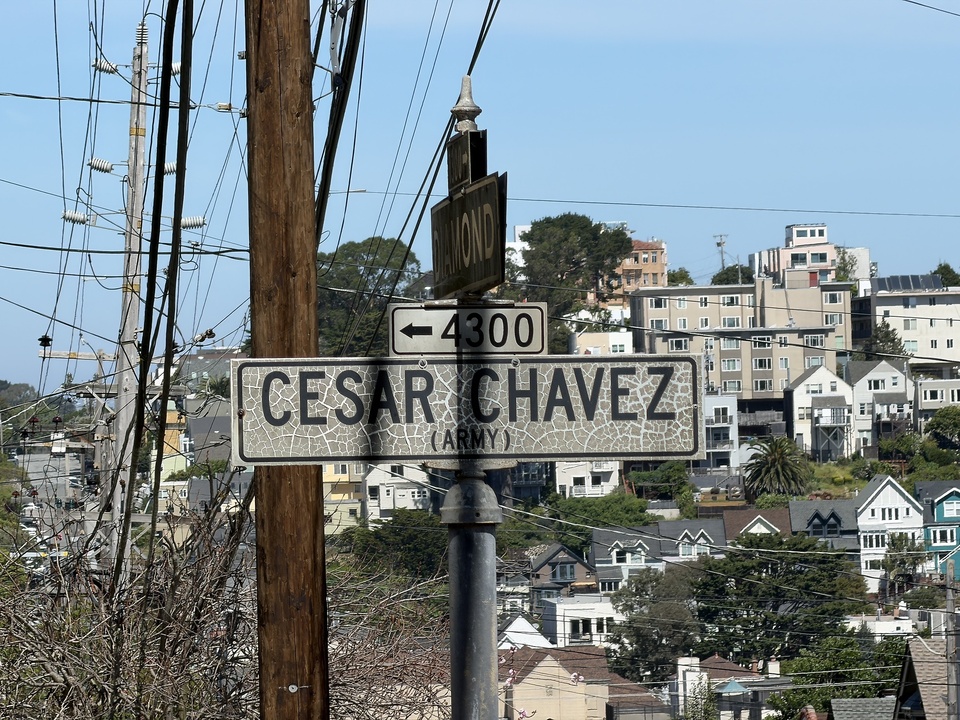
Cesar Chavez Street is approximately three miles long and runs from west to east through the city, from Douglass Street in Noe Valley to Pier 80 by the water. In San Francisco, renaming a street is not easy. It involves a lengthy process: an application must be submitted to the Public Works Department, either by the city's representatives or its residents. Hearings and signature collections follow before anything happens. Even after a renaming, both names remain on the street signs for five years.
It quickly became clear to me that Cesar Chavez is regarded as something of a Californian national hero. In San Francisco, there is still a Cesar Chavez Elementary School with a huge mural, and there is a uniquely Californian national holiday on March 31st for the man, although hardly anyone gets a day off on this holiday.
But who exactly was Cesar Chavez? He was an American civil rights and labor leader who primarily advocated for the rights of farmworkers. In the 1960s and 1970s, he organized strikes and boycotts to fight for better working conditions, fair wages, and basic rights for mostly poorly paid farmworkers.
Anyone who knows California well understands that it is not just made up of laid-back coastal towns where surfers gather, or well-known big cities like San Francisco and Los Angeles, and the famous Lake Tahoe. Instead, in the state's central region around Fresno (San Joaquin Valley) and Salinas (Salinas Valley), there is vast farmland often described as the breadbasket of the USA. However, in California, grain is generally not grown; instead, a variety of fruits, vegetables, and especially nuts are cultivated.
According to the official statistic, California produces 99% of the almonds, walnuts, and pistachios grown in the USA. Book author John Steinbeck already mentioned this in his world-famous novel "Grapes of Wrath". The novel, published in 1939 and still absolutely worth reading, draws attention to the devastating conditions of the so-called migrant workers in California. At that time, they came from the American Dust Bowl region and moved from Oklahoma to California, hoping for a better life. However, most were deeply disappointed. Steinbeck's novel is set during the time of the "Great Depression" and deals with themes such as the exploitation of migrant workers, poverty, and poor living and housing conditions.
Decades later, these would be the exact issues that concerned Cesar Chavez. However, in the 1960s, you would more likely find farm workers from Mexico and the Philippines on the fields of California. Cesar Chavez gained great fame through the grape boycott he initiated, where consumers across the country were urged to refrain from buying grapes to put pressure on producers and achieve fairer conditions for farm workers. I find it interesting that both Steinbeck and Chavez focus on grapes (as in the title of his book), even though, of course, dozens of other crops are harvested by workers.
In recent weeks, however, the reputation of the symbolic figure Cesar Chavez has suffered significantly, as the New York Times published several articles with serious allegations after extensive research. Several women had reported to the newspaper that they had been sexually abused by Chavez, some of them as minors. His close associate Dolores Huerta, now 95 years old, revealed that two of her children were conceived while being raped by Cesar Chavez. There had already been rumors for some time that Cesar Chavez's leadership style, especially in the last years of his life, left much to be desired and increasingly slipped into authoritarianism. He had retreated with his followers to the Tehachapi mountain region in California near Keene, lived there quite isolated on the so-called La Paz property, and increasingly succumbed to cult-like practices.
The New York Times article triggered a veritable shockwave, especially in California, and an eager renaming of places and streets began. Cesar Chavez statues were removed. Gavin Newsom, our governor, immediately announced that Cesar Chavez Day would now be called "Farmworkers Day." In San Francisco, the first applications to rename Cesar Chavez Street have already been submitted. But as I said, this will take time, and I doubt that the street will revert to its original name, Army Street.
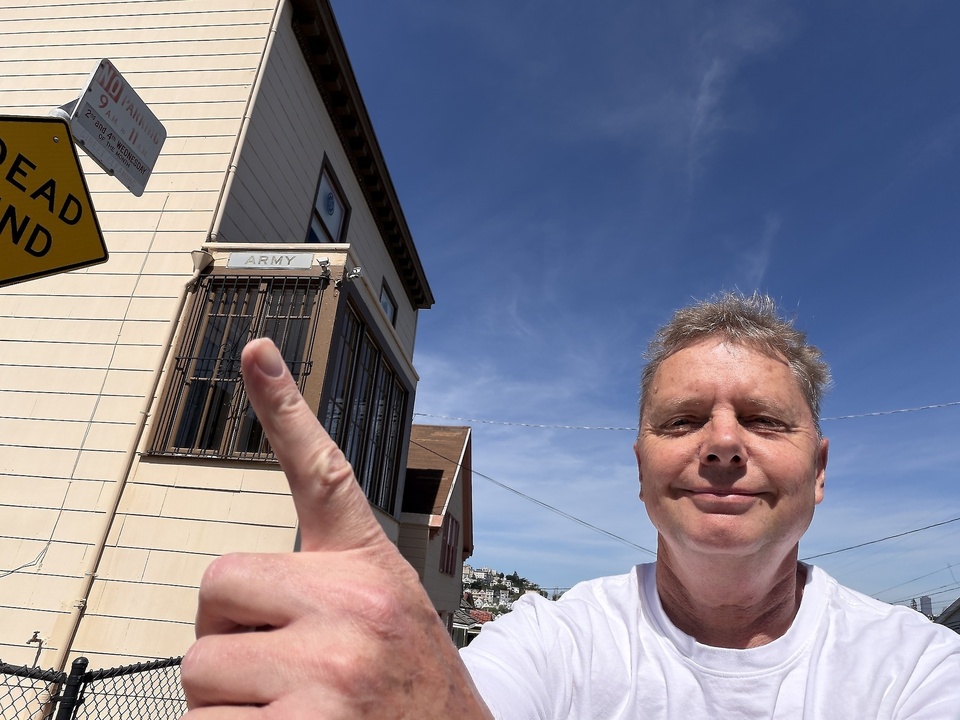
Perhaps streets should only be named neutrally with letters and numbers, which is admittedly a bit boring, and in San Francisco, there are already numbered streets and avenues. In any case, the whole situation is a sad end for a figure that was long considered an undisputed role model.

Michael Now for some entertaining facts about Cesar Chavez Street. Since we live around the corner, we know that the amazing car chase in the Feature Film Bullitt also began on Army Street. In the scene linked above, Steve McQueen makes a U-turn in his green Mustang GT 390 Fastback on Army Street, roughly at the level of Precita Ave, to then roar up the steep Hampshire Street ("vroom, vroom" sputters the 390 at low revs). The chase then flips, and Steve McQueen pursues the gangsters through half the city, with screeching tires and muscle cars taking off like on ramps on San Francisco's steep hilltops. Never gets old.