
Michael I can tell that I'm really getting old by the fact that I just can't wrap my head around why someone would order food from a delivery service. For people from the Millennial or Gen-Z generation, it seems completely normal to have lukewarm food delivered to their unventilated rooms at exorbitant prices. A sandwich shop owner once told me that he sometimes sees people sitting in their rooms in houses across the street, ordering a sandwich from him via an app and having it delivered 20 meters across the street for a three-dollar fee.
At the end of the nineties, just as we had arrived in San Francisco with a bang, bike couriers were considered hot shit. Back then, they were less associated with delivery services, but the internet wasn't as fast as it is today, and companies often had to send important documents or data carriers from location A to location B. In cities with hopeless car traffic like New York City or San Francisco, bike couriers stepped in, daringly weaving through the standstill of rush hour traffic to transport items in grotesquely large flat bags across the city.
The image of the well-trained, tattooed long-haired person who disregarded conventions, fearlessly zipping through the streets of the megalopolis, riding up in the elevator in their outlaw attire along with their bicycle, to the executive floors and their suit wearers, had a coolness factor of over 10,000 and inspired many followers.
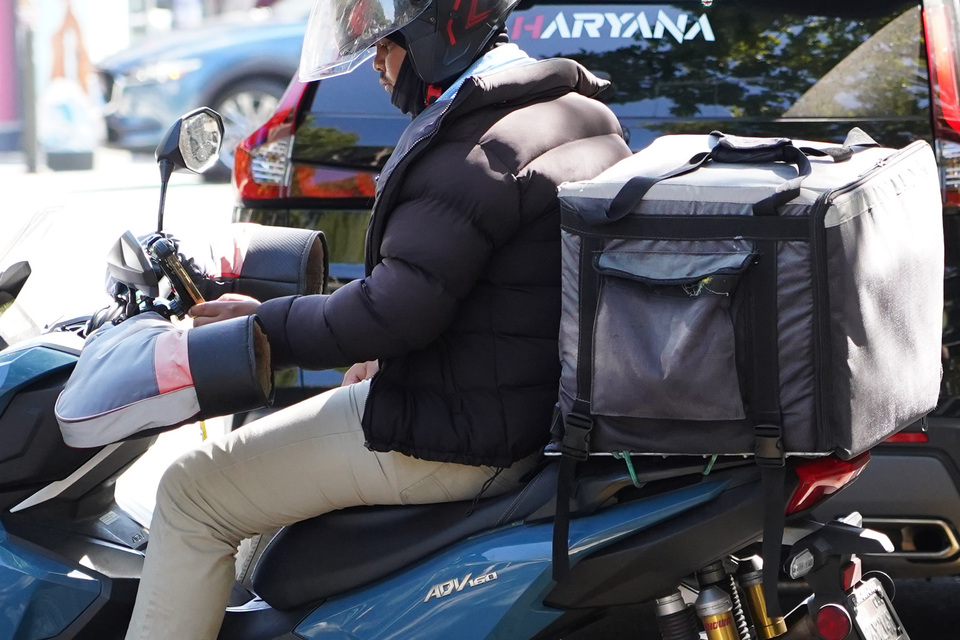
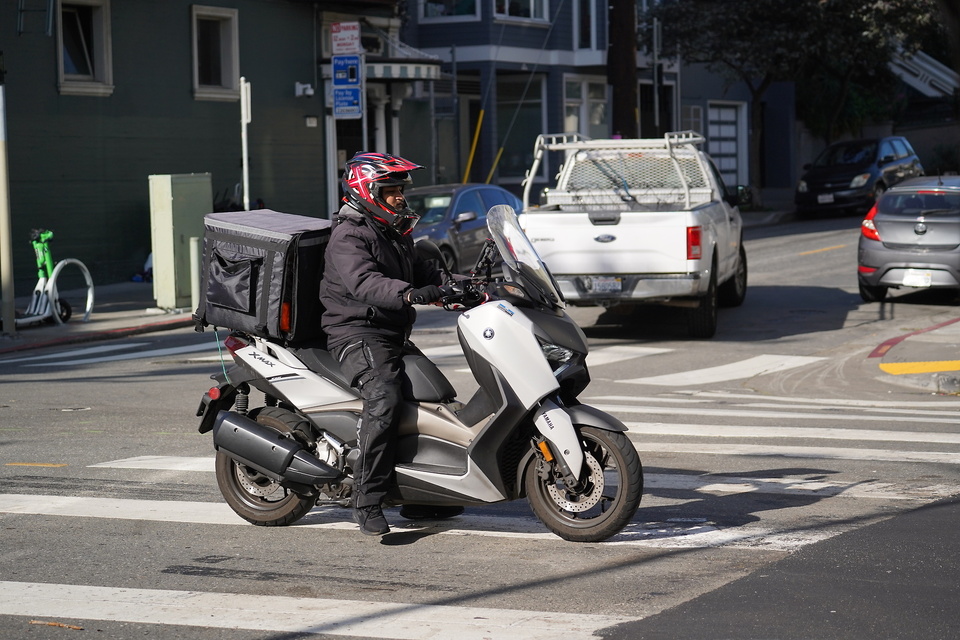
During the Covid era, delivery services became fashionable because sitting in a restaurant suddenly became very out of style. Since bicycle couriers were either too slow or couldn't transport ten cubic feet of food, daring riders of Vespa-like smelly mopeds or couriers on illegally souped-up electric bikes stepped in to fill the gap. This industry has long been established in major cities of the third world; in Bangalore or Delhi, moped men also weave through the streets to deliver warm meals or drinks to their masters.
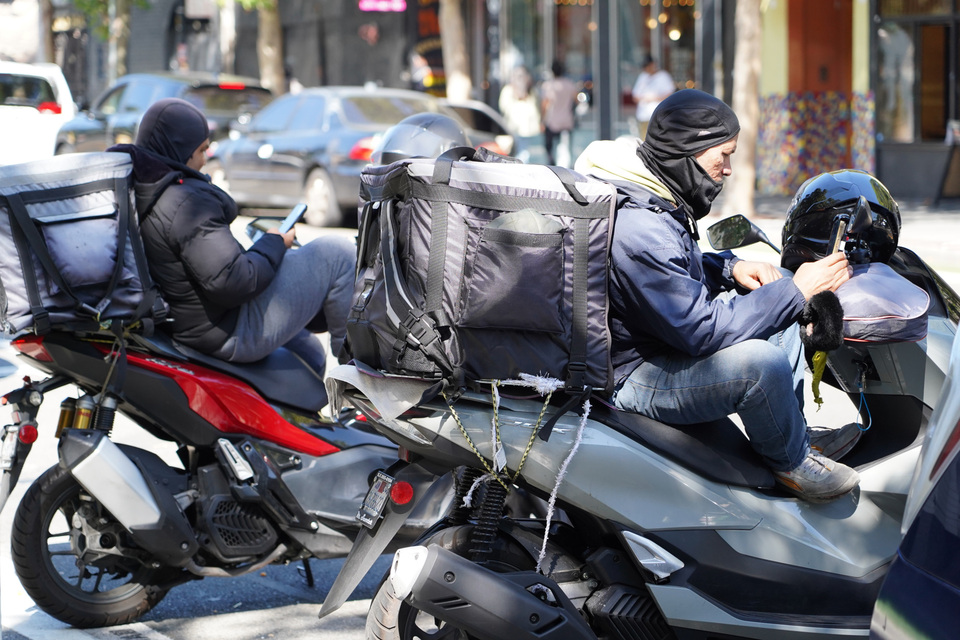
Moped men can be recognized by their handlebar muff sleeves (illustration 5) and the grotesquely large (about ten cubic feet) warming boxes in which they transport the lukewarm mush around. Interestingly, this job is often done by either Latin Americans or Indians. They race through the dense traffic, dressed in arctic grade puffball jackets, and, like madmen, weaving recklessly through standstill traffic. Often, they don't pay attention to traffic but instead keep staring at their phone, which is attached to the moped's handlebar, sometimes even typing on it, probably to arrange the next delivery.
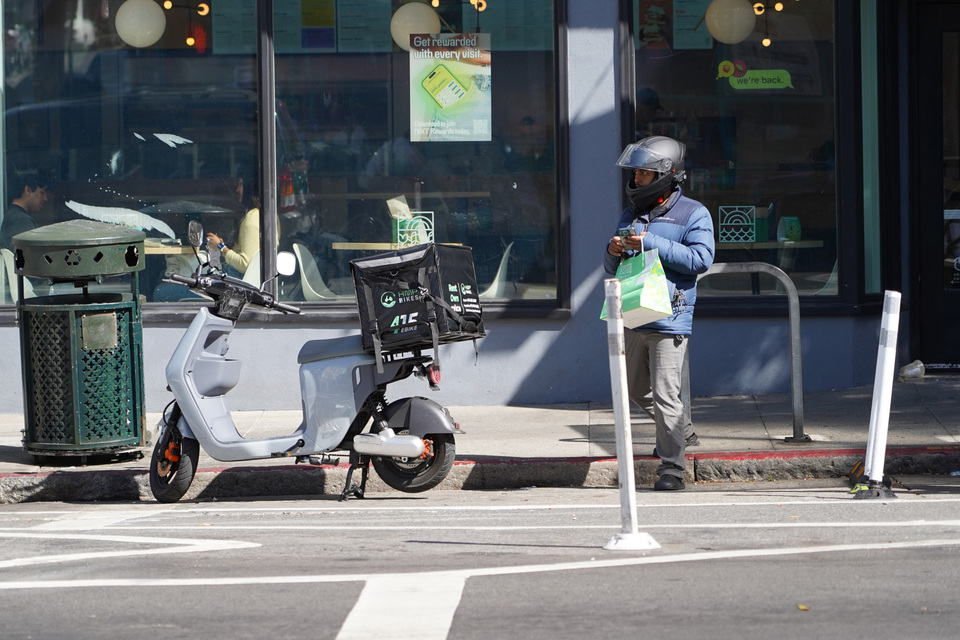
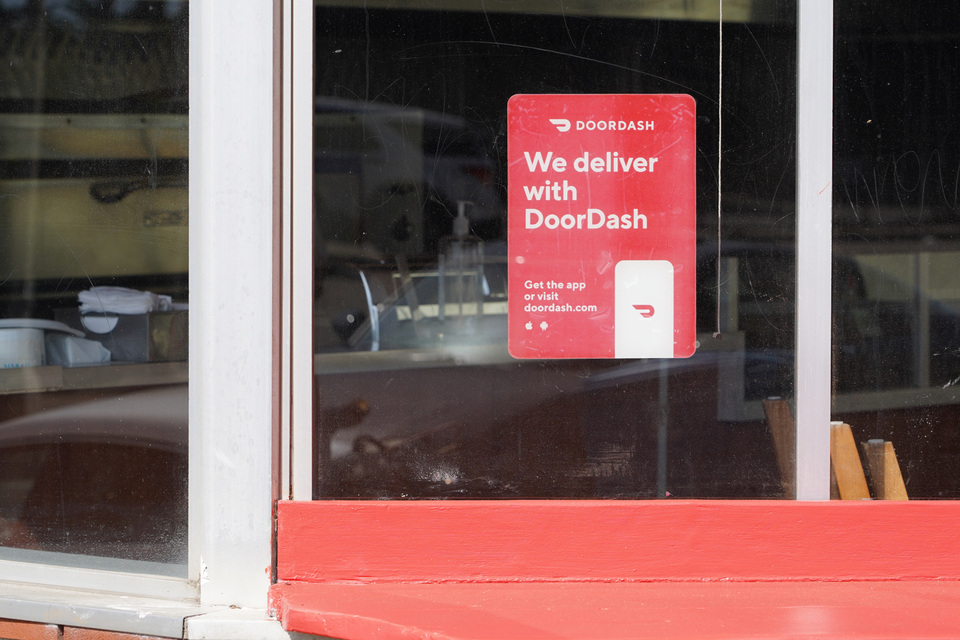
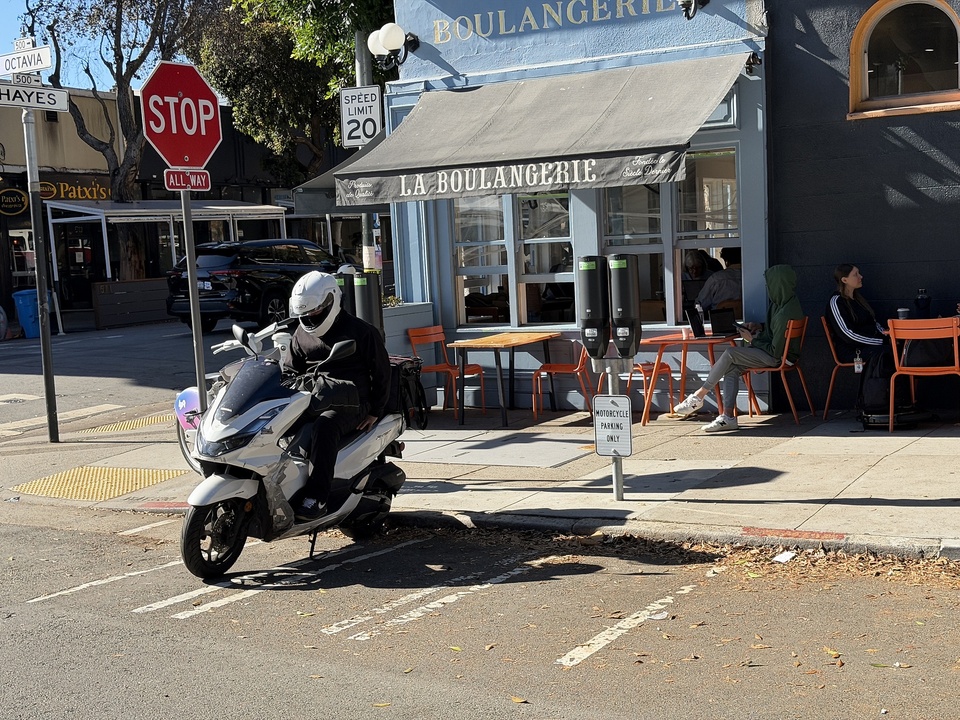
I often observe the lukewarm mush couriers loitering on their delivery mopeds in front of trendy restaurants, where our hipsters apparently prefer to order their food. At this point, the couriers, still inactive, sit on the saddles of their propped-up mopeds, bored, tapping away on their phones and waiting for an order to come in through delivery services like Grubhub, Doordash or Caviar, so they can quickly accept the job on the app. Then they dash into the restaurant, receive the meal packed in boxes and plastic bags, and hop on their moped to speed away. Depending on the hipness of a restaurant and the time of day, it can happen that half a dozen couriers are sitting in their saddles in front, tapping away on their phones. Bizarre!
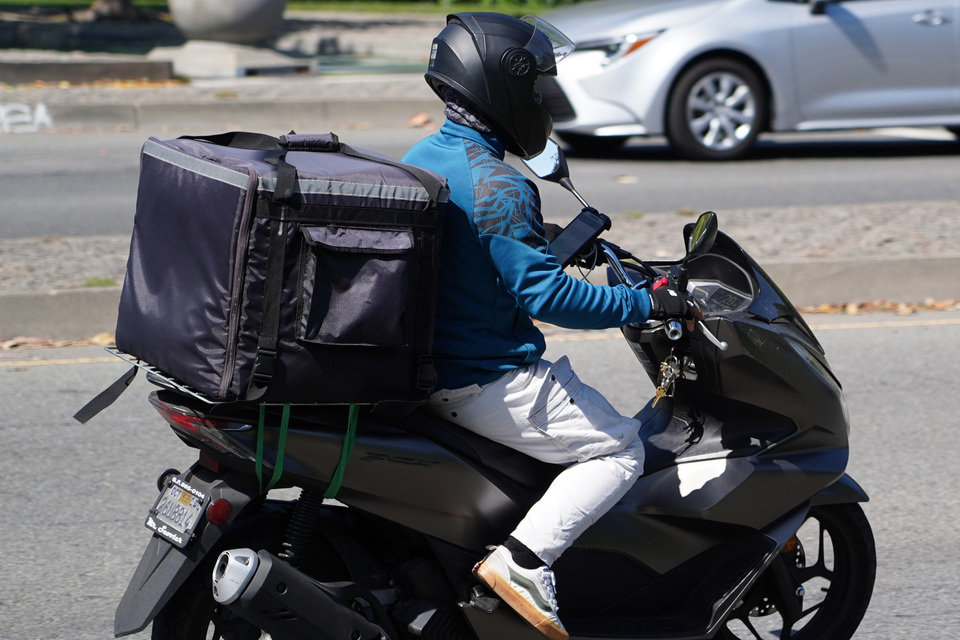
As I said, for me personally, a delivery service would only be interesting in exceptional circumstances. For example, if I had a contagious disease and couldn't leave the house because of unsightly pustules on my face. In all other cases, I would prefer to pick up the meal myself, or cook something nice, or we would just go to a restaurant. But, hey, to each their own, not the same for everyone!