
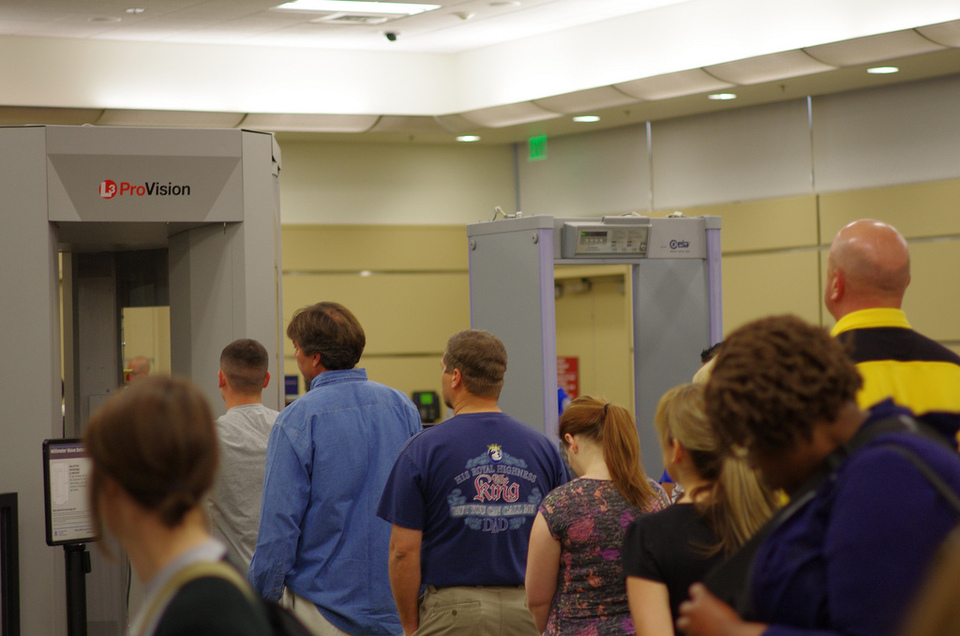
Angelika Every time we fly somewhere from San Francisco, the following ritual takes place at the security check: After we've placed our backpacks and similar items on the conveyor belt, emptied everything from our pockets, and taken off our shoes, the TSA (Transportation Security Administration) officers want to scan us with the full-body scanner, commonly known as the "naked scanner" or "body scanner."
We stubbornly refuse it every time. It is completely legal, and you are then guided around the scanner and directed to the end of the conveyor belt, where a TSA officer performs a so-called "pat-down" (palms-on-body search). The pat-down, which shouldn't actually take longer than 2 minutes, always takes a few minutes because the officer painstakingly explains each step, detailing which areas are being searched and how. They also ask if you would prefer to be searched in a private room, but we always politely decline. You often have to wait around a bit at the airport, as TSA rules state that women can only be searched by female officers and men only by male officers. This is, of course, quite absurd in San Francisco, but rules are rules.
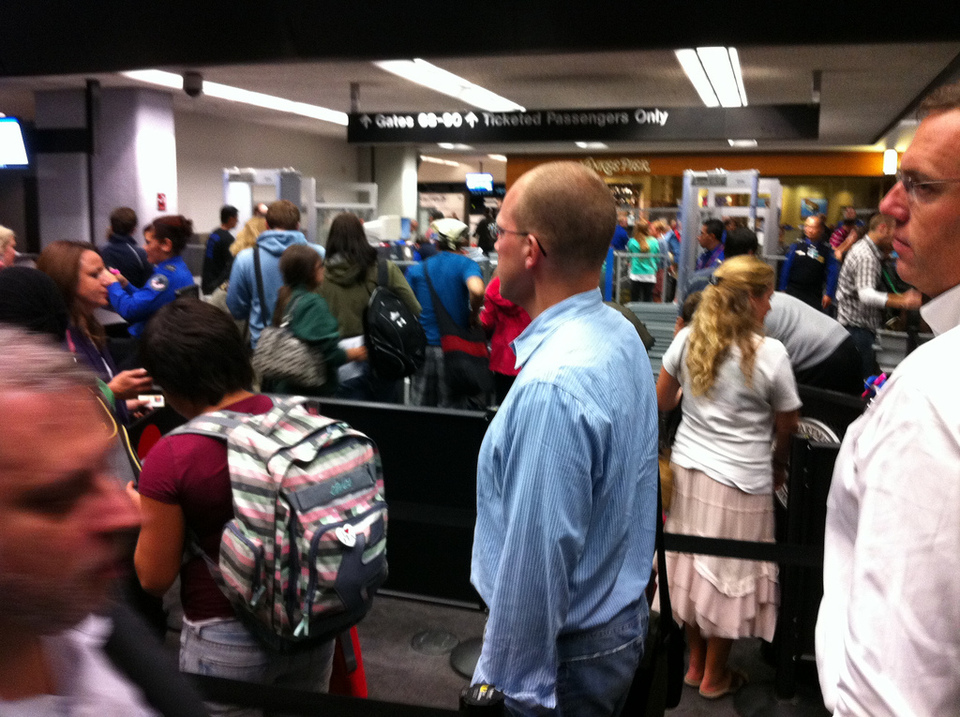
Wordy explanations are common practice in the USA for legal reasons. You might be familiar with this from American TV shows. During every arrest, the so-called Miranda Rights are recited, informing those taken into police custody about their legal rights.
The TSA officers have always been slightly annoyed when we refuse the scanner, and when we dutifully respond to the question of why we are declining the scanner with "for health reasons," the prompt reply is that the scanner does not use radioactivity to scan the body. In San Francisco, at the security checkpoint, there is usually an information board indicating which type of scanner is in use: the "Millimeter Wave Scanner," which uses electromagnetic radiation, or the "Backscatter X-ray" scanner, which operates with X-rays.
Allegedly, the first one mentioned poses no health risks, and the second only exposes travelers to minimal radiation. When I recently mentioned somewhat curtly that the X-ray scanner is no longer used at airports in Europe for health reasons and that I'm just waiting for the other scanner to also fall into disrepute, I only got the response that they didn't know what the Europeans were doing. Michael always says that he refuses the scanner for health reasons, but in reality, he considers the scanners to be ineffective security theater. And who knows what the TSA does with the data? Allegedly, neither the image nor any other data is stored, but the lack of data protection in many areas in the United States raises doubts in this regard.
At our SFO airport, there is now a full-body scanner at almost every security checkpoint. A notable exception is Terminal 3, from where most domestic flights with United Airlines depart, as there is not enough space for the scanners in the security area.