
Angelika Certain things seem unstoppable; like the vinyl record, CDs will eventually disappear. Traditional bookstores are also increasingly vanishing in the USA. This is partly because there is no fixed book price agreement in the USA, leading to ruthless competition. Additionally, many people now order their books online from Amazon, which often sells books up to 40% cheaper.
Initially, this development broke the back of small independent bookstores, as they can only purchase small quantities and thus have little negotiating power when it comes to pricing with publishers. It was only recently that the bookstore "Cover to Cover" in our neighborhood closed for good, after a community initiative had temporarily saved it from bankruptcy in the summer of 2003 with generous loans (Rundbrief 07/2005). Smaller independent bookstores really only have a chance if they specialize, for example by stocking rare books that are not easily found elsewhere.
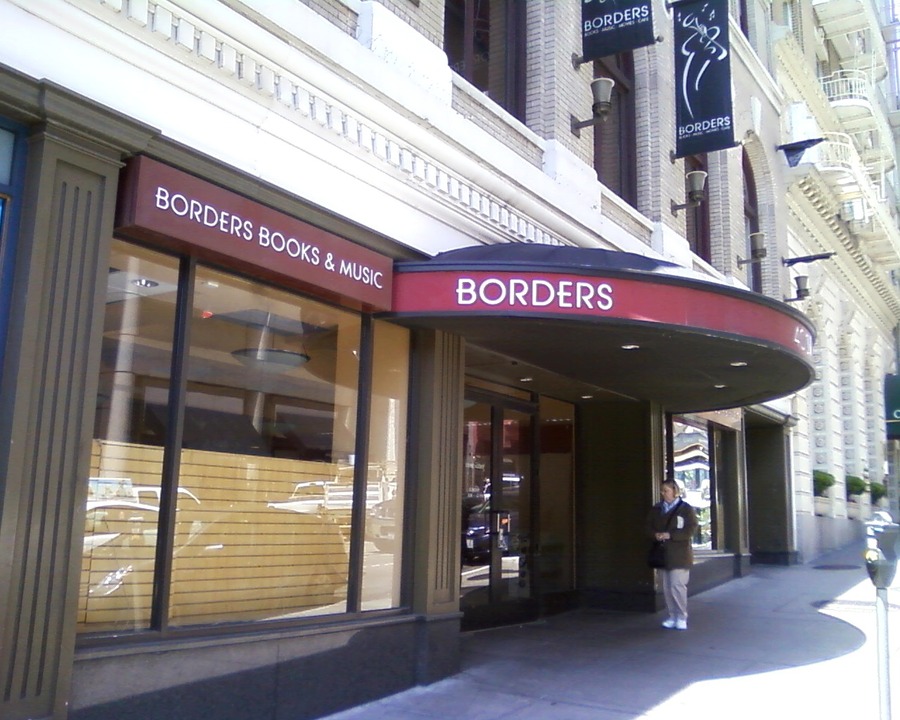
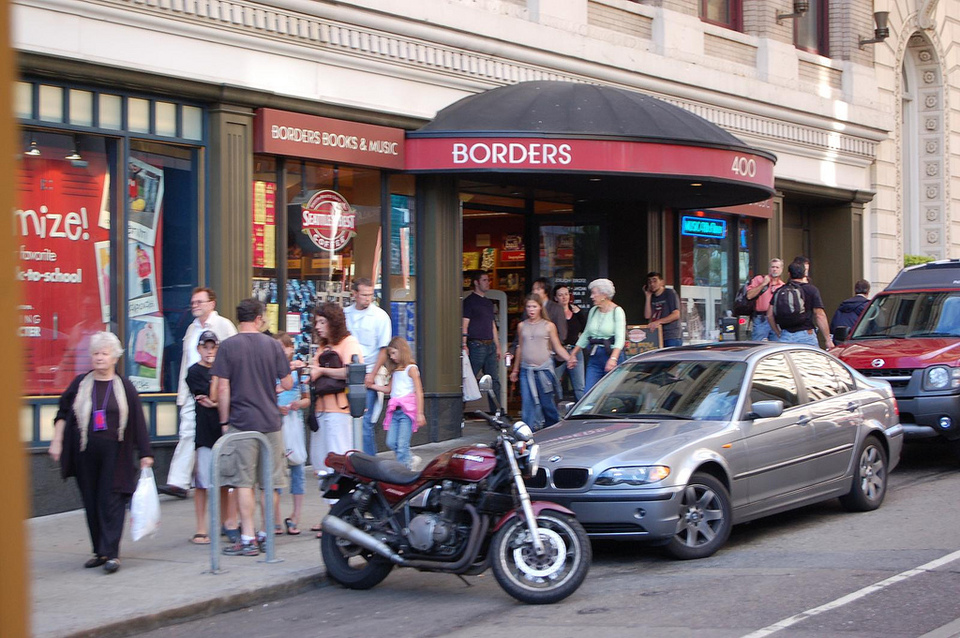
However, even the large bookstore chains, which emerged as megastores in American shopping malls in the 1970s, are increasingly facing financial difficulties. The bookstore chain "Borders," which is widespread throughout the USA, initiated bankruptcy proceedings in February and, as a result, is closing over 230 of its 650 existing stores. Even the flagship store on Powell Street in downtown San Francisco is shutting its doors. Borders' biggest problem was not only its relentless expansion during good times but also that its management failed to recognize the rise of online business. Until 2008, Borders did not have its own online bookstore and instead handled internet orders through Amazon, essentially through its competitor.
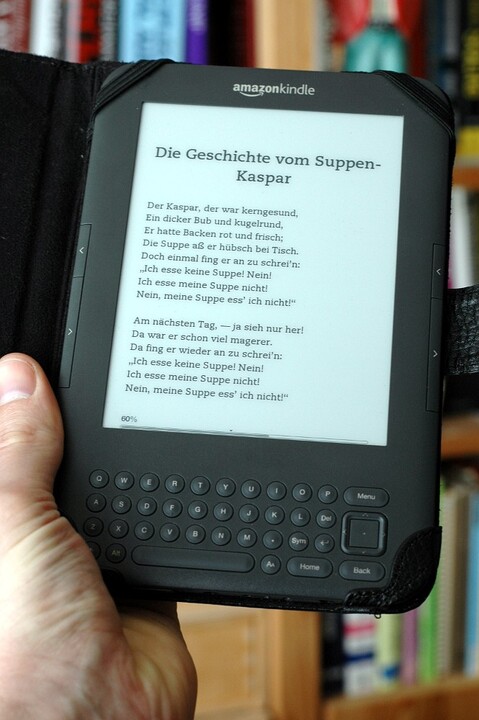
Borders also missed the trend that digital books are becoming increasingly popular in the USA. Many readers are now forgoing paper books and are reading publications using electronic devices like Amazon's Kindle or Apple's iPad. Book lovers can choose from 850,000 electronic titles on Amazon and store up to 3,500 of them simultaneously on a device from the latest Kindle generation. Through the mobile network, they can order new books anytime and anywhere, which arrive seconds later. The special feature of the Kindle is that it allows for fatigue-free reading because it displays black letters in a matte finish, similar to how they appear on paper, rather than glossy like on a computer screen, such as the iPad. A Funny Kindle commercial video clearly highlights the differences. Michael received a Kindle from me for Christmas and has been going around with that thing ever since.
Borders completely missed this trend towards eBooks, while the other mega-chain "Barnes and Noble" not only launched a competing product to the Kindle (the so-called "Nook"), but also established a reasonably solid online book business. However, I must admit that there is nothing more enjoyable for me than browsing in bookstores, and I hope that I can continue to do so despite the described trend.
Michael In this context, I predict, by the way, that the Kindle (or perhaps a no-longer-pound-heavy iPad3 with a better screen) could save the ailing newspaper and magazine industry. While it is historically considered uncool to pay for content on the internet, it is normal and elegantly integrated on the Kindle/iPad. Any newspaper or magazine that does not want to disappear into oblivion in the coming years should switch to the new format.