
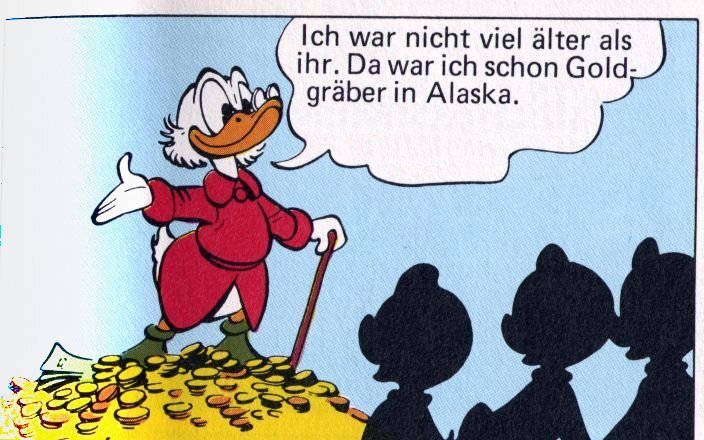
Michael If, like me, you used to enjoy reading Donald Duck comics, you surely remember that Uncle Scrooge laid the foundation for his fantastillion fortune in the Klondike. In this context, Scrooge always emphasizes that only the toughest and most cunning gold prospectors made it in the Klondike, and that this cold and inhospitable region in Canada's Yukon Territory is no place for wimps.
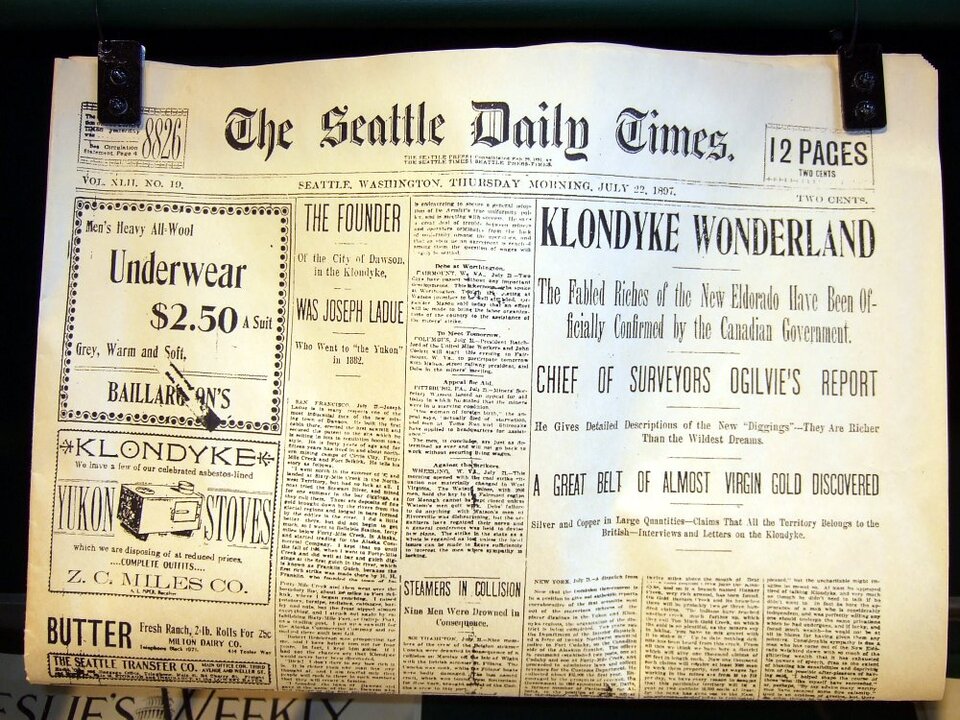
In Seattle, we recently visited the "Klondike Museum" and learned about how things unfolded back in 1897. Initially, rumors of gold discoveries from the northern territories reached the port cities of America, and since the American economy was quite stagnant in the last 10 years of the 19th century, hundreds of thousands set out to search for gold in Alaska. They gave up their jobs as salespeople, factory workers, or bank employees, liquidated their belongings, traveled to Seattle, and purchased a year's worth of provisions along with gold mining equipment. Ships then transported the so-called "Stampeders" (from stampede = trampling herd of buffalo) from Seattle in the northwest of the USA, up to Alaska.
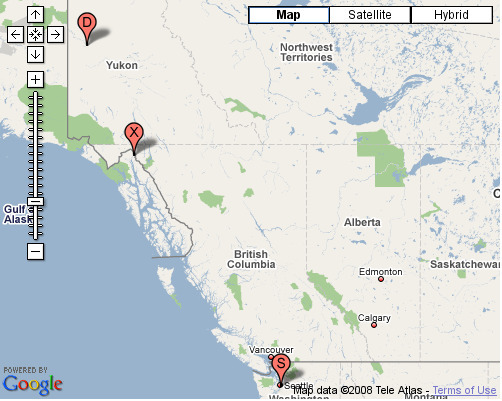
In Skagway and Dyea (pronounced: 'Die-ii'), two spots on the map without a proper harbor, they unloaded the provisions, disembarked, and first had to overcome a muddy 70-kilometer mountain pass on foot to reach Lake Bennett, where they continued with self-built boats and rafts.
In the Yukon area, there was naturally nothing to eat, so the brought provisions had to last for a year, weighing about a ton per man. Many traversed the pass up to 50 times to get their luggage to the other side, which took some people up to three months! The pass was crammed with caravans of men and lined with dead horses. The hard-hearted gold seekers were not exactly friendly to each other. I read that men who briefly rested by the roadside were often not allowed back into the caravan for hours, which snaked up the mountain pass man-to-man. That's how they are, the Americans, and it's still the same in traffic today!
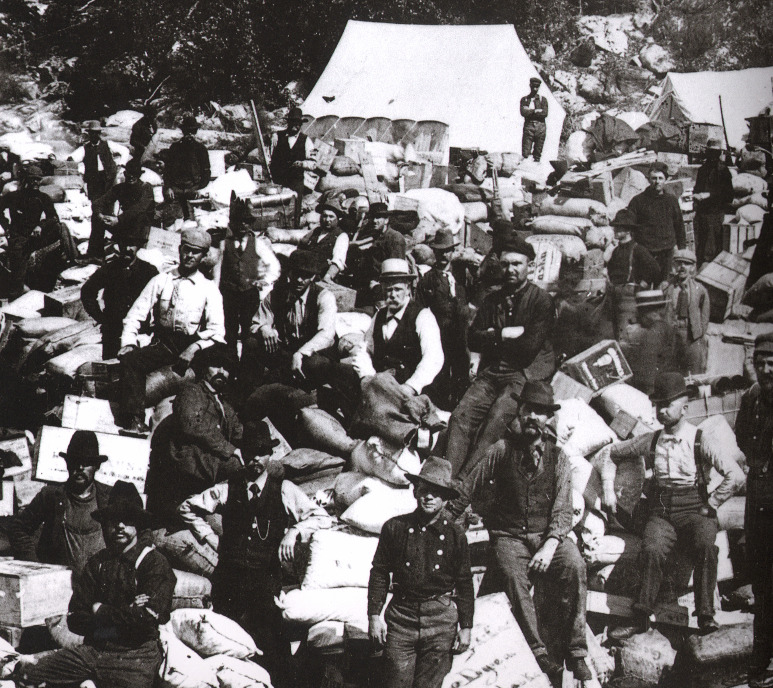
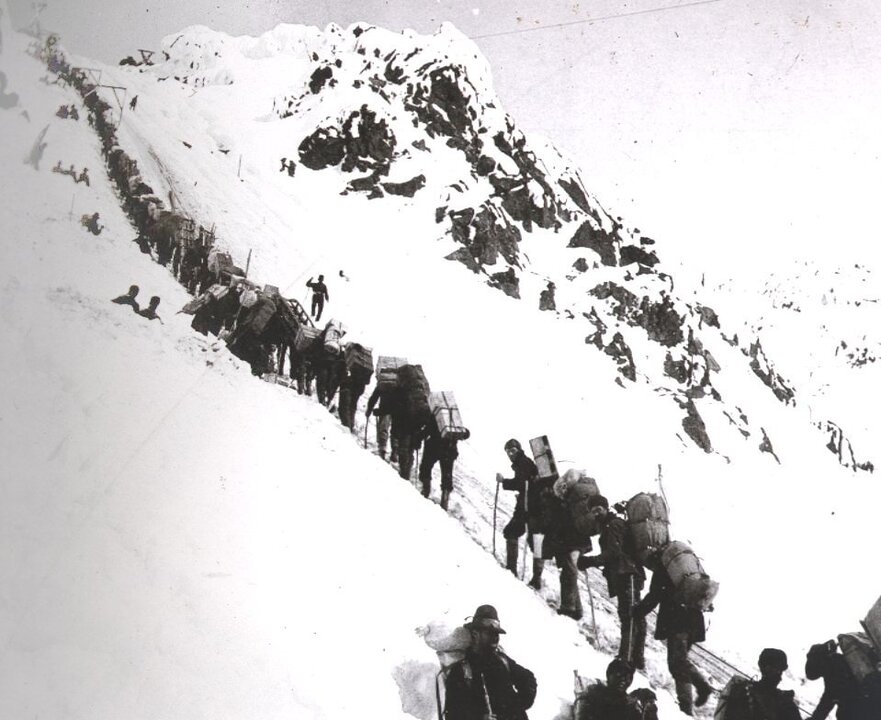
Many realized that they had brought too little provisions or were not up to the hardships, so they sold off their equipment and returned home disappointed. Others recognized that they could make money in the interim camps by selling equipment or offering services, and they stayed in Skagway and Dyea without ever seeing the Yukon. When the ice on the waters finally broke after the long winter on May 29, 1898, 7,124 makeshift vessels, cobbled together from the surrounding timber, set off within 48 hours to travel on the Klondike River to the gold rush tent city of Dawson City in the Yukon. The makeshift settlement turned into a bustling town with wooden houses, streets, and 30,000 inhabitants by summer. It still exists today, even though the gold rush in Dawson ended after just two years.

Only a very few became rich in the Klondike, and those who did really lived it up, even though in Dawson City, prices for everyday goods were sometimes a hundred times the usual rate at the time. Supply and demand, of course. Many brought canned fruits or flour, but only a few thought to bring a broom. The latter were then traded for $17, an absurd price considering that a haircut and shave cost about 25 cents back then. However, in Dawson City, it was already $1.25.
However, after the initial gold discoveries, some enterprising individuals staked all the gold-bearing claims. Those who arrived later often had no choice but to toil for someone else for a daily wage. In the photo book The Klondike Quest, you can read up on everything in detail, an exciting story! And as an avid newsletter reader, you probably remember that in Rundbrief 02/2002 we've previously run a short story about the California Gold Rush in 1849.