
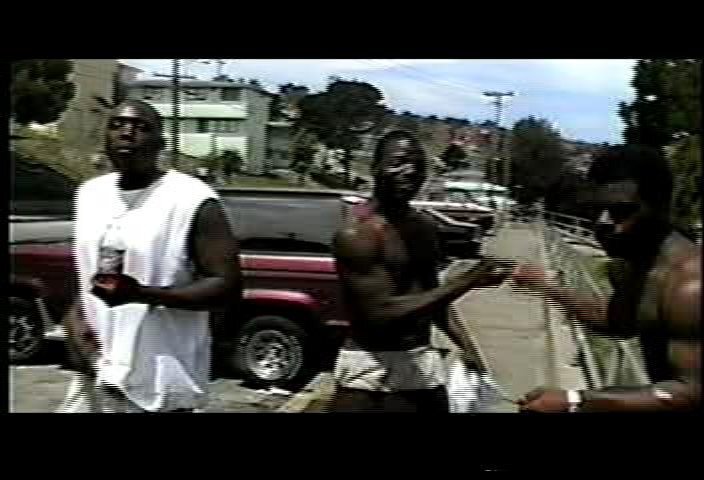
Michael In our series "San Francisco Views," today we visit the notorious twin neighborhood "Bayview/Hunters Point." It is located so far south that no tourist ever wanders there, and that's a good thing. Long-time residents of San Francisco cringe at just hearing the name of the neighborhood, would never drive there under any circumstances, and strongly advise any newcomer against even approaching the area.

The book on Bayview/Hunters Point (illustration 3) from the well-known neighborhood series, which dedicates a volume to each district of San Francisco, only features old black-and-white photos and reminisces about past times when Hunters Point was still a relatively normal working-class area with a shipyard.


After World War II, however, the shipyard was immediately closed down. The predominantly black shipyard workers were dismissed and housed in barrack-like social housing buildings in the neighborhood. Over the years, the conditions deteriorated dramatically, and by the 1970s, a veritable slum had developed, where rival street gangs were causing trouble every night.

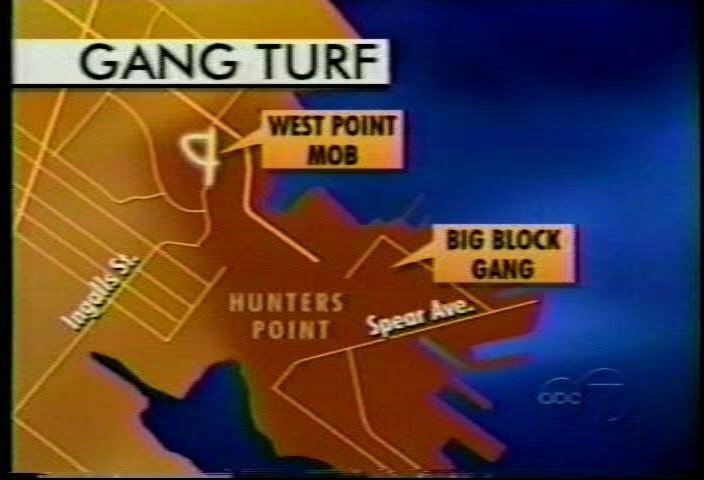
The documentation Straight out of Hunters Point provides quite a good insight into the catastrophic conditions there. Although there is a handful of dedicated people trying to turn the neighborhood around, it is not easy for the residents to escape the vortex of violence and drugs. And since in America the schools of a neighborhood are mainly funded by the residents through property taxes, the schools in Hunters Point are a big mess. Children learn nothing, and parents don't care -- the next generation of gangsters is pre-programmed. In the Music-Video 'Straight out of Hunters Point' you can see some gangsta rappers from the run-down neighborhood boast about their misdeeds.
Although news reports about shootings in Hunters Point no longer appear daily, it's practically impossible for an ordinary citizen to drive around there. The newsletter reporter, known as a thrill-seeker, ventured in there anyway by car, equipped with camera, and GPS--on a Sunday morning, when the worst criminals are known to still be asleep. Some were still around, looking somewhat puzzled. A car with two menacing-looking figures even turned around and followed the reporter's car, but he had already taken his photos and sped away at full throttle.

The phenomenon of completely run-down neighborhoods in the USA is often associated with so-called "projects." In this type of public housing, barrack-like buildings were simply placed in solid residential neighborhoods and populated with marginalized social groups. Much to the dismay of the local residents, of course, who saw the value of their homes plummet to dizzying depths. Urban planners hoped that the newcomers would integrate, but they found that after a few years, the buildings became totally dilapidated and the neighborhood crime rate skyrocketed.
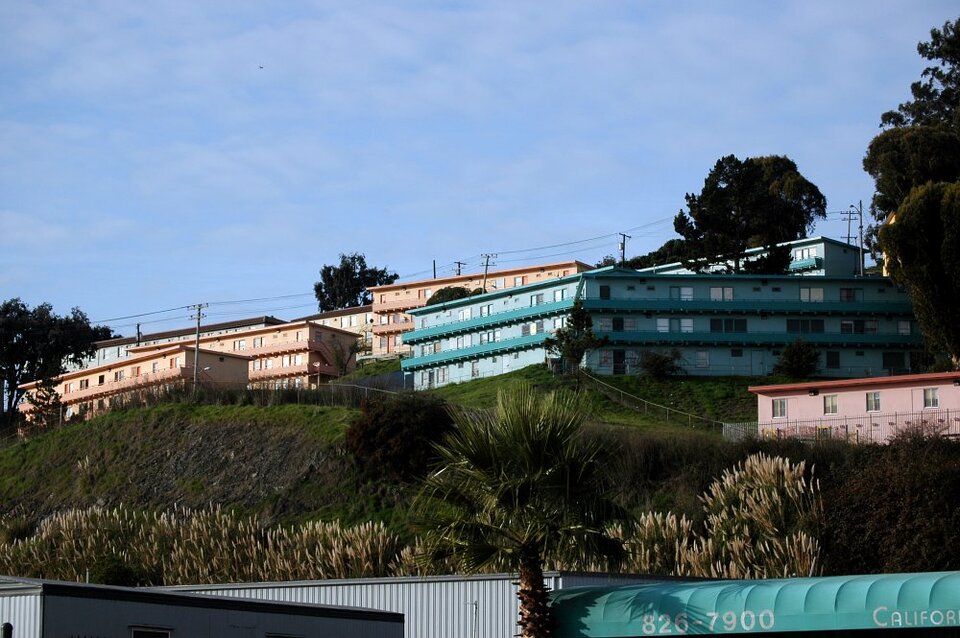
In the "Potrero Hill" neighborhood in San Francisco, there is also such a "project," and it's still quite lively there today. Anyone who takes the 48 bus, which I have dubbed the "adventure bus," from the Caltrain station on 22nd Street to Noe Valley will experience at least one or two adventures, especially in the evening hours after dark.
Nowadays, "projects" are usually smaller houses that are built with more architectural sophistication. There's one on Cesar Chavez Street around the corner from us that seems to be doing reasonably well--at least better than ten years ago when we moved to San Francisco and the area was called the "death zone." The smaller construction style also has the advantage that residents tend to identify more with their homes and don't let everything deteriorate with an "I don't care" attitude.
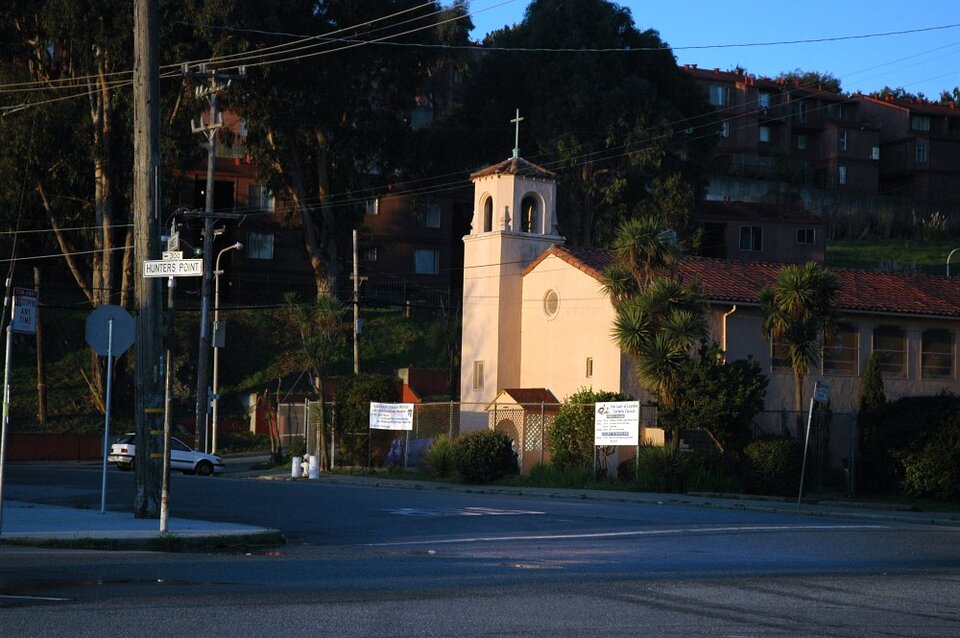

And Hunters Point even has some nice areas where residents get involved and take a stand against the bleak everyday life of the projects. The video "Hunters Point Heroes introduces people who carry out small projects (e.g., creating a small garden), achieve minor improvements, and are immediately celebrated as everyday heroes. America, and its optimism!