
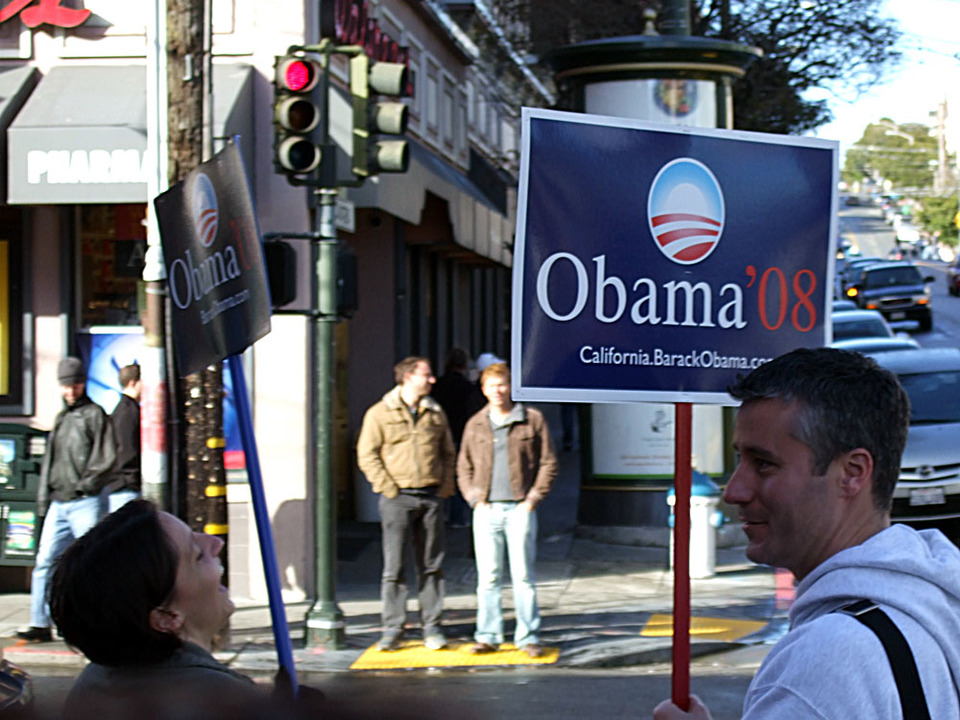
Angelika The American election campaign machine is in full swing, and for months the media have been bombarding us with forecasts, debates, and commercials of the candidates for the American presidency. At the end of the primaries, two candidates emerge, one for the Republican Party and one for the Democratic Party -- and one of them will become the President of the USA in the actual elections in November. Usually, interest in these primaries is relatively low, and voter turnout is extremely low, but this year everything looks different.
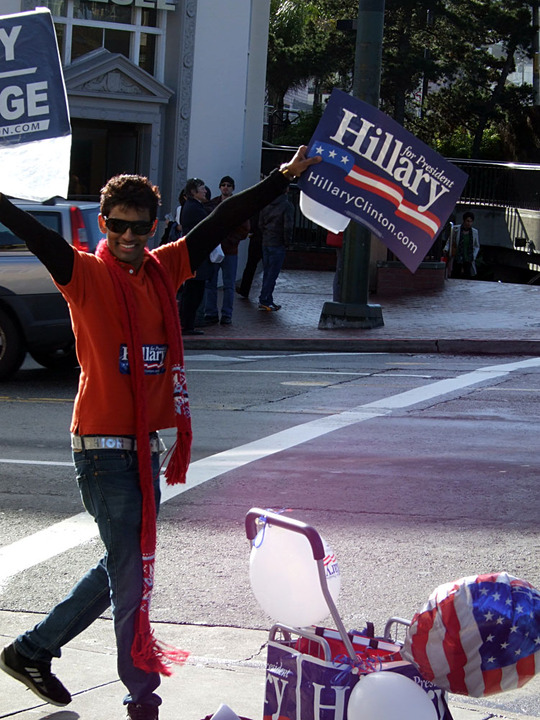
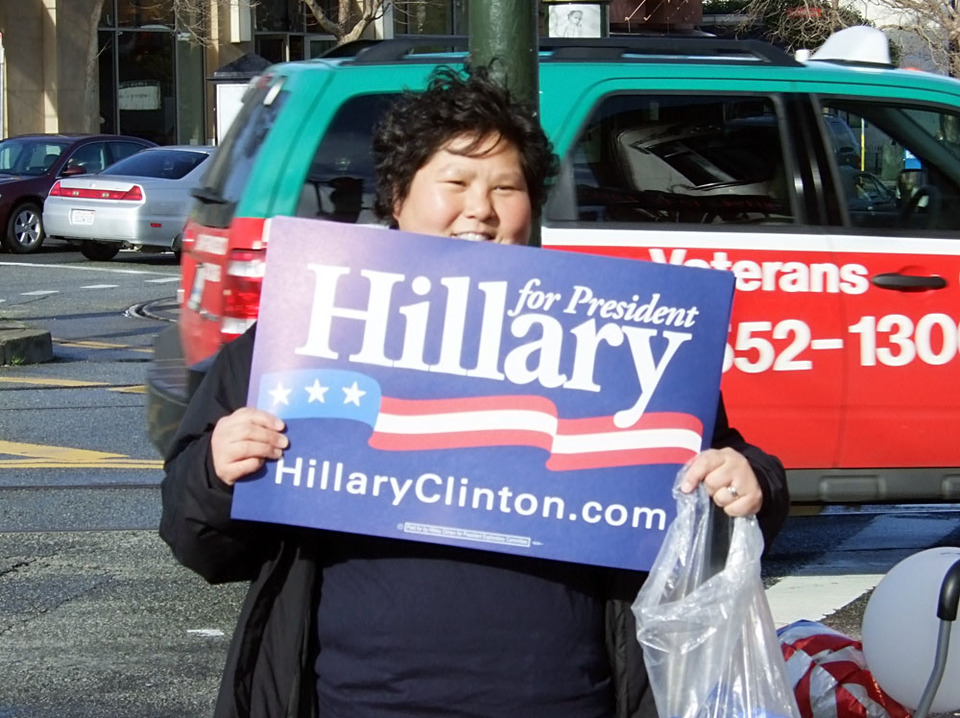
This is partly because there is currently no clear favorite among either the Republicans or the Democrats. Among the Democrats, Hillary Clinton and Barack Obama are engaged in an exciting race. Although their political concepts do not differ significantly, many Democratic voters are wondering whom they should vote for. Should it be the young, charismatic Barack Obama, the Senator from the state of Illinois, who promises to unite the country across all political divides? Or perhaps Hillary Clinton, who repeatedly emphasizes her thorough knowledge of the White House and the Washington establishment, but also carries the baggage of her husband Bill Clinton?
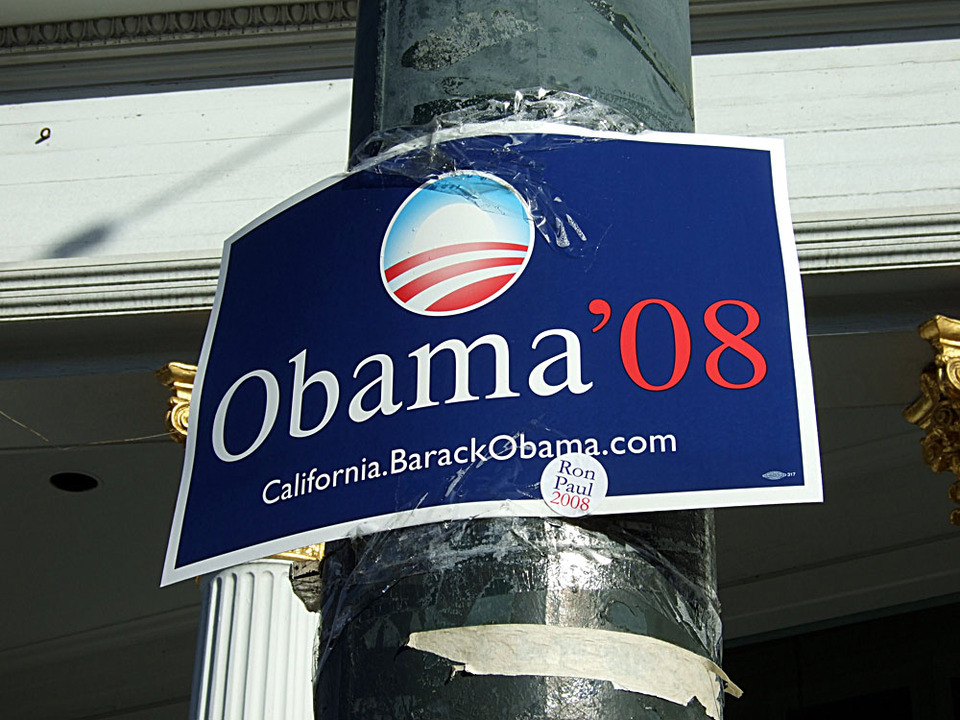
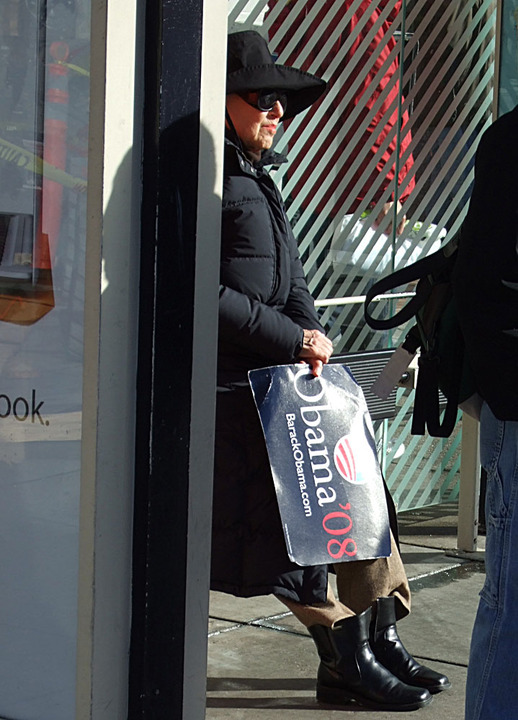
Many voters are opposed to replacing the Bush dynasty with a Clinton dynasty, especially since no one really knows what strings Bill Clinton is pulling behind the scenes. The historical dimension is also important to many voters: for the first time in U.S. history, either a woman or a Black person has a chance at the highest office in the country. And many already see Barack Obama as the reincarnation of John F. Kennedy, as he excites the masses regardless of skin color, age, and income, at least as it seems in San Francisco.
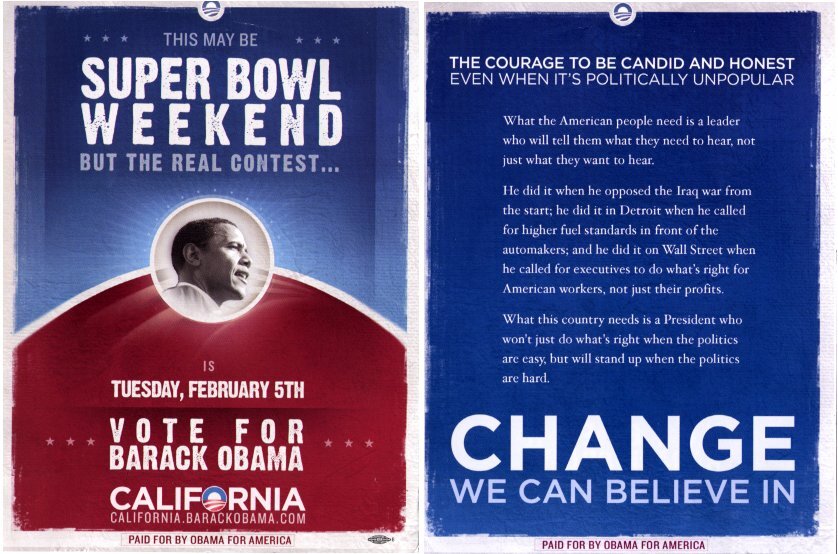
Among Republicans, the former Vietnam veteran and long-time Senator from Arizona, John McCain, and the millionaire businessman and former Governor of Massachusetts, Mitt Romney, are leading. For weeks, the country debated whether the Mormon Romney is even electable due to his religious affiliation. Romney's Mormon status is particularly problematic for the religious right, which predominantly votes Republican. The former Baptist pastor and former Governor of Arkansas, Mike Huckabee, is also holding his ground, as he is particularly appreciated by the conservative-religious base. So far, primaries have been held in seven states, but everyone is now eagerly awaiting February 5th, the so-called "Super Tuesday," when primaries will take place in 22 more states.
The hellishly complicated system of primaries I have briefly described in Rundbrief 08/2004, but today I will try to explain it in more detail. In principle, in American primaries, voters do not directly cast their vote for their favored candidate; instead, they elect delegates who then determine the presidential candidate at the respective party conventions.
Some ballots therefore do not list the candidates, but only the delegates. The number of delegates a state is allowed to send to the party conventions is determined by the population density of the respective state. Now, there are different methods for converting the number of votes cast into delegates.
The Democratic Party strictly follows the proportional method, meaning that if the Democratic Party from state X is allowed to send, for example, 100 delegates to the convention and Candidate A secures 70 percent of the votes, Candidate A receives 70 delegates. The Republican Party leaves it up to the individual states to decide whether to use the proportional method or the "winner-takes-all" approach (where the candidate with the most votes receives all the delegates).
In the this election's primaries, the Republicans end up with a total of 2,380 delegates and the Democrats with 4,049. At least according to the current situation, as Florida's and Michigan's votes are not being counted for the Democrats at the moment, because the Democratic Party stripped both states of their delegates due to their unauthorized early elections. Hillary Clinton would like to reverse this punitive action, as she won in Florida and Michigan. To be nominated at the convention, the Republican candidate needs the votes of 1,191 (out of 2,380) delegates, and the Democratic candidate needs 2,025 (out of 4,049).
Interesting are the delegates who are not bound by the primary election results but instead cast their votes at the party conventions according to their own discretion. These are usually party officials and elected representatives. Democrats amusingly call these delegates "superdelegates," while the Republicans simply refer to them as "unpledged delegates." Democrats are sending 796 of these superdelegates to their convention in Denver in August, while the Republicans have 463 at their convention in Minneapolis/St. Paul. Generally, the superdelegates do not have much impact, but this year they could become the deciding factor for the Democrats if the race between Obama and Clinton remains neck and neck.
It is also interesting whether the individual states hold "primaries" or "caucuses." You can think of primaries as regular elections. Voters go to their polling station and cast their vote on a specific day. There are closed and open primaries. In closed primaries, only registered party members are allowed to vote. However, the registration process is often quite straightforward. Democrats vote for the Democratic candidates, and Republicans for the Republican ones. In open primaries, party affiliation does not matter.
However, the American system also includes a mixed form, namely partially open primaries, where independent voters may be allowed to participate under certain circumstances. In California, for example, the Democratic Party allows independent voters to participate, while the Republican Party prohibits it. This might surprise you, but the Republican Party fears that the less conservative candidate of their party might win in California, as the state has a high proportion of independent voters who are considered more moderate. An American acquaintance even told me that her friends, who lean more towards the Democratic side, register as Republicans in California to influence the selection of the Republican candidate.
As 'caucus,' you should imagine a party meeting at the local level. People meet, for example, in schools and debate which candidate is best suited, and later, usually in a public vote, determine their favorite. These delegates are then sent to the higher-level meetings at the county and state levels, to ultimately determine the electors for the national party convention. However, the method of the caucus is increasingly falling out of favor. Only about one-third of American states still conduct caucuses.
Something peculiar about the primary election system is that the primaries do not all take place on the same day, but are staggered between January and July. New Hampshire and Iowa traditionally vote first because New Hampshire's laws stipulate that their primary must be held a week before any other primary. This results in smaller states with relatively small and homogeneous populations (in Iowa, for example, white farmers dominate the demographics) having significant influence on the initial selection of presidential candidates. This irritates more populous states like Florida and California, leading to a trend of increasingly earlier primaries.
You may remember that initially 9 Democrats and 11 Republicans entered their respective races. Currently, among the Democrats, only Hillary Clinton, Barack Obama, and Mike Gravel, who no longer appears in debates or in the press, are left to choose from. Among Republicans, John McCain, Mitt Romney, Mike Huckabee, and Ron Paul are still in the race, and as mentioned, California will not vote until Tuesday. The field of candidates is thinning out relatively quickly after the first primaries because campaigning in the U.S. is extremely expensive, and candidates who receive few votes have difficulties raising funds to continue their campaigns.
No one throws their money out the window and continues to support a candidate who no longer has a realistic chance of winning. However, people like John Edwards (Democrat) or Dennis Kucinich (Democrat) or even Rudy Giuliani (Republican) could have certainly received votes in California. I know many who wanted to vote for John Edwards or Kucinich (the most left-leaning candidate) on Tuesday and now can't do so. It even goes so far that some Californians who have already voted by mail and, for example, gave their vote to Edwards, are now left in the lurch because their vote no longer counts since Edwards is no longer in the race.
By the way, anyone who thinks that a Democrat is guaranteed to move into the White House as President is mistaken. Especially if McCain secures the nomination for the Republicans, he could very well win the election later on. John McCain embodies what Americans like, particularly those in the center of the country. He is a former Vietnam veteran who survived captivity and torture in Vietnam, and for this reason, he is a strong opponent of torture. And although he voted for the Iraq War and supported Bush in this regard, many see his experiences in Vietnam and his long military career as an advantage in resolving the mess in Iraq.
He is also considered pragmatic, speaks plainly, and is known for acting in a non-partisan manner, all qualities that are particularly appreciated by the more moderate conservatives as well as independent voters. For instance, he advocates for a humane solution to the problem of illegal immigrants in the country and attempted, together with the staunch Democrat Ted Kennedy, to push a bill on this issue through Congress and the Senate, which ultimately failed.
On the other hand, he is quite conservative. He is against abortion and wants to make the tax cuts introduced by Bush permanent. Those hoping for a Democratic president should keep their fingers crossed that Mitt Romney wins the nomination for the Republicans, because according to polls, the chances for the Democratic candidate increase if the opponent is Romney and not McCain. It's just a shame that we can't vote, because my vote would go to Obama.