
Angelika Most German tourists associate the state of Utah not with a Mormon stronghold, but with breathtaking national parks. Arches, Bryce Canyon, Zion, and Canyonlands are usually part of a German tourist's classic tour itinerary. Curiously, "Capitol Reef National Park," although also located in Utah, is one of the lesser known and visited parks.
We had also skipped the park during our big trip to America in 1987. It is quite out in the sticks, far away from major big cities. Salt Lake City is about 220 miles away and Las Vegas 360 miles. Many of the most beautiful spots in the national park can only be reached via unpaved roads or on foot.
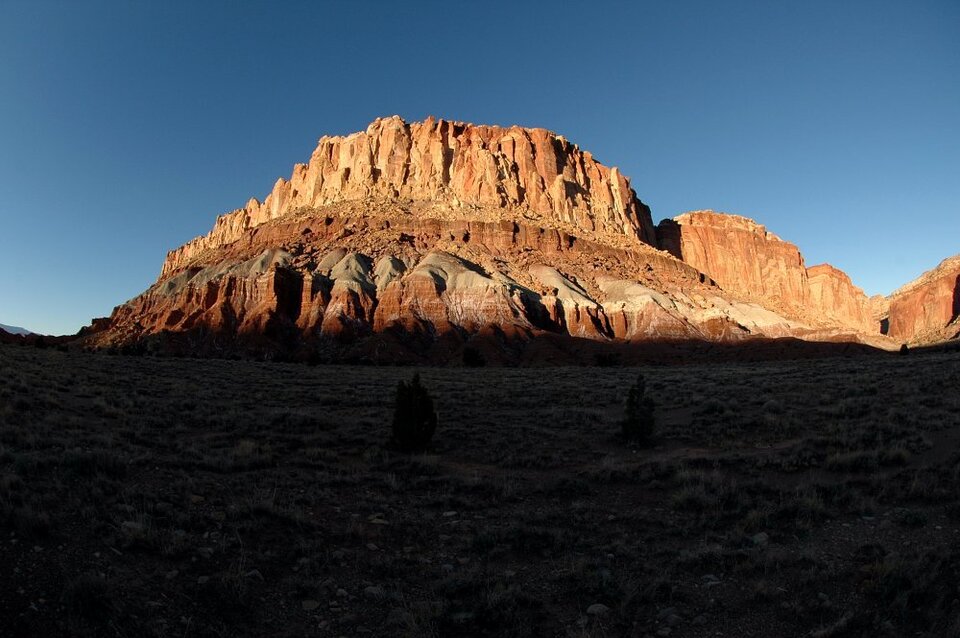
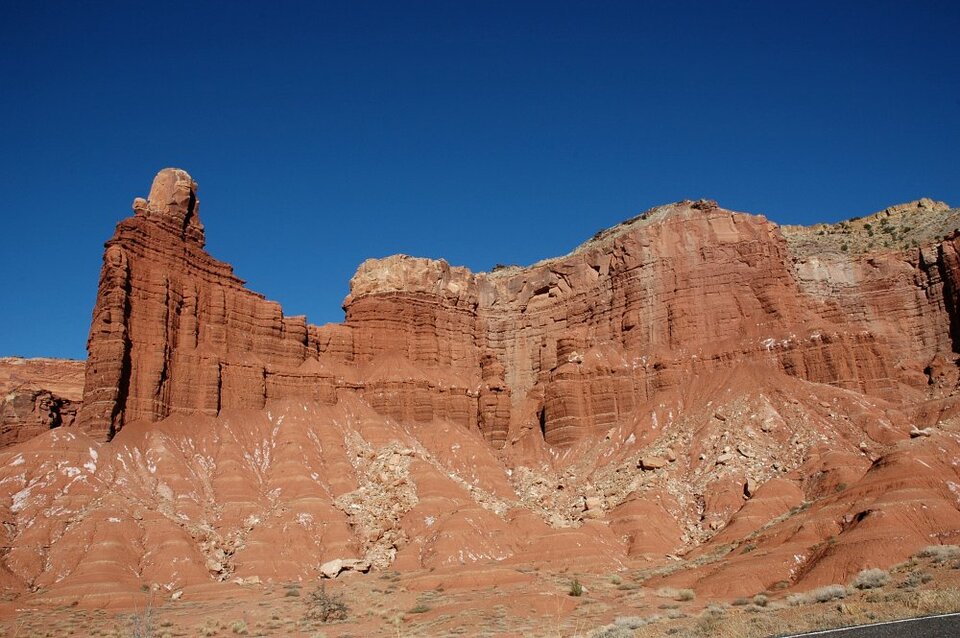
Despite this seclusion, around the year 1880, Mormons settled in what is now the park and founded, among other things, the tiny settlement of "Fruita," a reference to the fruit-bearing trees they planted in the rock-enclosed valley, which still green the barren desert landscape today. Native Americans from the so-called "Fremont Culture" tribe had been, of course, there before the Mormons, but left the area for reasons that remain unclear. The park owes its somewhat unusual name to the fact that a rock formation resembles the dome of the Capitol in Washington, and the pioneers encountered difficulties crossing the steeply rising rocks, which reminded them of the insurmountability of a reef. The park's special feature is the so-called Waterpocket Fold, a geological shift of the Earth's crust at a fault. Geologists know this Waterpocket Fold as a classic "monocline," meaning a fold where the rocks rise steeply on one side and otherwise display horizontal layers.
When we reached the park late in the afternoon, the lower sun made the red, yellow, and orange of the rock formations appear particularly dramatic. The view was magnificent, and we could have surely heard a pin drop, it was so quiet. In the following days, we hiked through deep rock canyons to remote waterholes and drove our old-fashioned-looking rental car on the "Burr Trail Loop," which spans a modest 120 miles (30 of which are unpaved!) through seemingly untouched landscapes. We hardly encountered anyone and felt like we were in another world. In such moments, I always reflect on how small and insignificant we humans really are. By the way, the rental car company's contract usually states that you shouldn't drive the vehicle on unpaved roads. This makes sense, because they don't want to have to pull you out of some mud hole in a godforsaken area. However, many unpaved roads can be driven on without any problems with a normal car, so we have often disregarded this rule (don't follow our example, though).
I still maintain the habit of always asking a ranger at the visitor center about the road conditions in a park. This time was no different. The ranger confirmed, "No problem at all, since the unpaved section was just leveled yesterday." So we set off undaunted until we came to the first mud hole. Our beloved "Perlman" would have easily managed to cross the little stream, but it was parked at home in our garage in San Francisco.
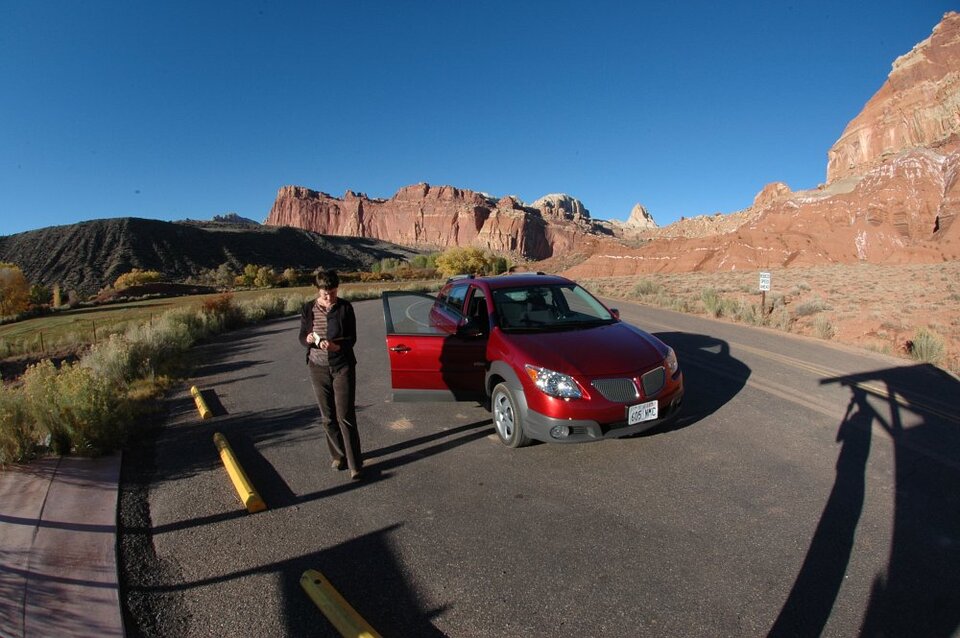
And the rental car was a Pontiac Vibe, which looks like a modern version of the old taxis in England and, with its small tires, and doesn't quite fit into the rugged desert landscape of Utah. But Michael, the terror of the road, was undeterred and maneuvered us through the water without getting stuck. Thankfully, we were spared any further surprises. However, the red sand had crept into every crevice of the car. The maintenance guy at the car rental company surely must have had his own thoughts about it.
Capitol Reef National Park is open year-round, by the way. We just wondered how one could still get something to eat in the winter. Not only did one restaurant after another close at the end of October, but even the grocery store shut down, and some motels also closed their doors until spring. The waiter in one of the still-open restaurants mentioned that Torrey, the small town where you stay when visiting the park, resembles a ghost town in the winter.
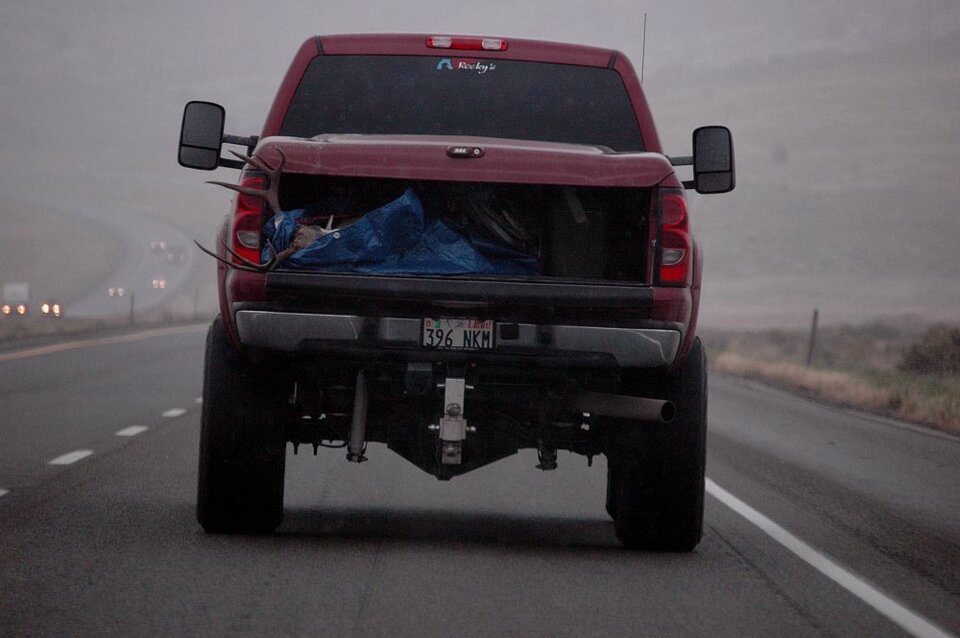
On our return trip to Salt Lake, winter suddenly set in. According to the car's external thermometer, the temperature dropped to 32 degrees Fahrenheit (which is 0 degrees Celsius) and it started to snow. When some snow actually stayed on the road, the sun-spoiled Californian driver started to sweat a little! But it wasn't too bad, and it was sunny again when we returned to Salt Lake City.