![]() |
| Angelika/Mike Schilli |
Michael Riding a bicycle in large American cities requires courage and nerves of steel. In San Francisco, this has led to cyclists being seen as aggressive daredevils who don't follow traffic rules, get upset for no reason, and with whom it's best not to start any discussions. Exactly right, haha!
TODO
No, it's not quite that bad, of course. Most of them are quite reasonable people. The dubious reputation is fueled by a few troublemakers who really misbehave. In June 2005, an incident occurred on the Embarcadero in San Francisco, not far from the tourist area "Fisherman's Wharf. The translation of "nachrichtenwürdige Gewaltszene" toEnglish is "newsworthy scene of violence. A car driver and a cyclist started a discussion that eventually ended with the cyclist deliberately ramming his handlebars into the car's side window. Not exactly the British way! The car driver, a 73-year-old retiree, lost it, grabbed a (illegally!) stored gun from the glove compartment, and fired a shot at the cyclist. However, he didn't hit the culprit but instead a 20-year-old Asian woman who was peacefully jogging by on the sidewalk at that moment. The cyclist initially fled but later turned himself in to the police. The retiree was immediately arrested. Just another day in San Francisco...
Furthermore, today I will tell you about two peculiarities of cycling in America. The first peculiarity is that hardly any bicycle has a bell. Recently, after many years of riding without a bell, I finally bought one, but until now I followed the American principle: When overtaking someone on the left, you call out "On your left!" from behind to let them know, so they don't make any careless swerves and get in your way.
The second peculiarity comes when making a right turn: Instead of extending your right hand horizontally to the right as in Germany, you raise your left (!) hand to form an "L" shape upwards. You learn this procedure when you get an American driver's license. The practical examiner actually asks: If the car's turn signal is not working and you want to turn left, how do you signal that? You extend your left hand horizontally out of the window. And when turning right? You hold your left arm bent upwards out of the window. When cycling, this looks very elegant and fits the overall picture, as cycling in San Francisco, due to the many hills (at least downhill), is almost like gliding.
Angelika The saying "art is a breadless profession" is well-known, and unfortunately, there is a grain of truth to it. Because, let's be honest, who really manages to exhibit their works in renowned museums or galleries? However, once a year in San Francisco, anyone willing to pay $165 gets the chance to present their art to a wider audience.
On four weekends in October, the so-called Open Studios take place, and artists of all kinds open their doors, either those of their studios, if they have one, or even their private homes.
All you need to participate is a valid address in San Francisco. There is no selection process or anything like that, so the quality of the art on display varies accordingly. The Open Studios have been in San Francisco for 30 years. ArtSpan, a non-profit organization, manages the whole event, including the creation of the catalog. To prevent art enthusiasts from rushing around the city like crazy to visit as many studios as possible, the city is divided like a pie: each weekend, a different area, consisting of several neighborhoods, is featured. The artists naturally hope to sell as much as possible and make connections in the art world.
Michael Recently, I came across something strange on the internet: a publicly accessible database of convicted sex offenders. Go to the website of the The translation of "National Sex Offender Public Registry" to English is the same, as it is already in English. It seems like your message is incomplete. Could you please provide the full text you would like translated into English? http://www.nsopr.gov The translation to English is: "of the US Department of Justice The translation of "United States Department of Justice" to English is "United States Department of Justice." It is already in English. After you accept the fine print with "I agree," click on California on the map (the elongated state on the West Coast) and enter our postal code 94114 as the Zipcode. A click on "Search" will provide a list of convicted sex offenders in our neighborhood who have since been released from prison. If you click on the names in the list, the police photos of these individuals will appear, along with their full names and information about their offenses, and in some cases, their current addresses, including street and house number! You can even view their addresses on a digital map. The following clause is intended to prevent anyone from threatening or harassing these individuals: "ANY USE OF THIS INFORMATION TO THREATEN, INTIMIDATE, HARASS, OR CREATE A CRIMINAL ACT AGAINST ANOTHER PERSON WILL RESULT IN CRIMINAL PROSECUTION.
The address information is after the Megan's Law" refers to legislation in the United States thatrequires law enforcement authorities to make information available tothe public regarding registered sex offenders. The law is named afterMegan Kanka, a young girl who was tragically murdered by a known sexoffender living in her neighborhood. The intent of Megan's Law is toincrease public safety by informing communities about the presence ofsex offenders. The mentioned law, which dates back to 1996 and was signed by President Clinton at the time, is available. In a small suburb in the state of New Jersey, 7-year-old Megan Kanka was murdered in 1995 by a man who was a convicted sex offender and had lived in the same neighborhood for years. The law is intended to ensure that citizens are aware when a convicted sex offender is living in their vicinity.
In a recently aired episode of the controversial yet funny TV series "Curb Your Enthusiasm Rundbrief 03/2003 Larry David invites a newly moved-in man to his party at his home and casually mentions to his wife, "by the way, he's a publicly known sex offender," which causes the wife to freak out. Needless to say, the party turns into complete chaos. Larry David knows no taboos!
And here is a new series in the newsletter: Absolute insider tips that only people who have lived in San Francisco for years know. Today: What to do with loose change? Because you never know exactly how much something costs due to sales tax and therefore can't count out the change you urgently need to get rid of in advance, you often end up with unwanted coins. Quarters can usually still be used, but dimes, nickels, and pennies are hard to get rid of, and sooner or later they tear a hole in your pocket. The solution: Take the MUNI streetcar from the Embarcadero, Powell, Montgomery, Civic Center, or Van Ness stations. The streetcar lines in this area run underground, and at the entrance, there are turnstiles that--unheard of in the entire USA--accept any loose change! So when you pay the $1.50 for a ride, you could theoretically insert 150 individual pennies! I've tried it with about 30 and paid the rest with nickels and dimes, and it worked flawlessly. That was the super insider tip for this issue. In the next installment: The best publicly accessible restrooms in downtown.
Die-hard newsletter fans probably noticed right away: The newsletter is now available in a new online format. After 9 years, it was high time to make our little letters a bit more modern. The newsletter now runs under the domain. usarundbrief.com ...so that people don't have to remember the 'perlmeister'. And also a... Diskussionsforum Here's the translation to English: "There is now a place where you can ask questions and give praise or criticism to the newsletter writers. Let's hear what you think about it! Discuss eagerly!The San Francisco Super Insider Tip
Discuss in the newsletter forum
In November, I managed to wrangle 10 vacation days from Yahoo! once again, and we took off to Hawaii. Since we've already been to all the islands, we had to start over: So we went to Kauai again, the green island all the way in the west.
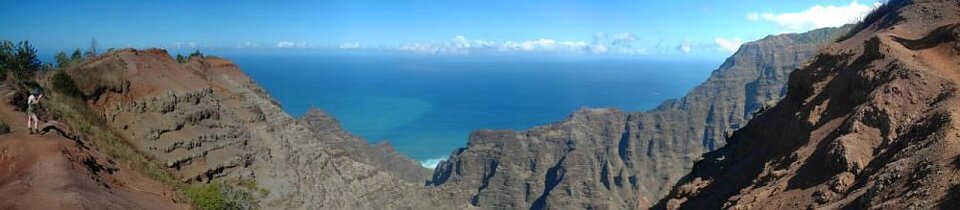
We didn't just laze around on the beach; we also undertook some grueling hikes that really wore us out. And believe me, my life hasn't been short of brutal hikes. The so-called "Alakai Swamp Trail" is 15 kilometers long and requires overcoming some elevation, which takes a solid 6 hours. And a few days later, we tackled the Nualolo-Awaawapuhi Trail, which was another 15 kilometers long with a 2,000-foot elevation difference. On such a trail, you hardly encounter any Americans, but naturally, you meet Germans and a British couple. And on the way back to the parking lot, which ran along a road for a while, a Frenchman gave us a lift for the last stretch. Apparently, Americans have an aversion to grueling hikes.
We rented a total of two different vacation homes, first one for seven days in Kekaha, a bit off the beaten tourist path. When we picked up our rental car and asked for directions, the car rental lady actually directed us to the tourist beach Poipu, which made us laugh! Kekaha is a remnant, a rather quiet place on the edge of a now-closed sugar cane factory, with an access road to the Waimea Canyon. We shopped almost every day at the Japanese supermarket "Takahashi" in Waimea, where they had "Poke," which is deliciously prepared raw tuna. Our cabin had a charcoal grill, and after I bought charcoal and lighter fluid at the supermarket, I lit the first grill fire of my life (at home, of course, I have a gas grill). What I learned: Never squirt lighter fluid onto partially burning coals. It does say on the packaging not to do that, but as you know, I don't take advice. Now I know why the warning was on the lighter fluid.
In the north, we then stayed for a few days north of Kilauea, where there was, however, a severe shortage of geckos and an excess of mosquitoes. We probably should have brought the mosquito eater from picture 9 from Kekaha, where I photographed it.
In Hawaii, there is always a pleasantly warm, gentle breeze, which can occasionally become a bit gusty. If you have drilled a large sun umbrella into the sand, it can sometimes be torn from its anchoring, and then you have to chase after the runaway umbrella in a completely uncool manner.
That's why there is the "Sand Digger," a patented sunshade anchor that you screw into the sand, and then attach the sunshade to the holder, which sits as firmly as cement. The manufacturer guarantees securely fastened sunshades up to wind force 4. Available for only about 10 dollars at Wal-Mart!
On Hawaii, there is always a pleasantly light breeze: In a vacation rental, naturally without air conditioning.
If you print your digital photos on an inkjet printer, it is extremely expensive. The printer ink mafia has ruthlessly driven up prices in recent years. Additionally, the quality of the photos usually does not withstand the expert eye; the photos are not of the same quality as those from a photo shop, primarily due to the printing process.
If you take the images on a CD to a photo development service, the results can vary. The mega supermarket "Costco," on the other hand, offers a service where you can upload the images via the internet and then pick them up a few hours later at the nearest branch. This is nothing special in itself, but what is exciting is that you can provide Costco with a so-called "profile" along with the images, so that they print the photos exactly as they appeared on a calibrated screen at home in photo editing software like "Photoshop" or "Gimp.
The whole process works like this: Volunteers have a reference photo developed at a Costco store every few months, analyze the result, and calculate the profile from it.
On the website of drycreekphoto.com The current profiles are listed for almost every Costco in the entire USA. To select the Costco in San Francisco, you first click on "California" under "US States" and then scroll down the list on the right to "San Francisco." Under "Costco #144," it states that this branch has a "Noritsu Model 3111" printer that uses "Fuji Crystal Archive Paper." There is a profile available for both glossy and lustre/matte photo paper. I tried it out, and the result was astonishing. And the price is unbeatable at 17 cents for a 4x6 photo. I now know professionals who have their pictures developed there!Online printing at Costco
Angelika The persistent view holds that every American pays even the smallest amount with their credit card, and when paying with cash, people roll their eyes sympathetically: "Look at this poor guy, he has to hand over bills because he can't get a credit card." It's not quite that bad. You pay for your coffee at the "coffeeshop" in cash, and no one finds it strange. On the contrary, many smaller businesses even set a minimum amount (between 5 and 15 dollars) from which customers can pay with credit cards.
On the other hand, it is true that American daily life is difficult to manage without a credit card. Try booking a car, hotel, or flight without a credit card; it's a hopeless endeavor. When I first traveled to the USA at the tender age of 21, I didn't have a credit card because German banks at the time wouldn't dream of issuing one to a penniless student. My friend Marianne and I wanted to rent a car in Las Vegas without a credit card and had to sift through the Yellow Pages of Las Vegas until "Brooks-Rent-A-Car" finally agreed to give us a car if we deposited our return flight tickets and some travelerâs checks. Or shopping online: since America doesn't have the direct debit system as understood in Germany, nothing works without a plastic card.
In America, credit cards actually embody what the name promises. When a customer pays with a credit card, credit is granted, and interest accrues after a certain period, the so-called "grace period" (usually 20 to 25 days). In Germany, at least in our time, it was still common to link the credit card to the checking account, meaning the amount due was simply debited from the account (let us know if this has changed in the meantime). Such cards do exist in America as well, but they are called "debit cards" and are not considered real credit cards. However, they are indispensable for foreigners who have just settled in the USA and have not yet obtained a traditional credit card.
As long as the credit card holder pays their credit card bill, which arrives once a month, on time and in full, they are in the clear. But beware, if interest and fees accrue, then paying with a credit card is actually the dumbest thing you can do, because credit card companies really take advantage. The level of interest and fees and the methods used are comparable to loan sharks; there was an interesting article about it recently in "Consumer Reports" (similar to the German "Stiftung Warentest").
First, there are different interest rates depending on what the credit card holder does with their credit card. If they withdraw cash from an ATM with their credit card, a different, higher interest rate applies than if they use it for purchases. Additionally, the "grace period" is eliminated for cash withdrawals, even if you always pay your bill in full, meaning interest accrues as soon as the ATM dispenses the money. Furthermore, customers are usually charged a fee of 2-3% for using the ATM. The credit card company lists on the bill which interest rate applies to what. For example, with our Chase Visa card, it's 22.74% for cash advances and 18.74% for other purchases. (By the way, we pay our credit card bills in full every month).
Behind the percentage lies the annual percentage rate (APR), which varies from customer to customer. The free market rules here, as there is no law that dictates how high this interest rate can be. If you pay your bills late or exceed your credit limit, there are not only penalty fees, but the annual interest rate is also adjusted upwards. So don't believe the TV shows where the waiter politely and discreetly returns the credit card because it has been maxed out and the transaction couldn't be processed. In real life, the credit card company would rather charge the customer an average of 30 dollars for this offense and allow further charges on the card.
The credit limit granted is determined individually for the customer by the credit card company. If we use certain cards frequently, our credit limit miraculously increases after some time. Many credit card companies even increase the annual percentage rate if the customer pays a bill from another credit card late or applies for a new credit card, citing that the customer's behavior poses an increased risk for them as well. The customer might be in financial trouble and need a new credit card for that reason. The companies obtain information about the individual customer's payment behavior by accessing the much-discussed "Credit Report" ( Rundbrief 05/2004 Querying. With our Chase card, paying the required minimum payment late could cost us up to 39 dollars. The minimum payment is the portion of the granted credit that must be paid off each month, no matter what, usually 2% of the outstanding balance, which is not exactly a huge amount. Many financial advisors and consumer associations bitterly complain about this because if you only pay the minimum required amount and nothing more, it can take years to pay off the Christmas gifts that were all bought with the credit card.
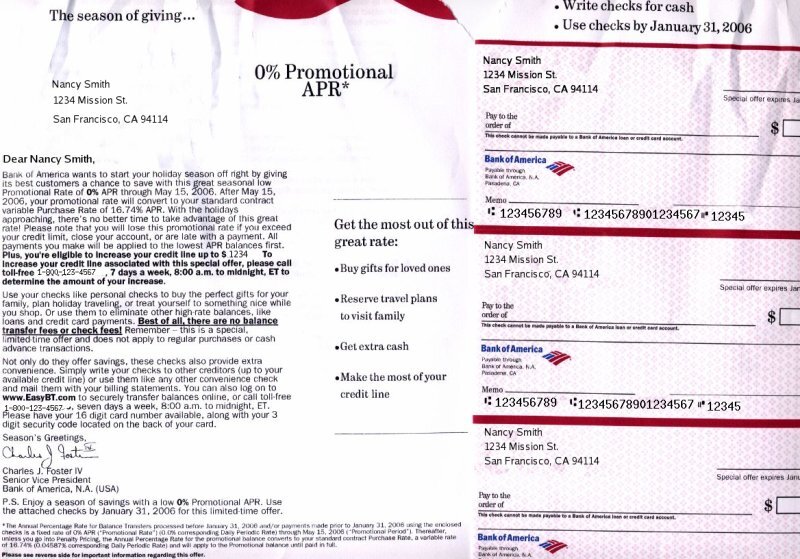
Many credit card companies also try to attract customers by offering them favorable introductory interest rates (or even interest-free periods) for a few months. They are particularly interested in having you transfer balances from competitors' cards to the new card. We constantly receive such offers: "0% Introductory Rate." This initially sounds good to many, but the interest rate naturally increases after the introductory months expire. And often, the favorable rate only applies to the transferred amount and not to new purchases.
Although everyone thinks that there are countless companies offering credit cards, the five largest, namely JPMorgan Chase, American Express, MBNA, Bank of America, and Citigroup, dominate 65% of the market, according to the Consumer Reports magazine in November 2005. Of course, the credit cards still come in a variety of different designs. Michael particularly loves the cards that have some kind of bonus programs, such as getting 2% back on certain purchases at the end of the year or being able to collect eBay points when using the card. However, we always attract the most attention with our Linux Mastercard (incidentally from MBNA), which features the Linux penguin on the card. Everyone always comments on how nice it looks, but they usually don't know that behind Linux lies Michael's favorite operating system for the computer.
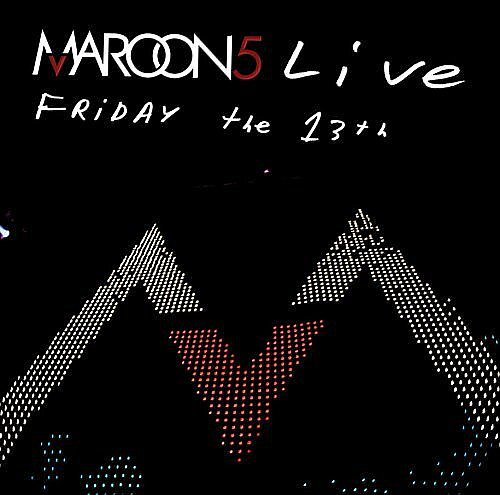
Michael Actually, I shouldn't really recommend this CD because it has a nasty copy protection. Of course, I didn't buy it; instead, I listened to it (legally!) on the new Yahoo Music Engine (YME). There, you pay $11.99 a month and can then listen to unlimited music, day and night, and choose from more than a million songs. It's still in the beta phase and extremely unstable, but as a Yahoo! employee, I get it for free, so I can't complain. Apple will be on alert if this takes off and competes with its iTunes!
About the CD: I've never heard a live album like this in my life. Precise sound, an enthusiastic audience, and the voice of singer Adam Levine hits every note absolutely perfectly, which is actually amazing given the complicated melodies of Maroon 5. I've listened to the album many times from start to finish, and I could go wild with every song. I just have to be careful at work not to stomp my feet too hard when I listen to the album with headphones.
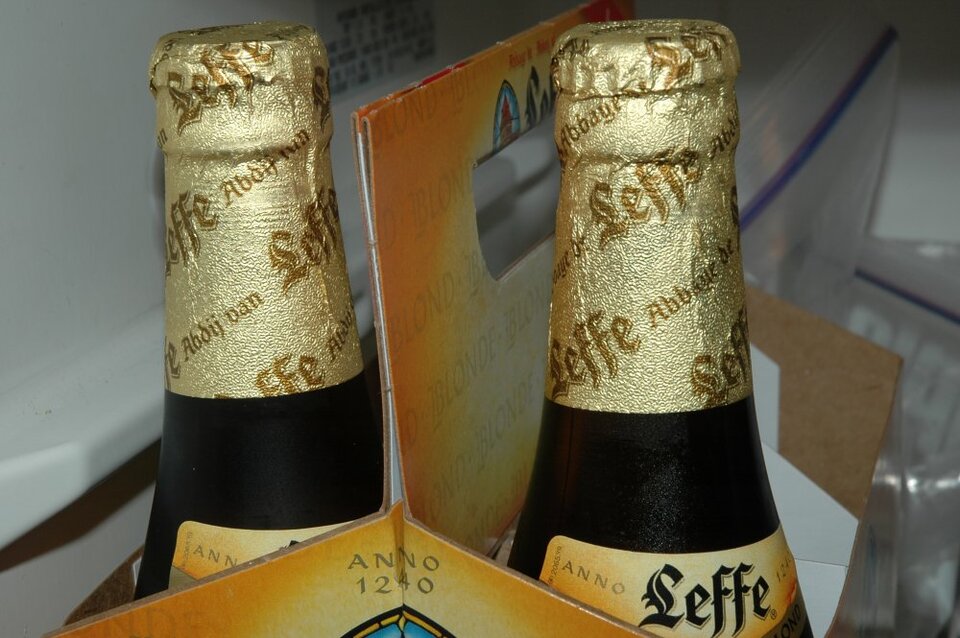
In the meantime, I'm not really used to German beer anymore. Of course, when I travel to Germany for a week every few years, Andechser Doppelbock and Augustiner Edelstoff are provided there. But in the absence of these great beers, I've adjusted my beer taste in America. Nowadays, I enjoy drinking "India Pale Ale" (IPA), which is a flavor that might seem almost bitter to uninitiated palates. "White Hawk" from the Mendocino Brewing Company is one of the best.
But recently, I discovered a new treat at the beer shop around the corner: the Belgian "Leffe." It costs the incredible price of $9.95 per six-pack (!), but it is truly unique. Extremely smooth and it flatters the palate immensely, I think there's a hint of wheat beer in it. There are also other Belgian beers, like "Chimay," which is sold in larger bottles at wine prices. Not bad either, but where are we headed if a bottle of beer suddenly costs $6? Trader Joe's seriously sells it. Sometimes the Americans are a bit crazy.
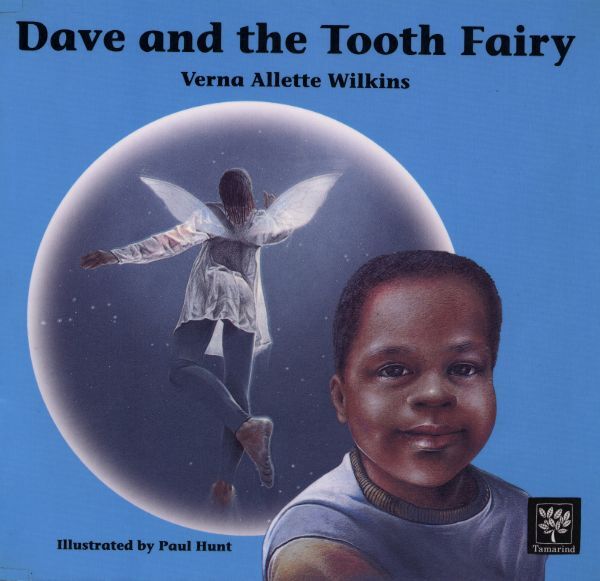
Angelika The little things that are different in Germany compared to America always fascinate me anew. In the summer, we visited our friends in Portland, and the son of the house had a loose tooth. He excitedly told us that as soon as he lost the tooth, the Tooth Fairy would come, which greatly astonished Michael, as he had never heard of the Tooth Fairy before. I was already familiar with her from various stories and children's books from the kindergarten in the Tenderloin, where I work. Here's how it works: When a child loses a milk tooth, they place it under their pillow. During the night, the Tooth Fairy (i.e., the parents) comes and exchanges the tooth for money, usually 1 dollar nowadays. In contrast, I used to place my milk teeth in a matchbox lined with cotton. There was no money involved.
Your crooked-toothed Europeans in San Francisco:
The translation of "Angelika und Michael" to English is "Angelika and Michael.