
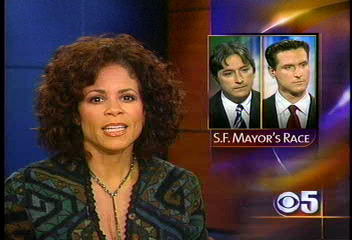
Angelika After we had just recovered from the shock that "Mr. Terminator" is now governing the state of California, another election campaign started in San Francisco. The city is looking for a new mayor, because Willie Brown, who had steered the city's affairs for eight years, has to step down, as required by reelection laws. San Francisco has always been an island in the American sea: liberal, a little quirky, firmly in Democratic hands, so to speak, a Bush-free zone.
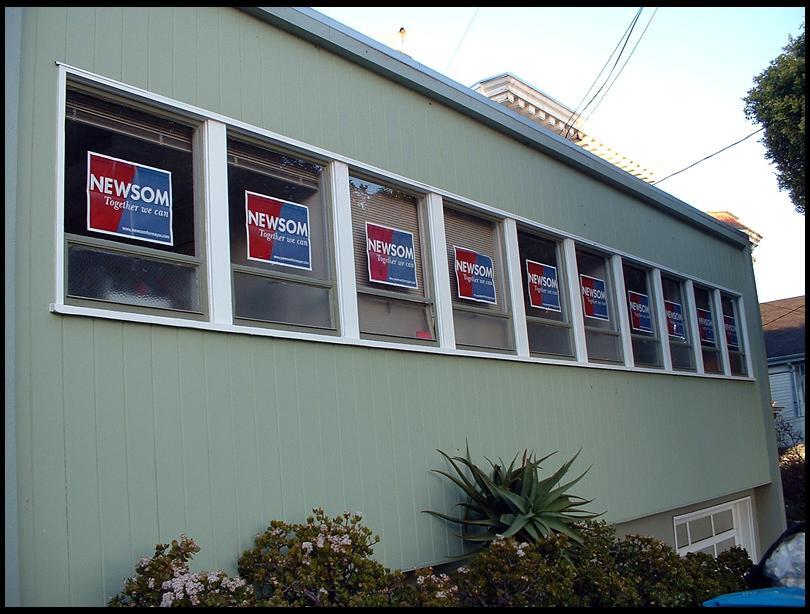
This was also reflected in the candidates. Of the six candidates, only one belonged to the Republican--thus conservative--party and promptly received the fewest votes. Matt Gonzalez, a Green Party member who entered the mayoral race at the last minute, is considered the candidate with the most leftist ideology. Gavin Newsom, according to polls the favorite, is a Democrat, but in San Francisco, he is often described by critics as a closet Republican--an exaggerated characterization. The wealthy businessman Newsom sees himself as a centrist and primarily represents the economic interests of companies and businesses in San Francisco.
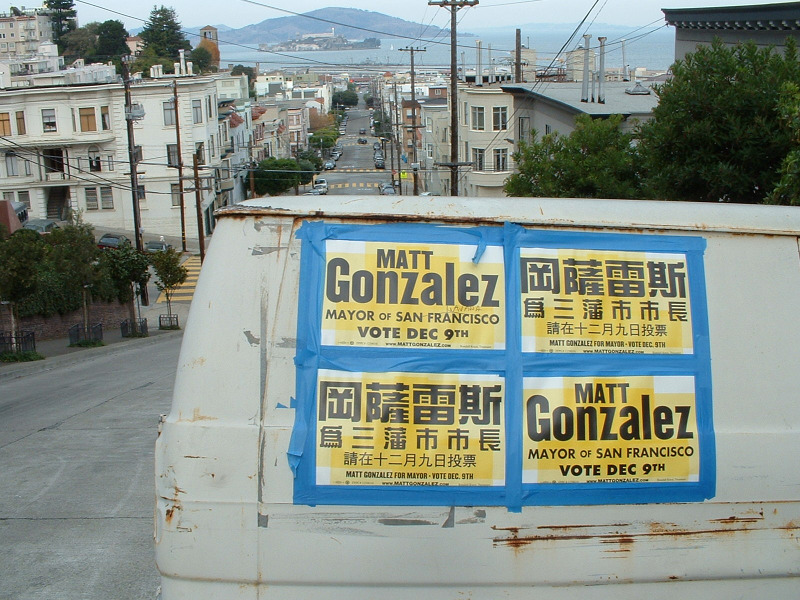
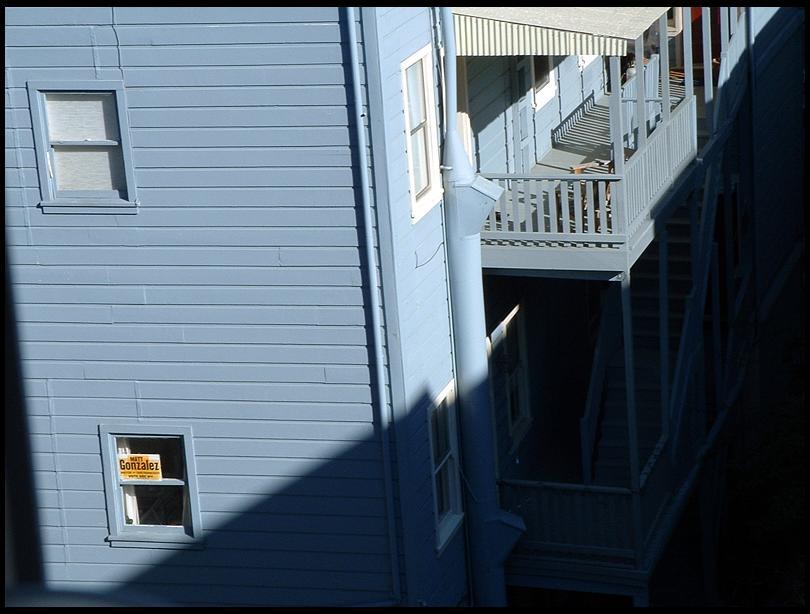
Transferred to the German party system, he seems to me more like a dynamic FDP man. However, Newsom also did not secure the required 50% of the votes on November 3 to win the election. Since Gonzalez landed in second place, albeit significantly behind Newsom (by 40,000 votes), a runoff election will take place on December 9, and as of now, the city seems to be splitting into the Gonzalez and Newsom camps.
Gonzalez, who only switched from the Democratic Party to the Greens three years ago, always reminds me of Joschka Fischer during his Sturm und Drang phase, when he still sat in the Bundestag wearing sneakers and jeans, and everyone in Germany smirked at green politicians. The Greens still have a hard time in America, with only 1% of voters supporting them. In San Francisco, it's three percent. It would be nothing short of sensational if San Francisco, a city of some significance on the West Coast, were soon to have a Green mayor.
However, I believe that for the people in San Francisco, the green party affiliation takes a backseat. What matters is the future of the city. Naturally, "green" ideas are indeed part of Gonzalez's program. For example, he promises, much to the delight of Michael and the other dedicated cyclists of San Francisco (a group not to be underestimated), to extensively expand the bike lanes throughout the city. According to Gonzalez, the MUNI, the public transportation system that includes streetcars, buses, and cable cars, should be free of charge for seniors, youth, and people with disabilities. He advocates for keeping large retail chains out of San Francisco's neighborhoods, a hot political topic in the city. Additionally, he wants to impose higher taxes on larger companies.
He became popular with blue collar workers by supporting, in his role as acting city councilor, the initiative to raise the minimum wage in San Francisco to $8.50 (for comparison: the minimum wage in California is currently $6.75), which voters approved by a large majority on the aforementioned November 3rd. His worker-friendly attitude also earns him approval among the South American immigrants living in the Mission. Additionally, he speaks Spanish, as he grew up in a bilingual household (Spanish-English) in the Texan city of McAllen, which is four miles from the Mexican border. Later, he studied law at the prestigious Stanford University and worked as a public defender in San Francisco. By chance, I recently flipped through various TV channels and was captivated by what was actually a boring city council meeting. One of the councilors stood out with his charming, intelligent, and substantive contributions to the discussion. You guessed it: I had come across Matt Gonzalez. Even his political opponents always admiringly note that Gonzalez is not for sale, a refreshing change, as Willie Brown's cronyism achieved notoriety during his time as mayor.
But once again back to Newsom: There is only one issue that stirs emotions in this city more than the unreliability of the MUNI: the homelessness problem. So far, every mayoral candidate has promised to solve this problem permanently, and each one has failed miserably (including Willie Brown). Newsom tackled this issue, already eyeing the mayor's office, in his role as a city council member with his flowery campaign "Care not Cash," which completely polarized the city. The idea behind the campaign is to drastically reduce cash payments for homeless welfare recipients and replace them with entitlements to assistance such as housing, food, and drug rehabilitation--ensuring that the cash is not converted into drugs and alcohol.
The idea may initially sound reasonable, but there are already not enough homeless shelters in San Francisco, let alone affordable housing or therapy spots, especially for the high proportion of mentally ill people living on San Francisco's streets. To make a long story short: "Care not Cash" was put before voters as the ballot initiative "Proposition N" in November 2002, received almost 60% support, and immediately ended up in the courts. There, Newsom faced criticism because the judge ruled that only the city council (and not a ballot initiative) could decide on the matter. After endless legal wrangling, the city council voted again on "Care not Cash"--and this time against it.
In America, by the way, every election campaign relies on so-called "endorsements" (support, backing). Newspapers, for example, openly and very directly state in their editorials shortly before the election who their readers should vote for. The idea that the Süddeutsche Zeitung could write "Vote for Schröder!" always amuses me greatly. But it's not just newspapers that endorse certain candidates; unions and all sorts of other interest groups do as well. Therefore, a crucial part of every campaign is who endorses whom. For example, Al Gore and Willie Brown support Newsom, which undoubtedly influences many voters. Who I endorse, once again, interests no one. What a pity! I want a green mayor!
But regardless of whether Newsom or Gonzalez succeeds on December 9, San Francisco's mayor will be a young whippersnapper: Newsom is 36 and Gonzalez is 38.
Greetings from the city that keeps you young:
Michael und Angelika