
Michael If someone is arrested for a crime in America, there is the possibility, as in Germany, that the examining judge will release the prisoner on bail until the actual trial. If there is no direct risk of flight, this is quite common. For minor offenses like marijuana possession, about $5,000 must be deposited with the court, but for more serious crimes, the amount can quickly reach $100,000. In the case of Michael Jackson, it was recently $3 million. The bail is returned if the defendant appears for the trial.
For those who don't have the urgently needed money or can't get it from the bank, there's a special industry in the USA: the "bondsmen," who issue "bail bonds." These small businesses typically set up around courthouses. In somewhat shady offices reminiscent of "Phil Marlowe," they issue bonds to equally shady defendants for a substantial fee (about 10% of the bail amount). To keep the risk manageable, the bondsman will first try to involve the defendant's relatives and personal assets, but to a significant extent, he must truly trust the defendant and take a calculated risk: if the defendant fails to appear in court, the bondsman must pay the full bail amount to the court.
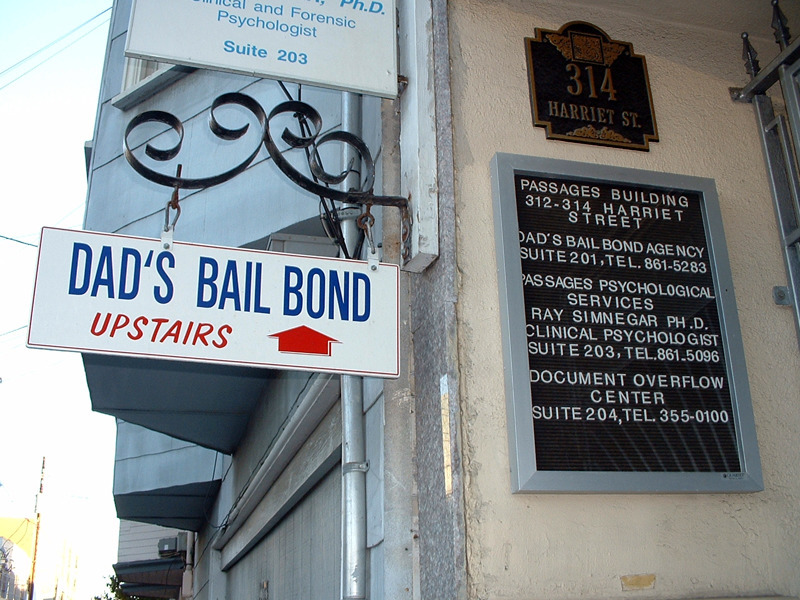
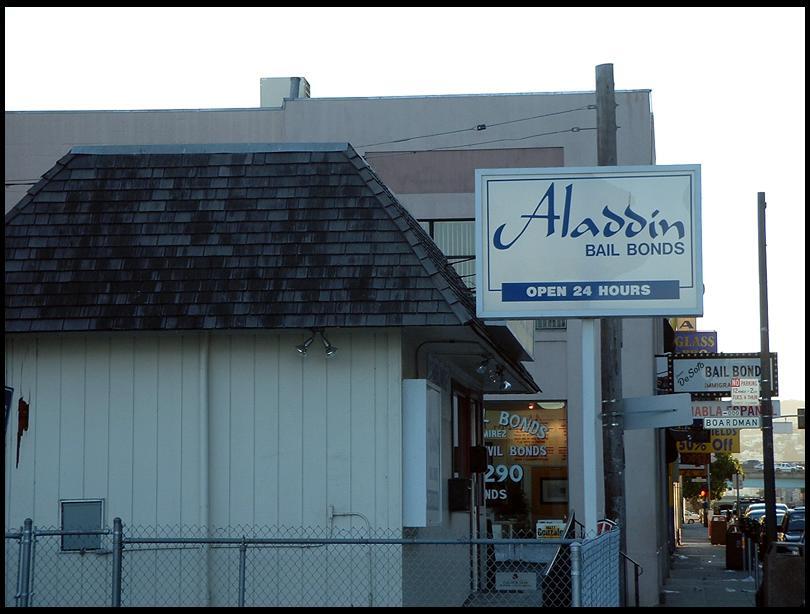
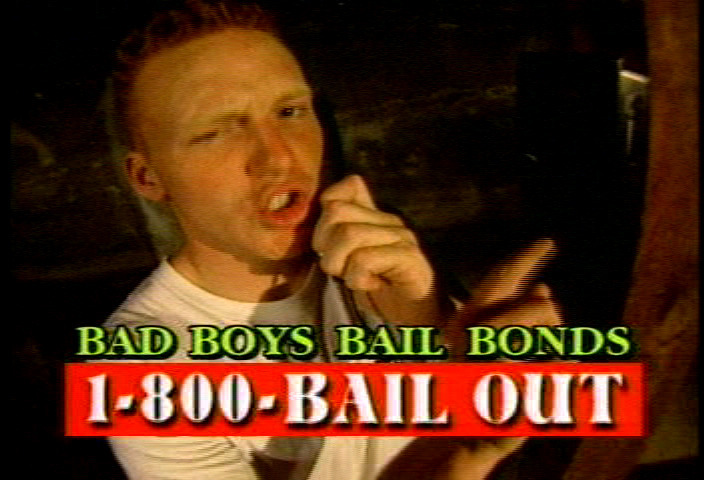
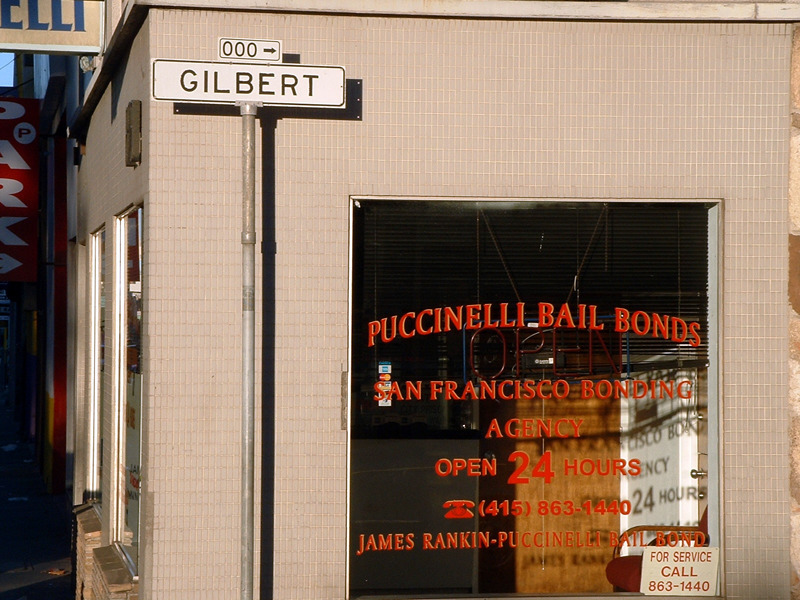
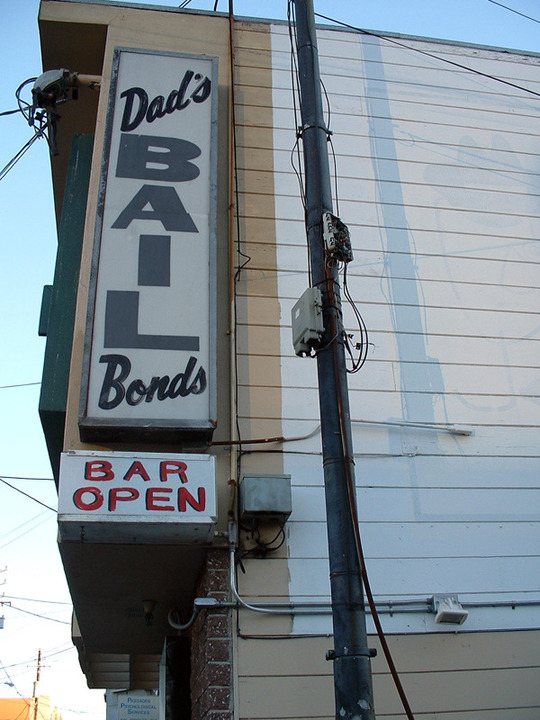
Next to the "San Francisco Criminal Court" on Bryant Street in SoMa, there are a few dozen of these small offices that often advertise their services to the bad guys with charming signs. The photos for this newsletter topic were taken by the newsletter reporter racing through SoMa on a bike with trembling hands, because the quirky characters operating there don't mess around. The company "Bad Boys Bail Bonds" is actually known nationwide and even advertises on television. And there's even "Aladdin Bail Bonds" and "Dad's Bonds"!
If the defendant actually absconds and does not appear for the court date, which happens in about 20% of all cases, the bondsman has a problem and only one option: He must bring the defendant in within the so-called "grace period" (six months in California) and deliver them to the police--otherwise, it becomes costly. For this situation, many bondsmen employ so-called "bounty hunters," daring types who, in serious cases, set out to capture the fugitive using methods that are often on the edge of legality and deliver them in exchange for a reward paid by the bondsman (usually 10% of the bail amount).
There are legendary figures like Ray Hawkins, a daring bounty hunter who claims to have captured 7,000 escapees in his 50 years of service! The professional bounty hunters do an excellent job: in 87 percent of all cases, they bring in the fugitives. And they don't even have to handle them gently: according to a Supreme Court ruling from 1873, bounty hunters are allowed to detain the bail jumper, who is considered a sort of commodity until officially arrested, even at their own home until they can safely deliver them to the police.
The bounty hunter business used to be relatively unregulated; it wasn't until January 2000 that a law was enacted in California regarding the training of bounty hunters. It mandates that future bounty hunters complete a 40-hour course on arresting techniques, a 12-hour legal course focusing on bail law, and a 3-hour security guard training. The exact number of bounty hunters in the USA is unknown, with estimates ranging from 1,200 to 7,000.
In California, bounty hunters must be at least 18 years old (for comparison: you can only buy alcohol in a supermarket from the age of 21) and have no blemishes on their criminal record. To arrest a fugitive, they must notify the police no more than 6 hours in advance. They are also not allowed to arbitrarily enter any private residences or deceive people with uniforms or badges. No later than 48 hours after a successful arrest, they must hand over the fugitive at a police station.
For success in this rough business, a bounty hunter needs a good connection to the underworld and a knack for dealing with bad guys. He must know where the underworld bars are, where the shady characters are hanging out. He's snooping around like a private detective, locating relatives and ex-girlfriends who might want to get back at the target. He spreads rumors in the underworld and gets the startled crooks to call fake phone numbers, which then, in turn, locate the calling phone.
One of the most famous bondsmen in San Francisco is not a man but a 60-year-old woman named Mackenzie Green from the bail bond agency "Mackenzie Green and Partner," known for taking on almost any bail. In case one of her clients disappears, she has a few strongmen for support, but she still goes bounty hunting herself for the "thrill."
Now, have you caught the scent of adventure? On the internet, there's a Training Seminar for Bounty Hunters and even a Certificate for Bail Enforcement Training available.