
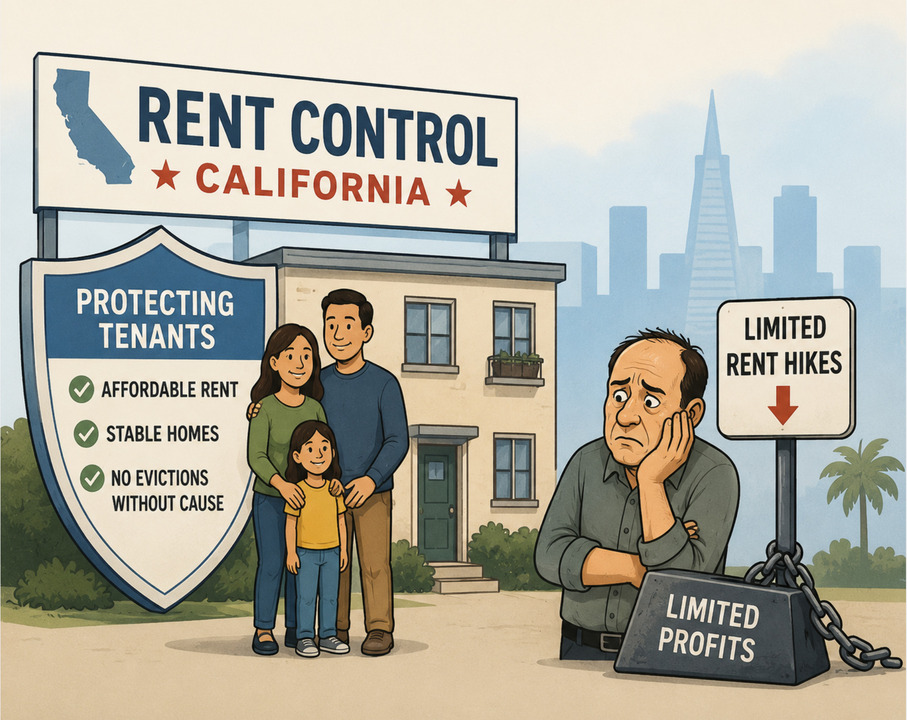
Angelika As we had feared, a rent increase notice landed in our mailbox at the end of July. As you diligent newsletter readers know, our building was sold last year. Since our building is subject to San Francisco's rent control regulations, the rent may only be increased once a year by a specified percentage. This year, the city set it at 1.6%. The landlord must give at least 30 days' notice of a rent increase. So we will have to pay the adjusted rent starting September 1. We knew from the outset that this would happen, as all our neighbors had already received rent increases. Our previous landlord, Gus, had not raised the rent every year, and his daughter, who later took over management, did not get around to it until she wanted to sell the building.
Rents in San Francisco have been exorbitantly high for as long as anyone can remember. The city is currently experiencing another full-blown boom, driven by artificial intelligence companies that are springing up like mushrooms all over San Francisco. It reminds us very much of the dot-com boom. Average rents are currently around $2,700 to $2,800 a month; depending on size and neighborhood, one-bedroom apartments range from $3,500 to $4,100, while a two-bedroom apartment will set you back between $4,900 and $6,000 a month. Absolutely insane! Since the neighborhood where we live is highly desirable, prices here tend to be at the upper end of the range. Another problem is that there are hardly any apartments available at all. The vacancy rate has once again become extremely low and, depending on the source, is around 2–4%. That is why our apartment is still exceptionally inexpensive by San Francisco standards: even with garage spaces and despite the rent increase, we are still paying below market rate.
Interestingly, the rent increase notice also listed several rather opaque charges. Together, they amount to only a little over $5 a month, but you have to keep your wits about you to avoid being taken for a ride. One charge was labeled "Water Bond Passthrough 2025," and the other "Bond Measure Passthrough 2025–26." These are costs that, under certain conditions, the landlord can pass on to the tenants in addition to the rent. In the case of the first charge, San Francisco allows landlords to pass 50% of certain water-rate increases on to tenants. However, this fee may not become part of the base rent.
In addition, the city allows bond measure costs to be passed through for rent-controlled apartments in San Francisco ("Bond Measure Passthrough"). This means that landlords may pass a certain portion of property-tax increases arising from voter-approved general obligation bonds directly on to their tenants as a separate monthly surcharge. And people say the US does not have its share of bureaucracy!
Amusingly, we are now also receiving interest on our security deposit for the first time. Apparently, this interest must now be paid out annually in San Francisco. That had never happened before. Here, too, the city sets the interest rate anew each year. It is currently 4.2%. The landlord may then deduct 50% of that as an administrative fee for the San Francisco Rent Board. Who comes up with these things?