
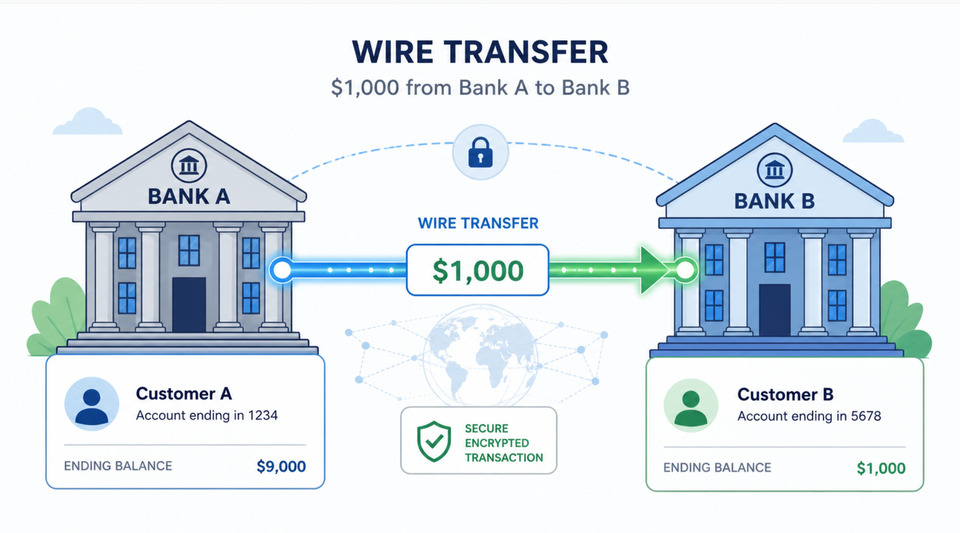
Michael For almost 30 years now, we have paid our rent every month with a check. We put it into a stamped envelope addressed to the landlord and drop it into a mailbox. About a week later, we see on the bank's website that the check has been cashed and the money has left the account. You might think this could be handled more easily by direct debit, but far from it: bank transfers and direct debits are still surprisingly complicated in America.
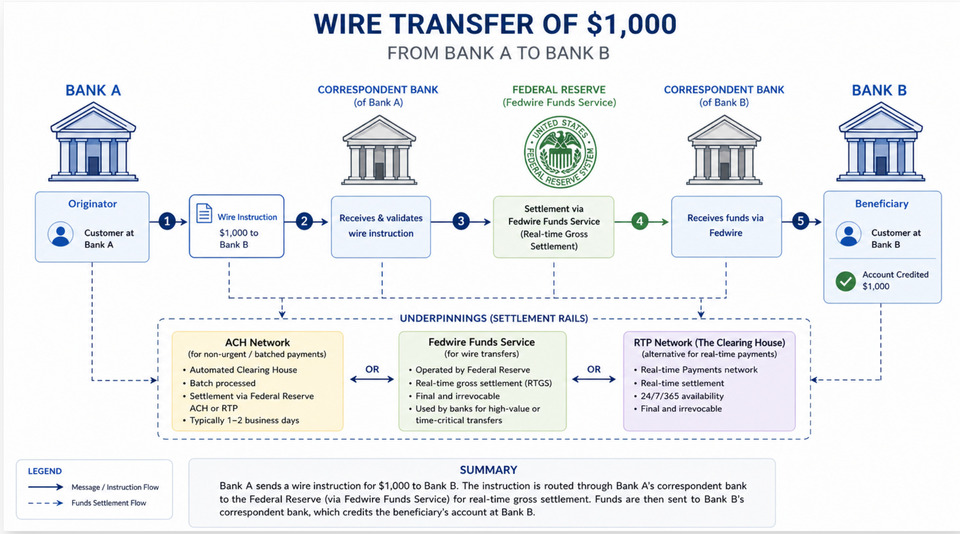
First of all, most transactions are handled with credit cards. While Amazon Germany happily charges purchases directly to the buyer's bank account, Amazon USA charges the buyer's credit card, which in turn collects the money from the customer at the end of the billing period. The costs incurred by the merchant are substantial: the credit-card company takes between 3 and 5% of the invoice amount. The benefit to the store is that it gets its money within a few days, while the card company absorbs any fraud.
In recent years, more and more government agencies have realized that these card fees are outrageously high. Besides, the DMV and the IRS know their customers, and it is relatively unlikely that someone would use a stolen card to commit fraud when paying vehicle-registration fees: it would come to light immediately, and the government agency would have the culprit in its grasp.
Consequently, the DMV and IRS have charged extra fees for many years if you pay vehicle-registration fees or a tax debt by credit card. As an alternative, they offer to withdraw the money from the payer's account when the payer provides an account number and routing number. The government agency then initiates what is known as a debit, a transaction not unlike a German direct debit. The money is withdrawn from the payer's account and credited to the agency.
But if, for example, a tenant wants to pay rent by bank transfer, the fees are eye-opening: banks charge exorbitant amounts for a wire transfer from a checking account to a private individual, typically around $20. Institutions sometimes waive the fee for customers with extremely large accounts. Banks also allow companies to set up regular transfers known as "direct deposits," for example to pay salaries. When a private individual opens a bank account, the account is usually free if the customer establishes one or more direct deposits. These can include not only wages from an employer but also regular government payments such as Social Security benefits. That ties the customer to the bank and keeps away ne'er-do-wells without a regular income.
In private life, nobody simply transfers money to another account. Instead, service providers such as Venmo or Zelle step into the breach. When a small contractor repairs something at the house, he usually wants to be paid through Venmo. The payment then reaches the recipient immediately, securely, and irreversibly, while Venmo bears the risk when it subsequently withdraws the amount from the payer's bank account.
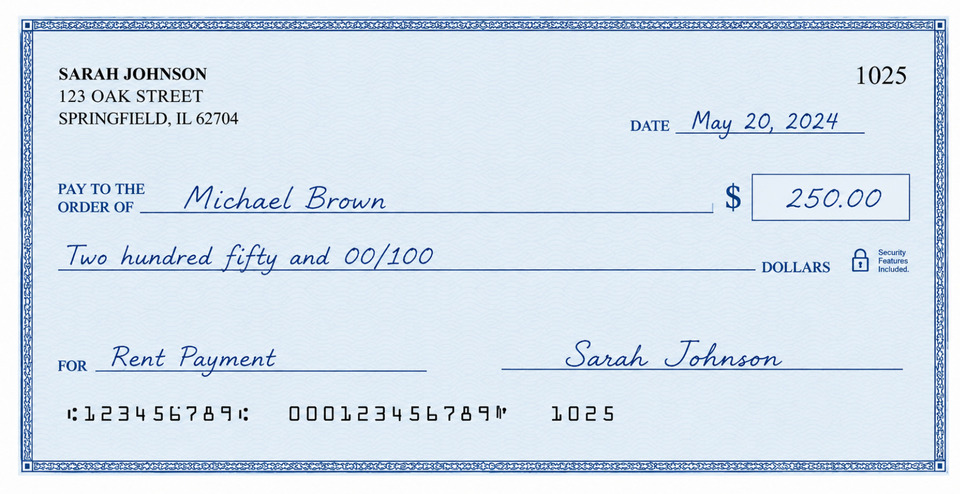
In the past, payments to private individuals were made by check. A father gave his college-age son a check. If you had no cash with you and wanted to pay your share of lunch, you gave the other person a check. Rent, too, was—and still is—paid by check, either by sliding the rent check under the landlord's or property manager's door at the beginning of the month, or by sending it through the mail.
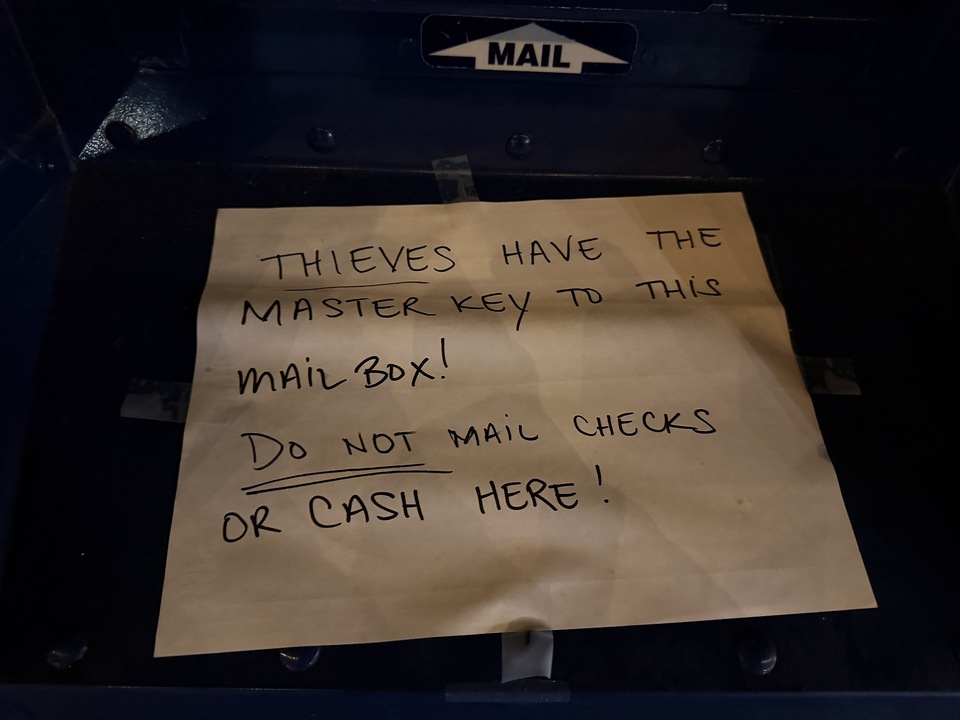
What happens if the check is stolen? That is not as unlikely as it sounds. Recently I noticed that someone had posted a note on a mailbox—ironically, the one outside the Noe Valley post office—after checks he had deposited there were stolen (Figure 4).
In such cases, you might expect the bank to verify that everything is in order when someone tries to cash a stolen check. It might check, for example, whether the person cashing it is the payee named on the check, or whether the signature with which the recipient endorsed the back matches the signature on file for the recipient's account. Wrong—the bank checks nothing at all!
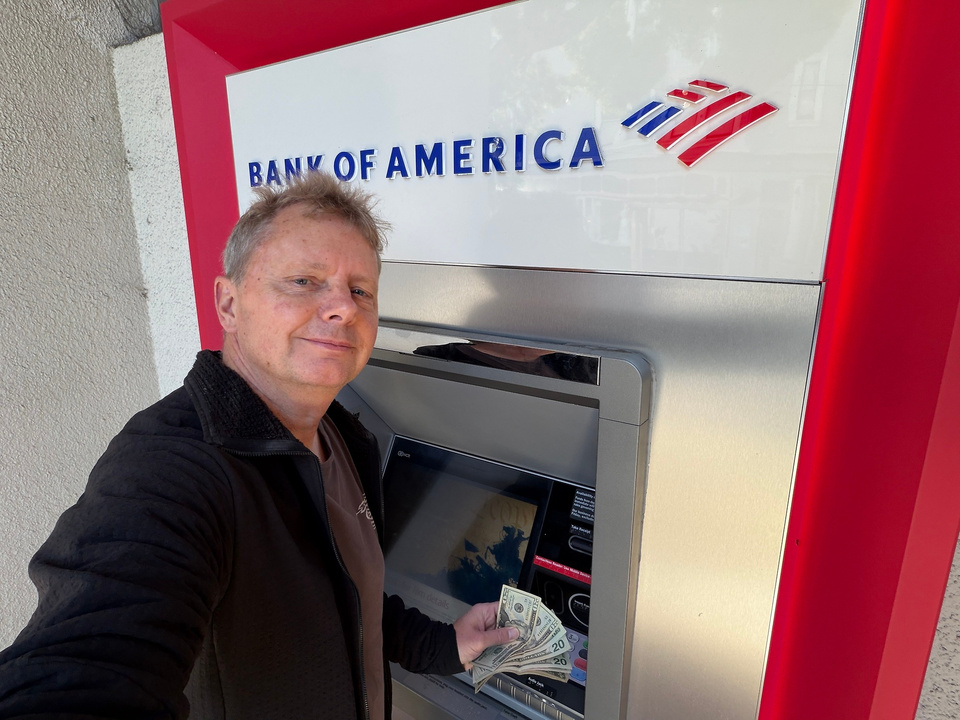
Not even for checks worth several thousand dollars. The bank simply cashes everything without scrutiny and acts only if the person who wrote the check complains. That does not happen until the intended recipient contacts the sender to complain that the check has not arrived, whereupon the sender looks and discovers that it was indeed cashed. After some back-and-forth, the bank then has to reverse the transaction, usually swallowing the loss itself, and the sender writes a new check and sends it to the recipient—hopefully with better luck this time.
The latest trick is known as check "bleaching." The criminal removes certain fields from the check and inserts a new payee and amount. Social media is full of stories about people who have been cheated out of thousands of dollars this way. Anyone who does not watch the activity in their account like a hawk risks major losses that can be recovered only with considerable effort.