
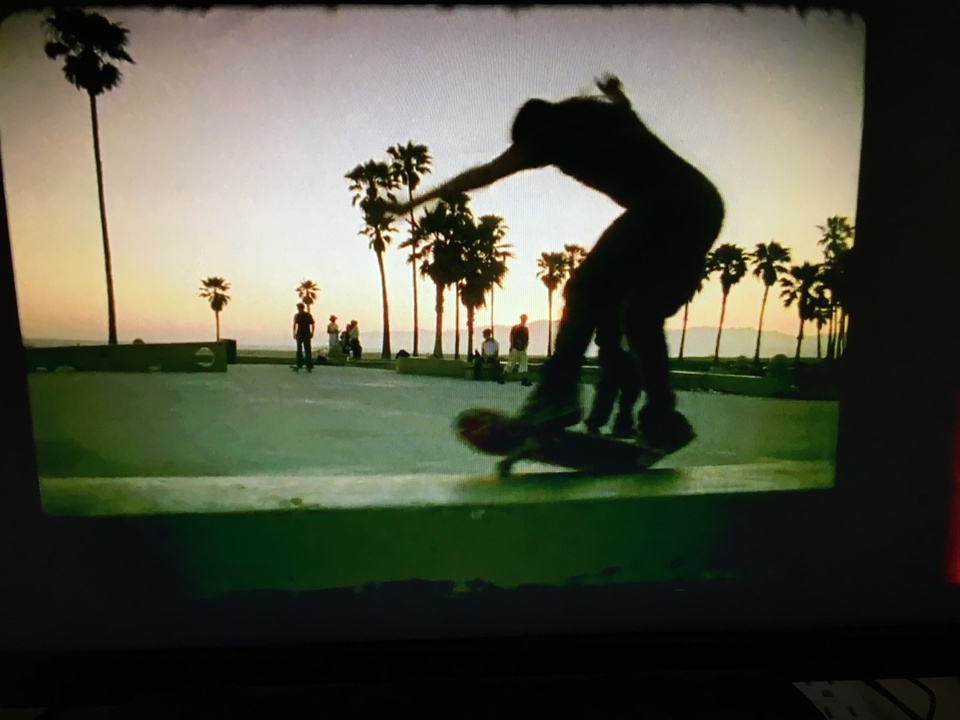
Michael In Rundbrief 10/2016 I have already told you about my newly awakened passion for zooming through San Francisco on a skateboard. You should also know that in my youth, in the late 1970s in Germany, I used to race down hills on a skateboard in my home town of Augsburg Kriegshaber with lots of speed. However, I never had contact with real skateboard gangs where I could have learned any tricks. The sport was simply too exotic in Germany at that time.
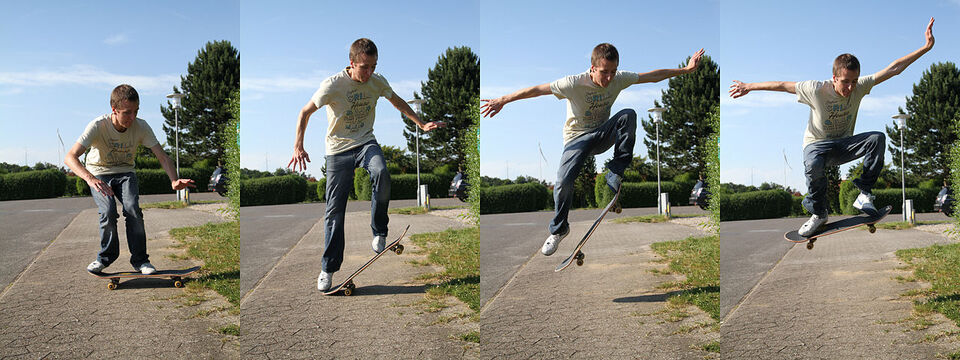
In urban skateboarding in America, the focus is on covering larger city distances, essentially getting from point A to point B, while skillfully and elegantly overcoming any obstacles such as curbs, wheelchair ramps, or stair edges. Kids in California learn as early as preschool age how to ride off a high curb without the board's front edge getting stuck on the street and the rider abruptly stopping and faceplanting. The trick is that the deck of a skateboard curves upwards at the front and back, and when you place your foot on the back and press down, the front of the board lifts, allowing you to ride horizontally off the curb onto the street. The front wheels stay in the air until the back wheels drop over the edge. It looks very cool, especially if you maintain an unimpressed expression, as if you've done it 100 times a day.
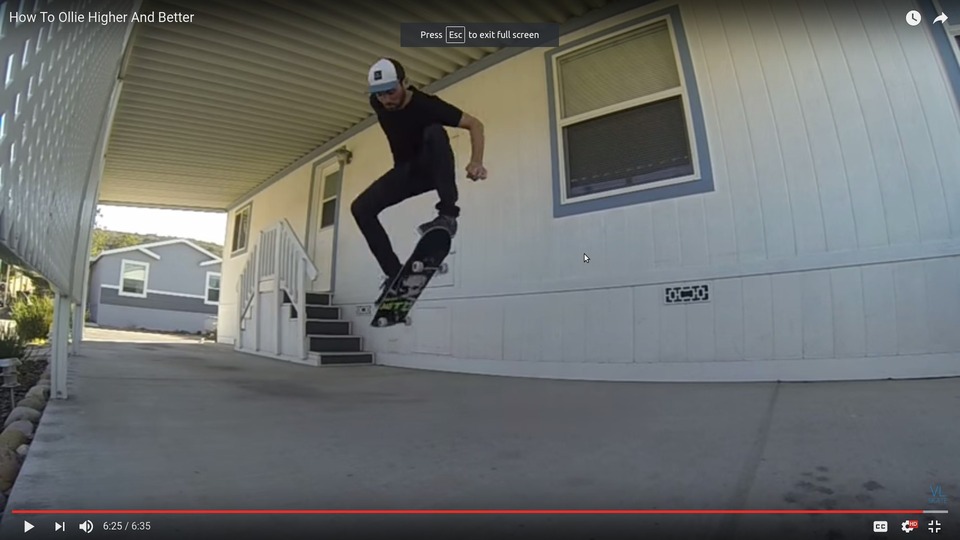
The reverse scenario, where the rider jumps from the street up onto the sidewalk at the curb, requires years of practice to master the so-called "Ollie." This maneuver was long considered completely impossible and was only invented in 1978, long after skateboards existed, by an American named Alan "Ollie" Gelfand. He discovered that a skateboard can be catapulted upwards, up to a meter high, and horizontally into the air without using external aids or hands. During an Ollie maneuver, the rider stomps with full force on the back part of the board until it hits the ground, while simultaneously sliding the front foot along the board towards the tip. This double movement first lifts the front of the board and then immediately levels it out again, quite high above the ground. Really skilled riders not only jump up curbs this way but can often seemingly effortlessly fly over beer crates, taut ropes, or park benches.
I'm certainly not that good yet! Some time ago, I ordered a 40cm high skateboard ramp from a mail-order catalog, but when I set it up in our shared garage, I feared I would break all my bones. At my age, you have to go to work the next morning and can't hang around in emergency rooms! So, I ordered special low ramps on eBay, which race car drivers use to push their lowered cars onto the scales before a race. It took some courage, but with elbow and hand protectors, I finally rode the skateboard over the ramp, which was 5cm high at its highest point, in the privacy of our ground garage, away from the public eye, for the first time.
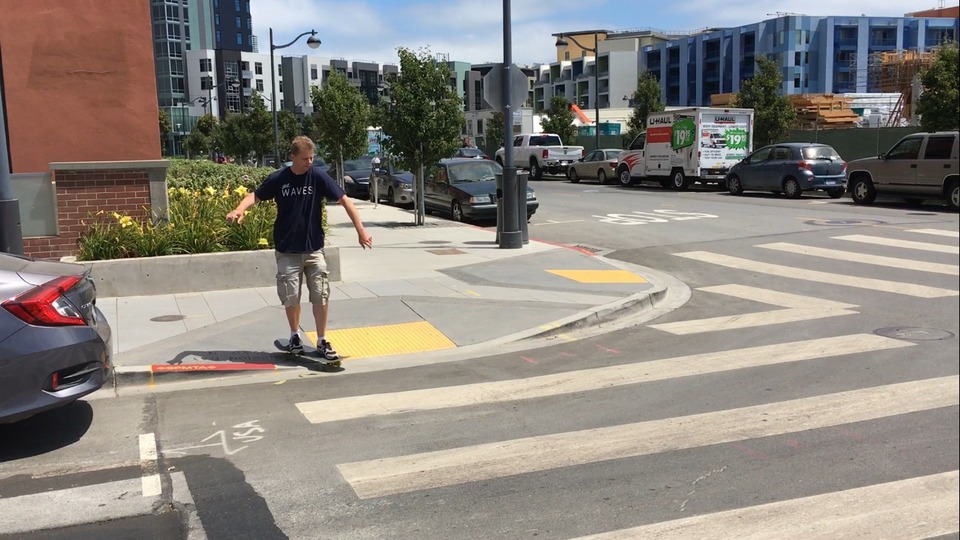
In the meantime, I have even slightly improved; when I dash to the factory bus stop in the morning or to the supermarket a few blocks away in the evening, I can already ride up and down the lowered curbs. I still need to practice the ollie, but I'll get there.