
Angelika Every day we receive new bad news from the White House. It feels like we are in a bad TV show. Yet, despite the daily drama, there is political deadlock. Although Republicans have solid majorities in the House of Representatives and the Senate, and a Republican president, nothing is moving forward because Republicans are so divided among themselves and the factions within the party are so extreme that compromises seem hopeless.
At first glance, this is good for population groups that neither voted for Trump nor are close to Republican policies. But on the other hand, everything is going downhill. Even the promise to improve infrastructure has not yet been fulfilled, although a broad majority considers it necessary. Anyone who, like me, has to navigate around the potholes in California's highways every day to avoid getting a flat tire knows what I'm talking about.
Trump was determined to overturn Obamacare, but despite massive bargaining and threats, the matter is now on hold. Instead, Republicans now want to reform the American tax system, which experts consider a complete madhouse. The American tax system is one of the most complex in the world (I'm not exaggerating!) with many special deductions and loopholes. So it would indeed make sense to simplify it. However, Republicans have no better idea than tax cuts, mainly for the super-rich and corporations. A proper reform, however, would need to include tax cuts, close loopholes, and raise more taxes to improve the state budget, as well as achieve a fairer redistribution of the tax burden.
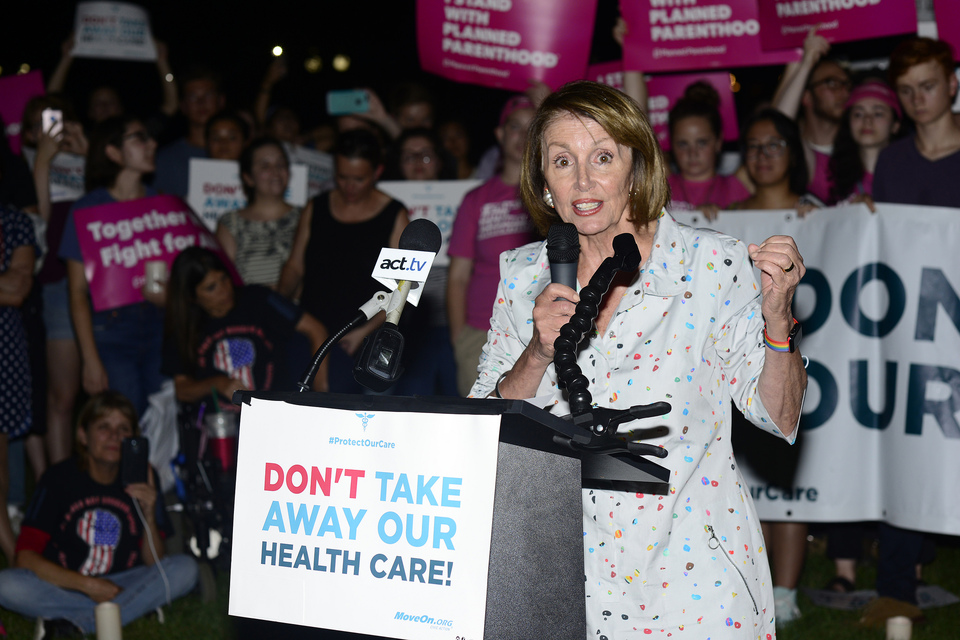
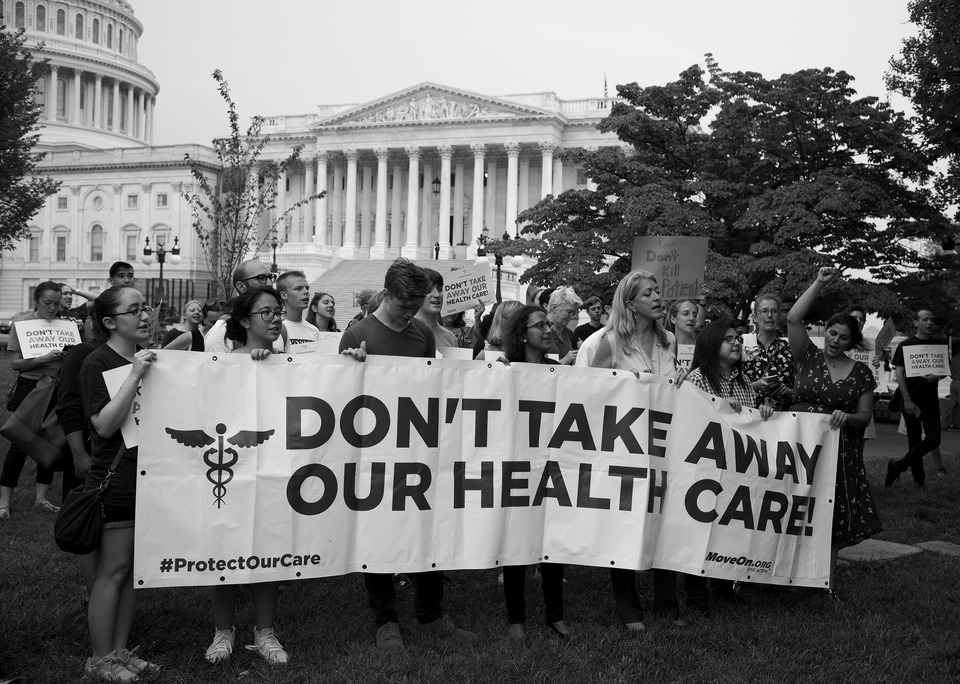
But I digress. I actually wanted to report on the failed healthcare reform. Why did it not pass, even though Republicans have a majority? First of all, it is always easier to criticize something than to come up with something new. For seven years, Republican politicians have railed against Obamacare but never made the effort to develop a serious counterproposal.
When they finally got their turn, they cobbled together something that would have meant tax relief for wealthy Americans through the back door. This was because taxes that had been imposed on higher incomes and wealth with the introduction of Obamacare were to be rolled back. Not to mention the loss of health insurance for millions of Americans. How so? Many people are unaware that under Obamacare, the state health insurance program "Medicaid" was significantly expanded in 32 states. I have previously written about the state-sponsored health insurance for the poorest of the poor (Rundbrief 03/2005).
Washington enticed individual states under Obama with substantial financial incentives if they agreed to provide health insurance to more of their low-income citizens through Medicaid. Medicaid is funded by taxes from both the respective state and the federal government. Thirty-two states accepted the offer and relaxed their conditions, allowing more low-income citizens to receive Medicaid. Under this regulation, 11 million citizens nationwide were additionally insured. If one is insured under Medicaid, the insured typically does not pay health insurance premiums and is also exempt from co-payments.
California expanded its Medi-Cal program (in California, Medicaid is called Medi-Cal) particularly generously. In 2016, a total of 12.2 million Californians were insured through the state Medi-Cal program. This is a record number, considering that California only has 30.25 million residents. In 2016, a four-person household in California qualified for state insurance if their income was $33,534 or less. Individuals could not earn more than $16,395 per year to access Medi-Cal. This corresponds to 138% of the Federal Poverty Level (FPL). However, higher income limits apply in California for pregnant women (income between 138% and 213% of the poverty level) and children under 19 (households with income up to 266% of the established poverty level).
Republicans have long been critical of the Medicaid insurance program, and they planned not only to roll back Obamacare but also to implement significant cuts to this social program. The now-failed legislative proposals aimed to cut off funding for the expansion of Medicaid programs, meaning that states would no longer receive additional funds to continue insuring a higher proportion of their citizens through Medicaid. Additionally, it was proposed that each state would receive a fixed amount for its Medicaid programs per Medicaid beneficiary.
Currently, it is the case that poorer states or states with higher healthcare expenditures receive more. For example, California currently receives 64.1% from Washington, while Wyoming only gets 51.1%. However, these planned restrictions on the Medicaid insurance program were among the reasons why Republican Senators Susan Collins from Maine and Lisa Murkowski from Alaska voted against the entire bill. John McCain also ultimately said no. So, for now, everything remains the same. The problem is that Obamacare actually needs urgent improvements to prevent insurance premiums from skyrocketing and to avoid the collapse of the insurance market. However, Trump announced that he intends to let it come to that.