
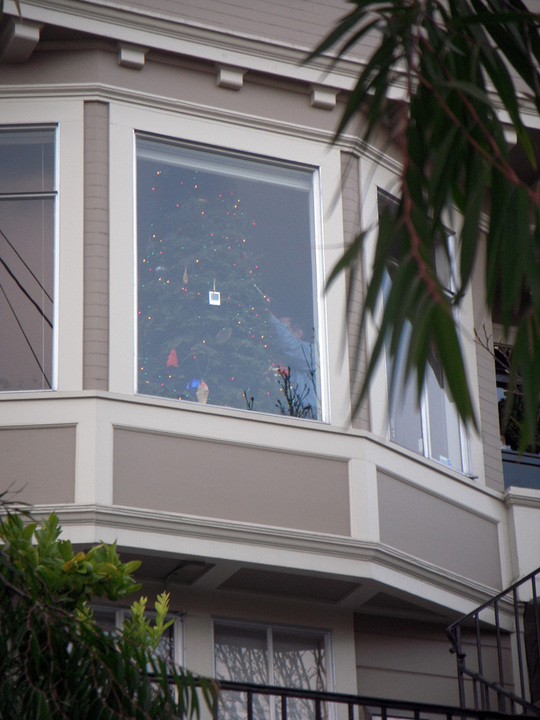
Angelika The tradition of decorating a fir tree and setting it up in the home, originally from Germany, is also widespread in the USA. However, the Christmas tree is set up much earlier here: many people buy their tree on the weekend after Thanksgiving (the fourth Thursday in November); they then immediately decorate it with Christmas ornaments and string lights, and leave it up and standing until after Christmas. I don't know anyone who has real candles on their tree. The branches of the trees available for purchase here are also much denser so that the cables of the electric string lights are not as noticeable.
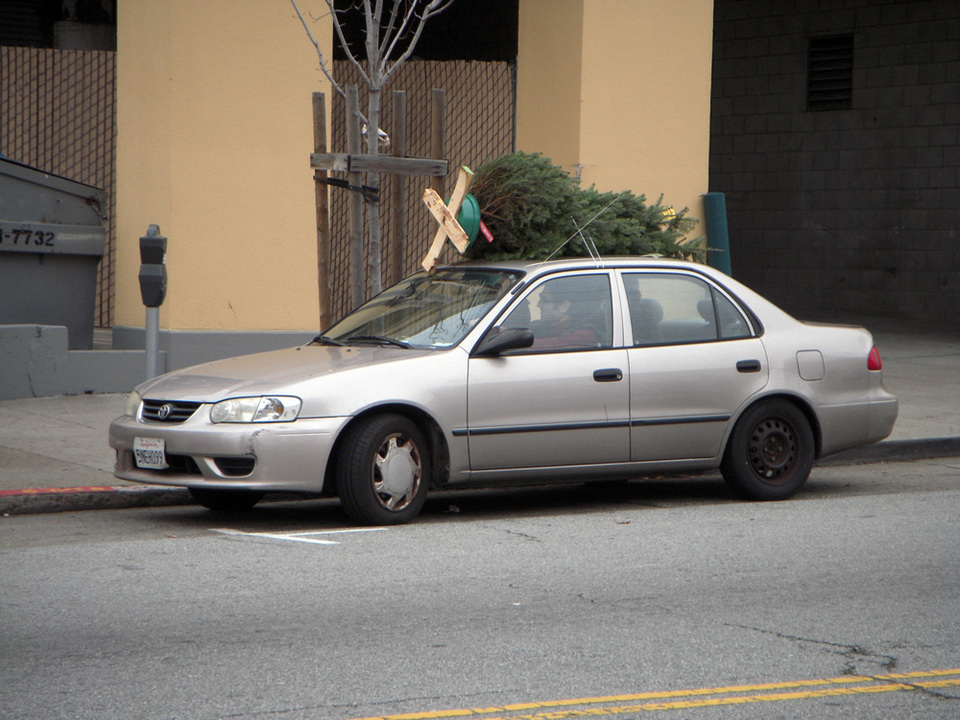
The Christmas trees are also not allowed to shed needles, as they stay in the homes much longer. Artificial Christmas trees are very popular because you simply pack them back into the box after Christmas and take them out again the following year. However, I won't have such a plastic thing in my house, even though we get dizzy every time we see how expensive real Christmas trees are in San Francisco. A tree about 1.80 meters tall now costs almost 80 dollars, including a water bowl and wooden stand. We are always happy to pay the slight extra charge for this ingenious construction, as I still remember the tedious work of properly placing the Christmas tree in the stand and the fear that it might fall over. The wooden stand simply consists of two wooden boards about 50 cm long, nailed crosswise to the bottom of the trunk. If the buyer also wants a watering bowl for the tree, a plastic bowl is added between the trunk and the wooden stand.
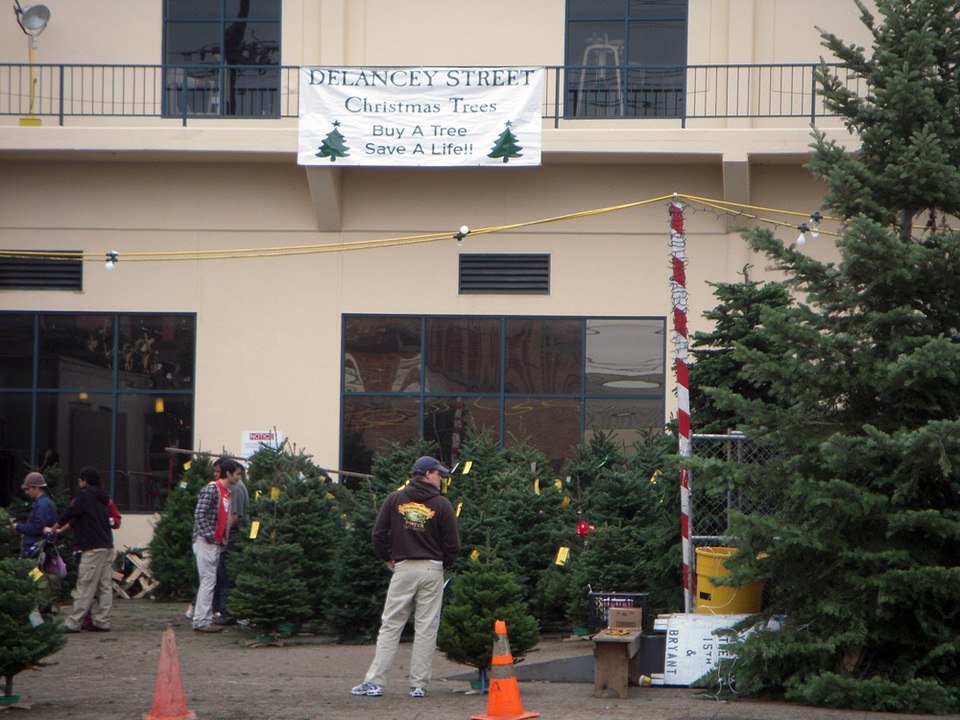
We always buy our Christmas tree, by the way, at the Delancey Street Foundation which offers a small selection of trees for sale on Bryant Street in San Francisco. This is a non-profit organization that was founded in San Francisco in 1971. It helps former drug addicts, homeless individuals, or violent offenders get back on their feet by sending them through a rehabilitation program that reintegrates them into society. What is special about the Delancey Street Foundation is that there are no paid employees; instead, the principle of self-help prevails. The foundation runs several businesses where the participants are working. However, the proceeds do not go to individuals, but into the community fund. In San Francisco, for example, the organization operates a restaurant, a moving company, and the seasonal Christmas tree sale.
But back to our Christmas tree: We always buy ours relatively late, because we don't decorate the tree until December 24th, and it only comes into the living room then, as anything else would feel strange to me. Before that, it has to patiently wait on the balcony for its big appearance.
Many cities also present a richly decorated Christmas tree in a central, public square, which usually shines in full splendor for the first time shortly after Thanksgiving when the lights are turned on during a festive ceremony. In San Francisco, such a Christmas tree adorns Union Square, and in New York City, it stands in front of the Rockefeller Center.