
Angelika In the last newsletter, I covered the American school system up to the high school graduation. After that, many people go on to attend an American university or college. In Germany, I often hear the question about the difference between a university and a college. In the USA, the term "college" is commonly used as a general term for both. A "college" in the classical sense takes four years and leads to a "Bachelor's" degree. At universities, various departments are often referred to as colleges, and you typically find a medical school and research departments. Furthermore, the university offers extended programs after the student has obtained a "Bachelor's Degree", in order to pursue a higher academic degree, the so-called "Master's Degree" or, for those eager to learn more, a doctorate.
According to statistics from the U.S. Bureau of Labor, 65 percent of American students with a high school diploma attended college in 2002. This percentage might seem a bit high to you, but you must consider that America does not have a tripartite school system like Germany. While high school graduates in Germany enroll directly in a specific subject at the university, the first two years at a four-year American college typically serve as general education, including humanities, natural and social sciences, arts, languages, and mathematics. After completing the general education requirements, the student then focuses their studies on one or two subjects ("majors"). Depending on the chosen major, they are awarded a "Bachelor of Arts" (B.A.) or a "Bachelor of Science" (B.S.) after an additional two years.
The "Bachelor of Business Administration" (B.B.A. = Bachelor of Economic Sciences) is also common. The four-year college can perhaps best be described as a combination of the German Abitur and the preliminary diploma. Many college graduates initially dive into the workforce once they have their "Bachelor" in hand and return to university at a later point for two to three years to earn a "Master's Degree." In America, we also often encounter people working in a profession that has little to do with their original "Bachelor's Degree." Changing one's profession or career goal is not considered a stigma in America.
In addition to the "Bachelor's Degree," there is another lower academic degree known as the "Associate Degree," which students receive after two years at a "Junior College" or "Community College," among others. These institutions offer the general education courses of the first two years of four-year college programs and often additionally focus on specialized vocational areas such as nursing, business, or technology. If one wishes to transfer to a four-year college later, this is generally not a problem, as the qualifications obtained previously are recognized.
Many students choose community college because of the more affordable tuition fees, which are often astronomically high in America for private universities. City College of San Francisco, for example, a community college that offers countless educational programs for further education, personal development (similar to the German Volkshochschulen), and the acquisition of various degrees, charges only $18 per unit for California residents (a California resident is someone who has lived in California for more than a year).
Most courses consist of three units per semester. So that amounts to 54 dollars for one course. If a student, for example, takes five such courses, they pay 270 dollars for the respective semester. Since many community college students are working part time, they do not enroll as full-time students. Many use community college as a second educational path. Perhaps you remember that I also diligently went to City College during the first months of our stay in San Francisco to study English as a second language.
For certain professional fields, including medicine, dentistry, pharmacy, law, and theology, students must first obtain a "Bachelor's Degree" in the USA before enrolling in an advanced study program to earn a "Master's Degree" (equivalent to a Magister in Germany). Dentists spend an additional four years in school after their "Bachelor's Degree," while lawyers spend at least three years. Becoming a doctor is also a lengthy process in the USA: after the "Bachelor's," there are four years of study, followed by a one-year clinical internship, which is then followed by specialist training (residency) that can last from one to eight years, depending on the specialty. American student life often takes place on the "campus." While in Germany university buildings of various faculties are often spread throughout the city, in America everything is typically centrally located in one place: lecture halls, research facilities, student dormitories, library and student bookstore, sports and recreational facilities, student organizations, and the cafeteria.
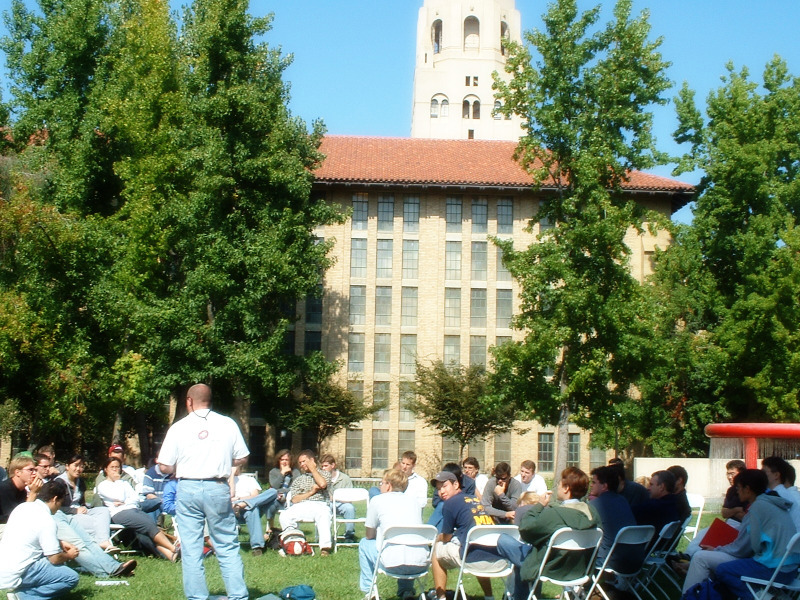
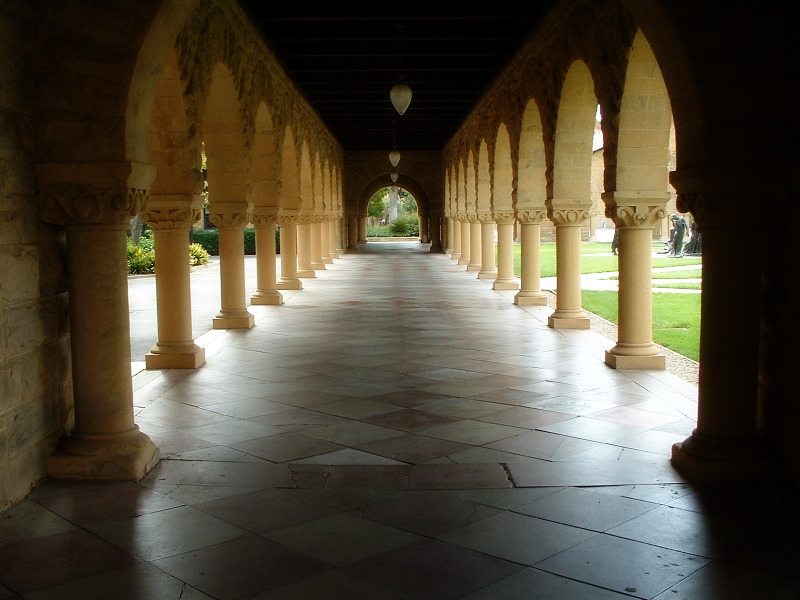
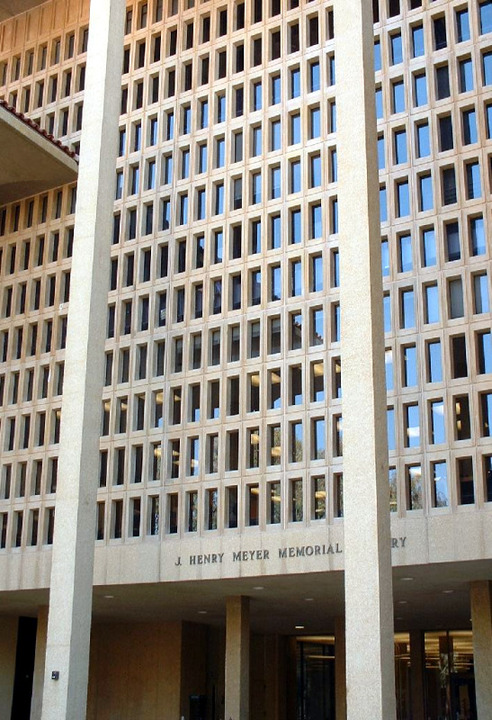
The campus of the prestigious private Stanford University in Palo Alto--about a 45-minute drive from San Francisco--feels like its own little town. Many students live on campus in dormitories ("dorms") because, due to the high tuition fees, they can hardly afford anything else.
You are probably familiar with the situation from American TV shows: a dormitory room is often shared by two or three students. How anyone is supposed to get any studying done in such a setting is beyond me. Single rooms are usually only available for students in higher semesters. It is considered normal to go into debt for one's studies. At an elite university, that can quickly add up to $100,000 or more.
Every state and some larger American cities have their own public universities. In California, this is the "University of California," with the world-famous "University of California, Berkeley" located right in our backyard across the Bay. Colleges or universities, whether public or private, charge tuition fees in the USA. Public institutions, like the University of California, are often more affordable--at least for students who are considered residents of the respective state. The funding for these institutions relies more heavily on public funds. Currently (as of 2003), the University of California, Berkeley charges $2,135 per semester in pure tuition fees for California residents (one-year rule, see above), but a hefty $9,240 for non-residents.
In comparison, the private elite university Stanford charges $9,520 per semester for programs leading to a "Bachelor's Degree." Medical students, however, pay $11,572. As mentioned, I am only talking about tuition fees here, meaning what the student pays for their courses. The total does not include costs for a room, books, health insurance, which is mandatory at many universities, or various other fees (e.g., for enrollment). Incidentally, the "University of California, Berkeley" has just increased its fees by a modest 30% (already reflected in the number given above) because public subsidies were drastically cut due to California's budget crisis.
To finance the exorbitantly expensive education after high school, American students have the following options: 1) They have extremely wealthy parents who are not hesitant to spend money with both hands. 2) The parents have iron discipline and have been saving for college since the birth of their son or daughter. 3) They are super smart, talented, or an athlete and secure a scholarship. However, there are often only partial scholarships that do not cover all costs, but at least debt does not have to be repaid. 4) They work part-time and therefore take a bit longer to complete their studies. 5) They possess an arsenal of credit cards with high credit limits. 6) They apply for a student loan.
Many of our friends and acquaintances have financed their studies through a student loan. The amount of the loan depends on the financial situation of the parents. Student loans benefit from government support, so no interest payments are required before graduation. However, the amount that must be repaid later does include interest, although the interest rate is comparatively low. Most people make their repayments in the form of monthly installments over the course of many years.
Since America does not have the Abitur or another qualification that automatically opens the doors to college, many higher education institutions set their own admission requirements. First, the grade point average (GPA) of the student's high school diploma is considered, which is expressed numerically for these purposes rather than in the usual letter grading system. The scale ranges from 0 to 4.0--the higher the number, the better the grades.
Most institutions also want to see a so-called SAT score. SAT stands for Scholastic Aptitude Test, which is a standardized test that assesses verbal and mathematical skills. The SAT test goes on for three hours, and most high school students take it. However, please do not confuse the SAT with an exam like the Abitur. Students can score between 200 and 800 points per section (verbal and mathematical) on the SAT. Incidentally, students can take the test as often as they like to potentially improve their SAT score. Naturally, the free market also offers various preparatory courses to help achieve better grades on the SAT.
For their college application, the prospective student usually has to write an essay, submit letters of recommendation, and pay a fee. Additionally, the student's previous social engagement is always well-received. Here are two Examples of essay topics: "'Why is XYZ a good college choice for you?' 'How would you describe yourself as a human being?'"
And here's another humorous example of an essay for a university application. However, securing a place at a college or university with a good reputation is not easy.
In the next newsletter, I'll publish the final part, describing the American education system. I will then reveal some curiosities to you, such as an interesting form of quota regulation ("Affirmative Action") and more.
Greetings from the state under Schwarzenegger's rule:
Angelika und Michael