
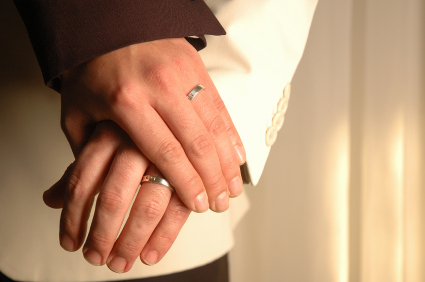
Angelika California has not only hit some economic turbulence but has also suffered a loss of image as a pioneering state, at least when it comes to same-sex marriages. In the meantime, six American states--Massachusetts, Connecticut, Vermont, New Hampshire, Maine, and Iowa--now allow same-sex couples to marry, while the California Supreme Court judges decided on May 26 of this year that Proposition 8 is legally valid.
You may remember: It all began with our Mayor Gavin Newsom, who practiced civil disobedience by allowing same-sex couples to marry in San Francisco in February 2004. This was halted a month later by a court order, including the annulment of the marriages conducted in San Francisco. The dispute between proponents and opponents of same-sex marriage then shifted to the California courts for a mere four years, until finally, in May 2008, the Supreme Court, by a 4 to 3 vote, allowed marriage between same-sex partners, as the narrow majority of judges deemed the previous practice discriminatory and in violation of the California Constitution.
Between June 16 and November 4, 18,000 same-sex couples exchanged vows in California. Opponents of same-sex marriage then promptly organized a ballot initiative, namely Proposition 8, which redefined marriage in California exclusively as a union between a man and a woman. On November 4, 52% of California voters voted in favor of Proposition 8, thus against same-sex marriage, prompting supporters of same-sex marriage to attempt to declare Proposition 8 itself legally invalid (Rundbrief 11/2008). The highest court then ruled in May of this year: No, the popular initiative, Proposition 8, is legally valid, but the 18,000 marriages that have already been conducted remain valid. Now, signatures are being collected once again to possibly vote on Proposition 8 in the near future, in the hope of overturning it by voter decision rather than by court ruling. An endless story...