

Michael In Alaska, on a kajak tour (Rundbrief 05/2006), we once had seen bears from a distance. In Yellowstone Park, while driving through the northern parts by car, we suddenly came across a larger crowd of people being kept in check by a ranger. In such cases, there's usually some kind of animal to see, and we looked around curiously. And indeed: On a rather steep slope to the left of the road, a bear was crawling around! I immediately grabbed my camera from the back seat and took a few photos through the windshield, but a ranger was wildly waving her arms, indicating that I should move on and not hold up traffic. We parked a few hundred yards further along the roadside, walked back, and joined the crowd to watch the bear. And there were actually two, a bear cub traveling with its mother, an impressive black bear sow.
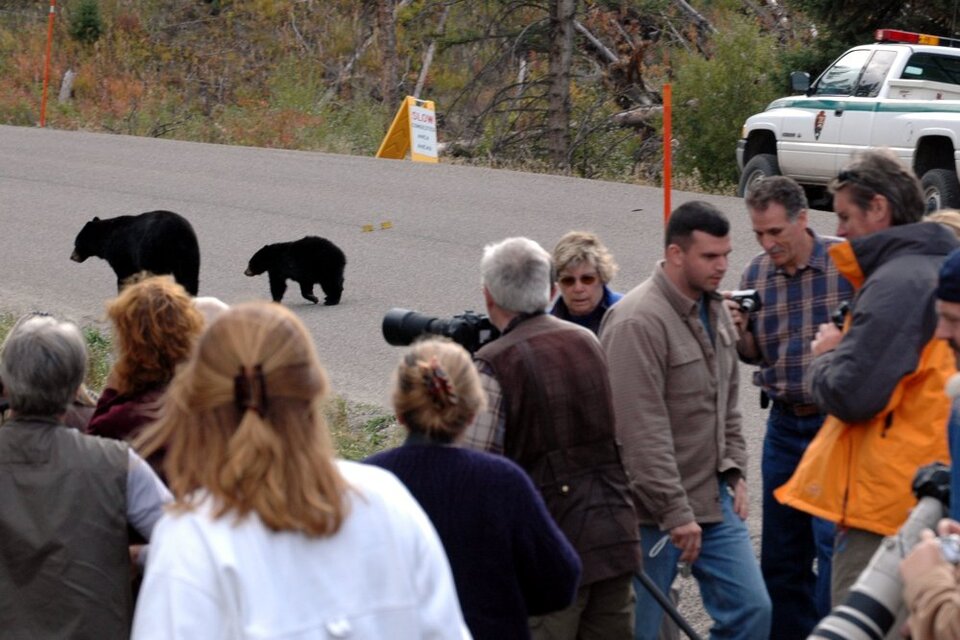
Bears are unpredictable wild animals with incredible strength, capable of killing a person without much effort. And if, for example, you happen to get between a bear cub and its mother, the mother bear will go berserk, and that's no picnic. Said ranger at Yellowstone was gesturing wildly and instructed people to stay in a group, as bears do not attack groups, only individuals at the most.
The two bears were lingering for a while on the slope before suddenly approaching the road. The ranger seemed to have anticipated this, as she had cleared a path about 50 feet wide, free of people and cars, for the bears to cross the road. We stood about 30 feet away, and I was already considering what to do in case we needed to intervene, as we had bear pepper spray with us. But the single mother bear and her cub purposefully trotted across the road and continued down the slope on the other side. To speed things up, the ranger made herself appear larger, clapped her hands, and shouted loudly, "Go bear!" which didn't have any significant effect, as bears don't take orders from anyone. Then the ranger then threw a small rock in the direction of the bears, causing the bear cub to jump aside in fright, but the mother didn't budge. Eventually, the two of them wandered off, the crowd dispersed, and we continued on our way. Amazing the things you can experience here!
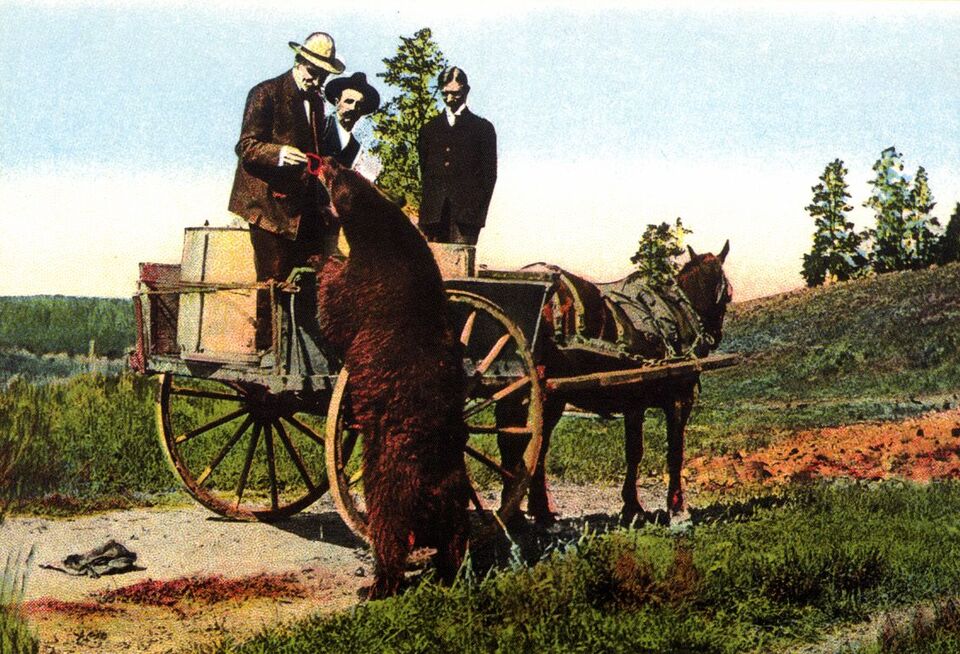
Angelika Crazy as it may seem, for a long time, one of the main attractions of Yellowstone used to be feeding bears to see them up close. In souvenir shops around Yellowstone Park, we frequently came across old postcards that proved this. Even garbage dumps behind the hotels in the park became tourist attractions because the bears would come there to rummage through the trash. However, bears are extremely dangerous when they become accustomed to humans. As we were already told in Alaska, bears think about eating 24 hours a day because they need to build up a thick layer of fat for hibernation. Additionally, bears are creatures of habit. For example, they return to the same river every summer to fish for salmon. If they learn that humans have food, they no longer shy away when they catch a human scent but instead approach campsites and break into tents or cars parked nearby. We often heard the saying from park rangers: "A fed bear is a dead bear!" because the bear no longer behaves naturally.