
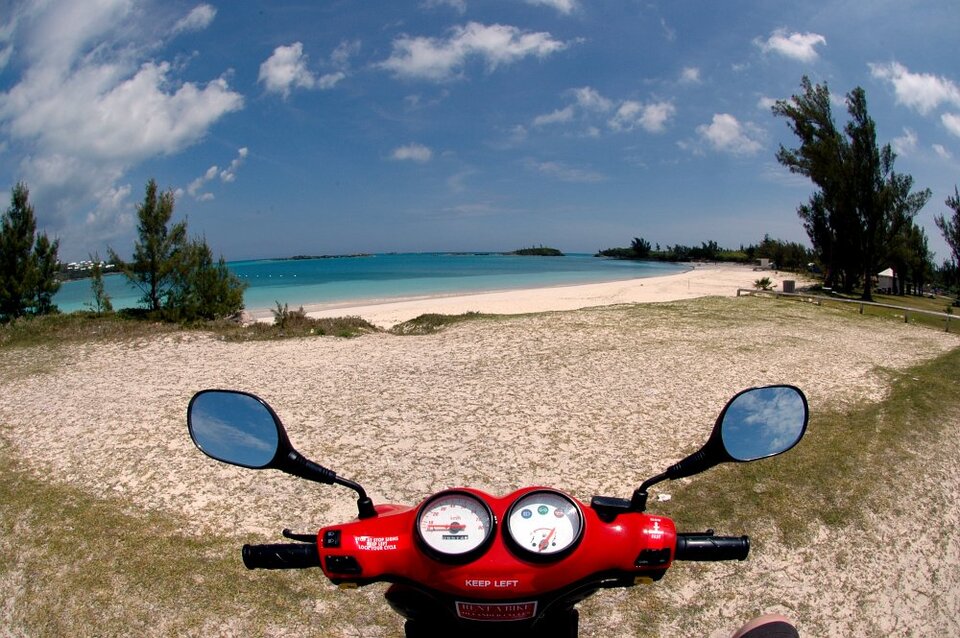
Michael We went on vacation again. Since we already know Hawaii inside and out, this time we flew in the other direction. First across the continent to New York and then another two hours, further east. There lies the English colony of Bermuda, a tropical island only 2 miles wide and 20 miles high, with turquoise water, and long, secluded sandy beaches.
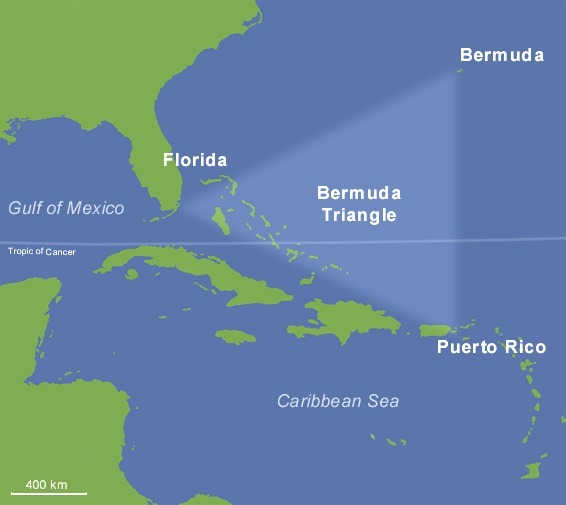
Bermuda is located about 800 miles off the U.S. east coast, in the Atlantic. On the map in illustration 2, you can see that the three corners of the so-called Bermuda Triangle point to the American city of Miami in Florida, the Caribbean island of Puerto Rico, and the island of Bermuda in the northeast. Numerous legends about lost ships are associated with this part of the Atlantic.
Bermuda has only about 65,000 residents, but there isn't much space there, either. According to travel guides, Bermuda's population density is only surpassed by metropolitan areas like Hong Kong. Tourists are not allowed to rent cars, only scooters, or they need to rely on the relatively well-functioning public transportation system. However, asking the cashier at the supermarket if she could call a taxi and then waiting for 20 minutes in the parking lot with five large paper bags can be quite annoying, so we rented a small moped.
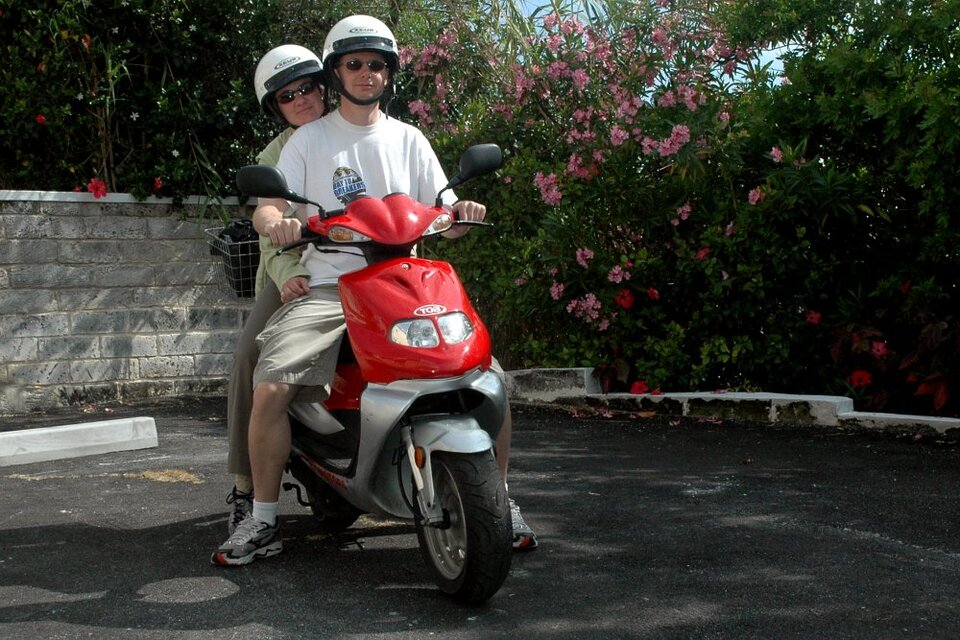
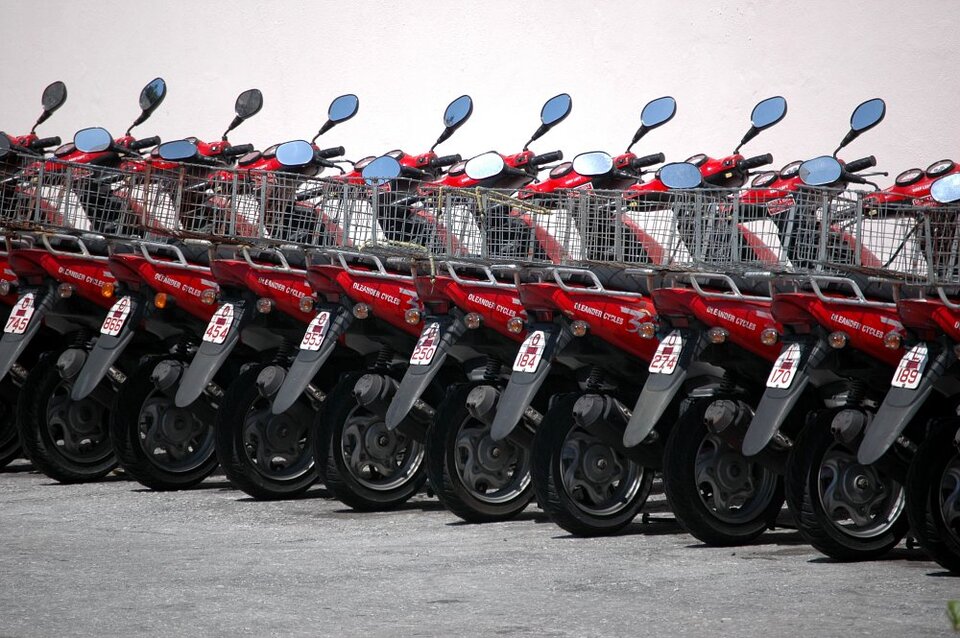
That was fun! Angelika sat on the back seat, and, as you know, I was riding motorcycles in my youth, so after some hairy maneuvers in left-hand traffic, it actually went quite well. Bermudians are driving quite briskly by car, but that might be because after ten years in California, we've slowed down a bit and tend to be somewhat nonchalant in traffic. In any case, the bus drivers drove like maniacs, and when you have a huge salmon-colored bus on your tail while on a moped, it can make you feel a bit uneasy!
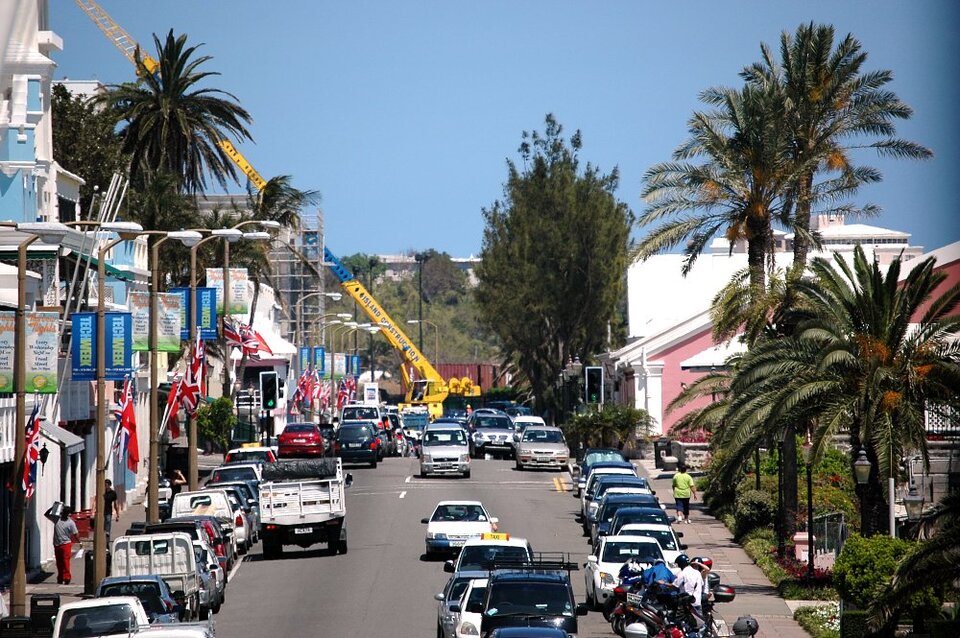
If every adult resident of Bermuda owned a car, traffic would come to a standstill in no time. That's why each household is assigned an "Access Number," and only one car per Access Number is allowed. A second car is not permitted. If the spouse or teenagers living at home want a vehicle, they can only get a low-powered moped, which costs a dizzying $4,000! By the way, the registration for a mid-sized car costs $1,200 per year. And a family member must always be in the car. Anyone caught lending their car will get into trouble. Tourists can ride their mopeds without a driver's license, but locals must apply for a permit, which they can obtain from the age of sixteen after passing a driving test.
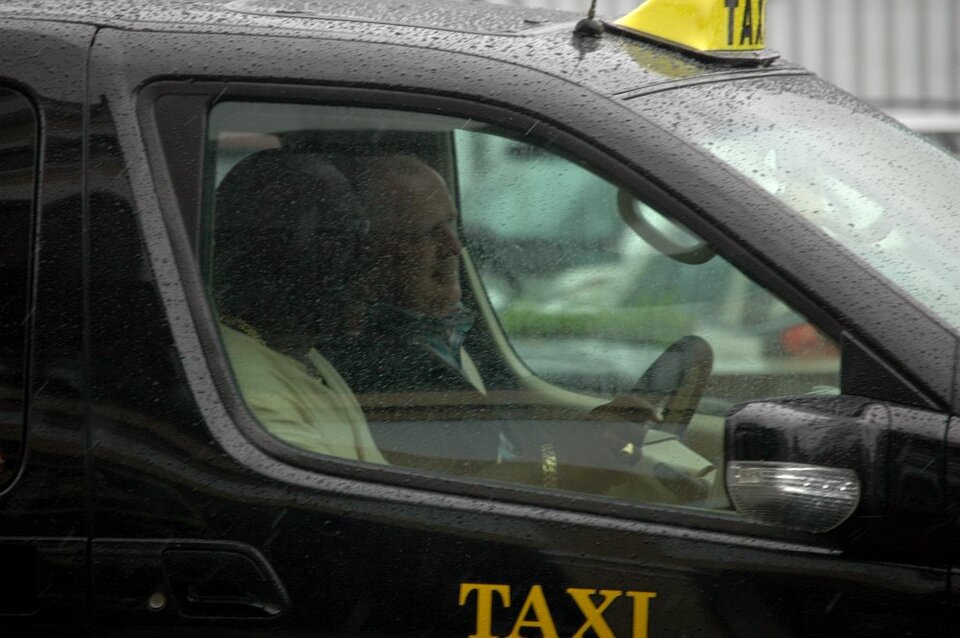
The young moped owners, however, ride like madmen. They're constantly in the fast lane, and quite a few accidents do occur. The landlady of the place we had settled into checked every day to see if the moped was still intact and praised our accident-free driving. Apparently, tourists often come home with abrasions and dented vehicles.
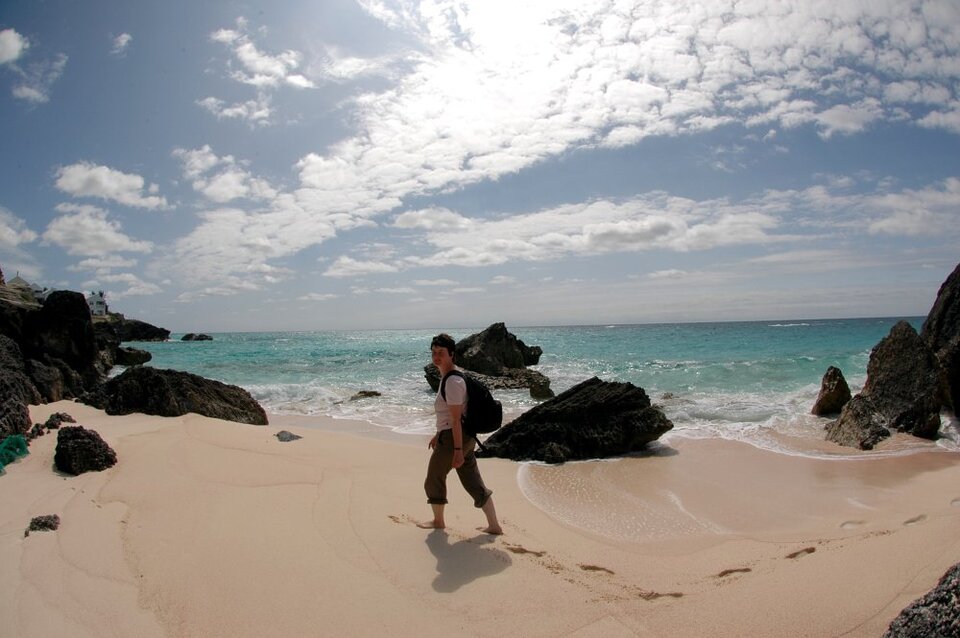
Angelika When looking at oceans and taking long walks on the beach, I always start to philosophize: How does the salt get into the sea? Why is the sand white? In Bermuda, I was plagued by two questions: Why is the sea such beautifully turquoise, and why does Bermuda's tourism industry advertise the pink beaches? Because at first glance, the sand shimmers in the finest yellowish-white tones, with no trace of pink. But upon closer inspection, you get to the bottom of it. Scattered throughout the sand are small pink shell particles that make the sand appear partially pink. They come from a sea-dwelling creature called "foraminifera," which has a reddish shell. When this organism dies, the waves are crushing the shell into tiny pieces and wash them onto Bermuda's beaches. Depending on the weather, the sand can appear more or less pink. The beautiful water color is due to the fact that there is hardly any phytoplankton in the ocean around Bermuda. Phytoplankton are small plant organisms that float around in the water. Without them, the sun's rays can hit the sandy bottom unimpeded and are reflected, making the water appear turquoise.
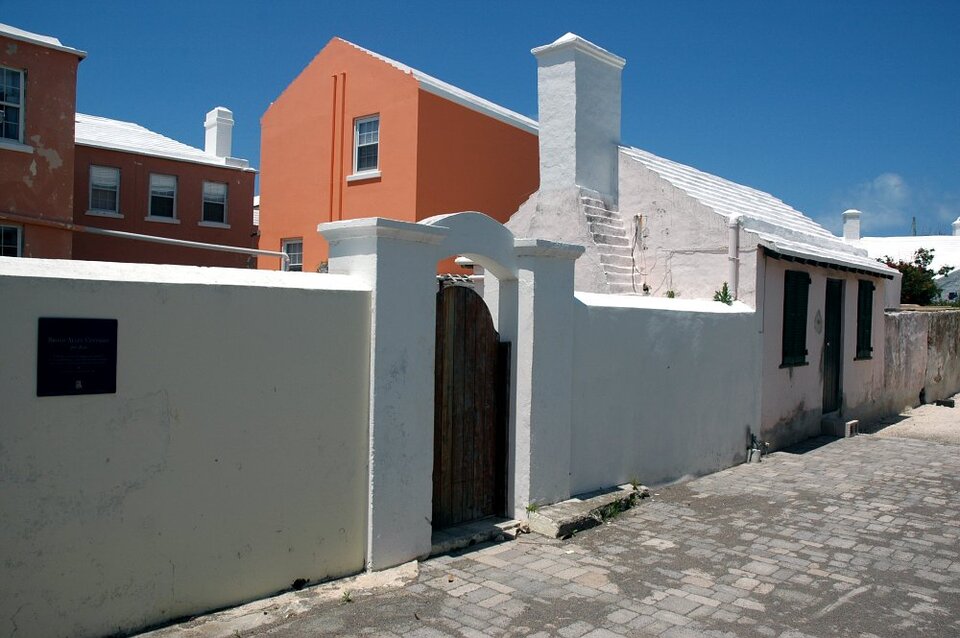
And another thing that catches the attentive tourist's eye: All the roofs of the houses in Bermuda shine brilliantly white and have a funny stepped shape. There is a very pragmatic reason for this. Access to drinking water is scarce on the island because there are no rivers or lakes, so rainwater is collected with the help of the special roof construction. The built-in steps in the roof are a sophisticated system of rain gutters.
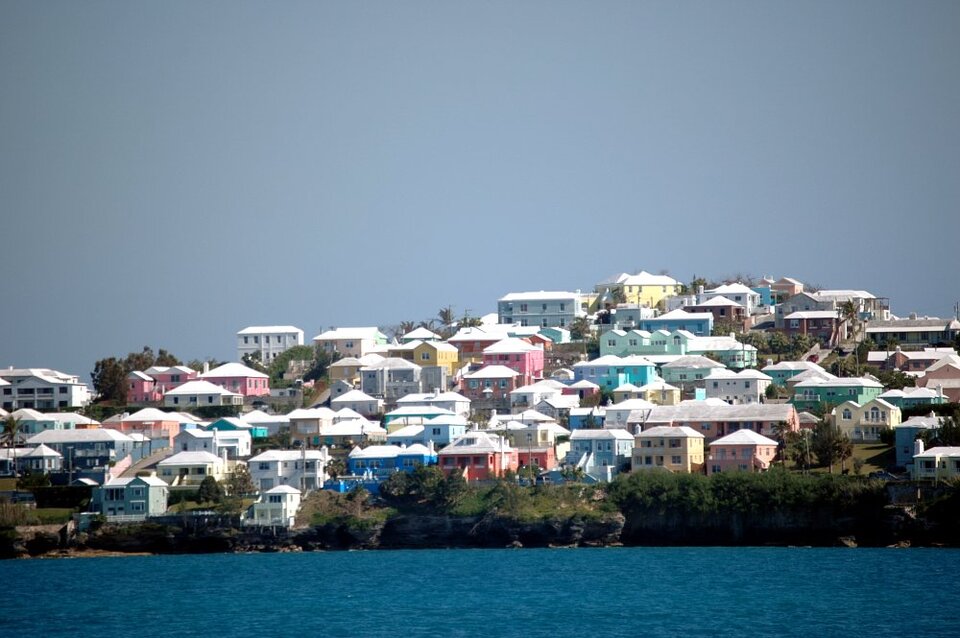
Behind the white paint is a special coating that ensures the precious rainwater collected on the roof won't get dirty. Very clever! Now you might be wondering how often it rains in Bermuda. Since these are subtropical and not tropical islands, the rain falls fairly evenly throughout the year. Temperature drops in the winter months (November to April) and hovers around 70 degrees Fahrenheit, while in the summer months of July to September, the thermometer climbs to 85 F. For the locals, the water in May is still too cold at 64 F, but we went swimming every single day.
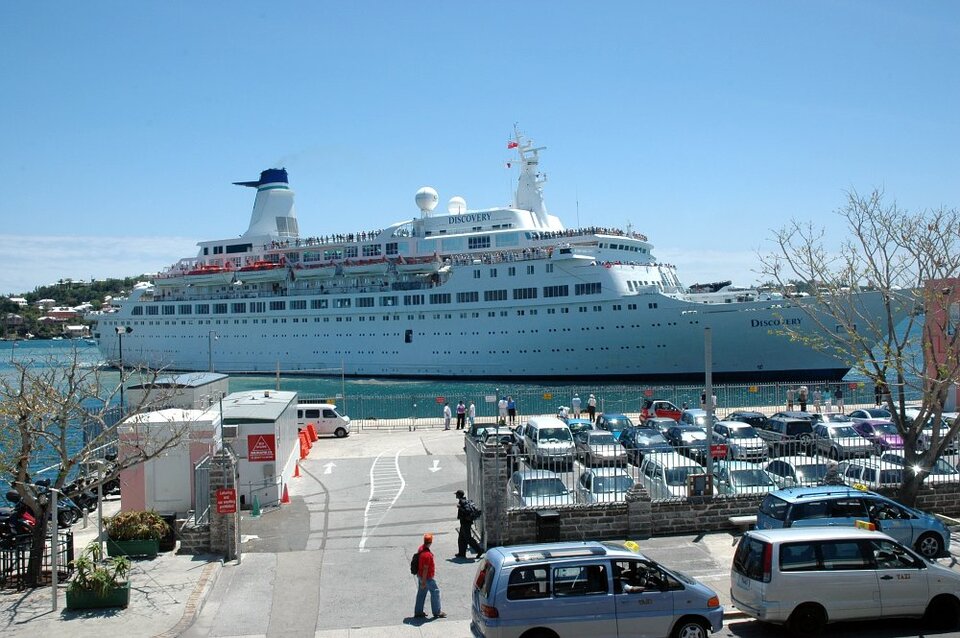
Michael Many large cruise ships visit Bermuda, docking at the three main piers at the Dockyard in Hamilton, and in St. George. These ships each release hordes of 2,000 people into the small towns for a few hours. If you avoid these behemoths, you will often find yourself completely alone, especially in the early season.
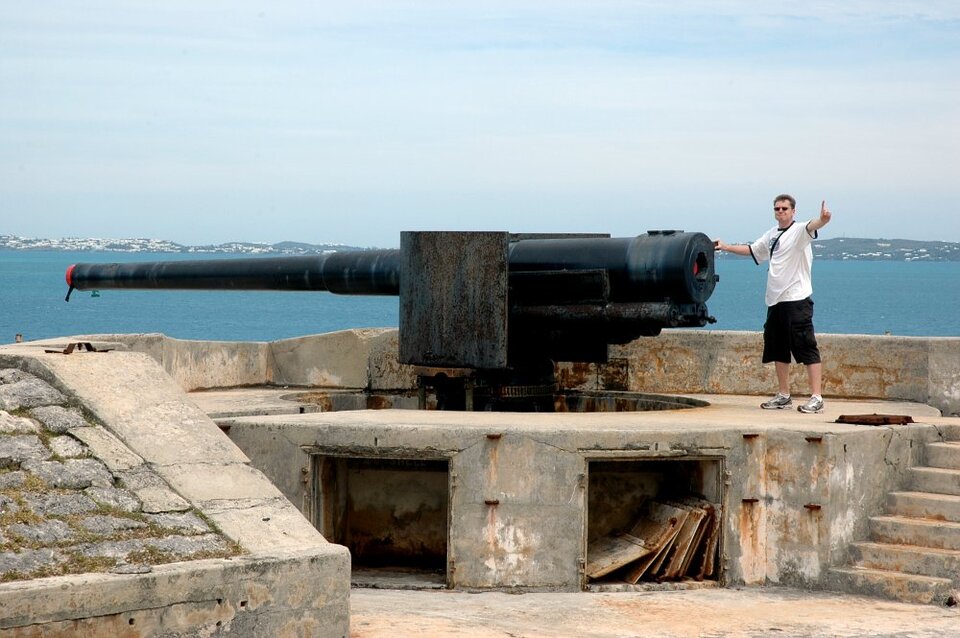
In the country's museums, you can marvel at old cannons and all sorts of treasures that have been recovered from shipwrecks stranded around Bermuda. A coral reef belt surrounds Bermuda, on which countless ships have run aground for centuries. Much to the delight of the residents, who then set about salvaging the wrecks.
A remarkably large number of people in Bermuda have the last name "Tucker." There is also a "Tucker's Town," but according to our taxi driver, who incidentally was also named "Tucker," it is not named after a famous Bermudian diver named Teddy Tucker. Teddy Tucker, the Bermudian national hero and wreck diver, recovered countless treasures from sunken ships, including a 16th-century golden cross adorned with gemstones. This cross was displayed in the museum until 1975, when someone stole it and replaced it with a plastic replica, so now a plastic cross stands in the glass case, which is quite laughable!
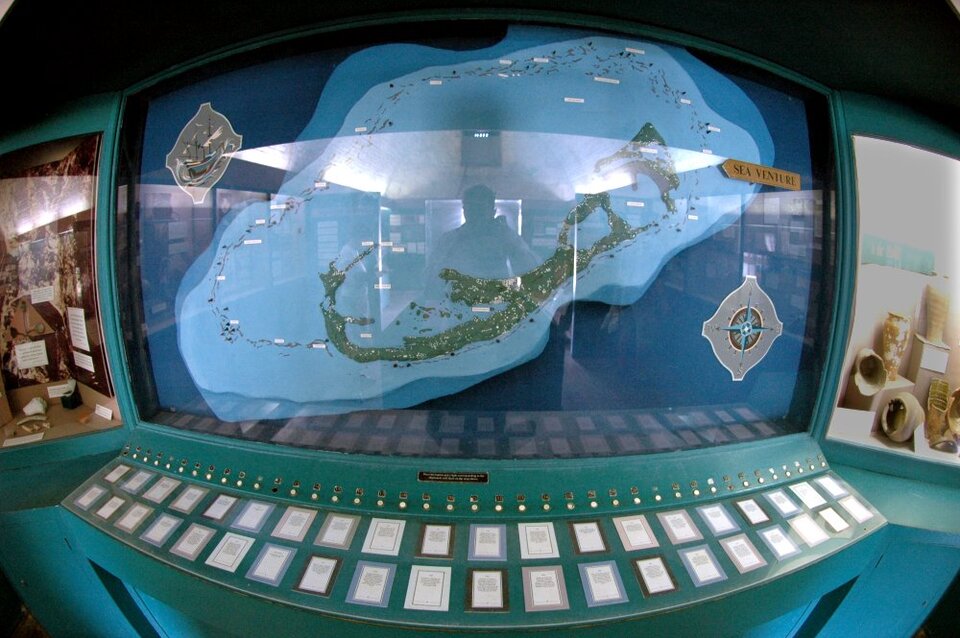
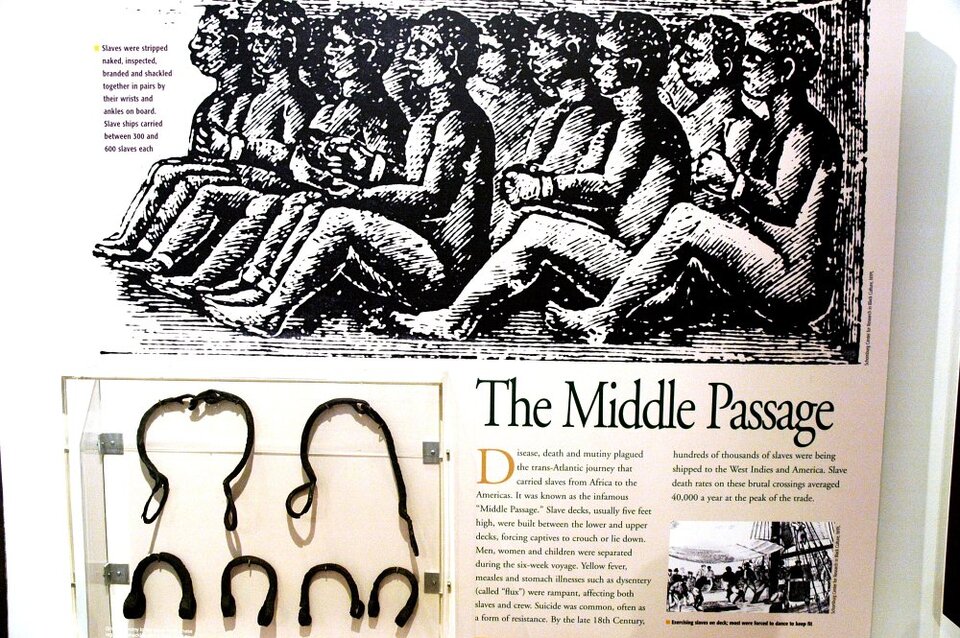
Furthermore, during the time of the slave trade, Bermuda was directly involved in the gruesome business. The museum at the Dockyard features a detailed exhibition about how slaves were taken from Africa and then transported under inhumane conditions on slave ships to Europe and America. Bermuda was one of the first ports of call before the ships continued on to America. Many Bermudians are descendants of former slaves. It was interesting to note that the topic was presented very thoroughly and candidly, whereas in the USA it is usually brushed aside quickly.
The location of the Bermuda Triangle varies according to different sources, but it is usually understood to be the area shown on the map above. The island of Bermuda is at the apex of the triangle. Strange things are said to happen in this area, such as a report of a flight that entered the region and lost all radio contact for 15 minutes. When the plane later landed in America, it was discovered that the control tower had not noticed the loss of connection, and the clocks of the crew and passengers were 15 minutes ahead! Under the Entry "Bermuda Triangle" on Wikipedia you can read up on more strange occurrences. However, the two newsletter reporters miraculously got away unscathed.
The upscale restaurants in Bermuda require their guests to adhere to certain dress codes. In some fine establishments, you are only allowed to dine with a tie and jacket! However, we learned from our landlady that some owners had to relax the rules because the overly strict British nonsense was annoying the predominantly tourist guests.
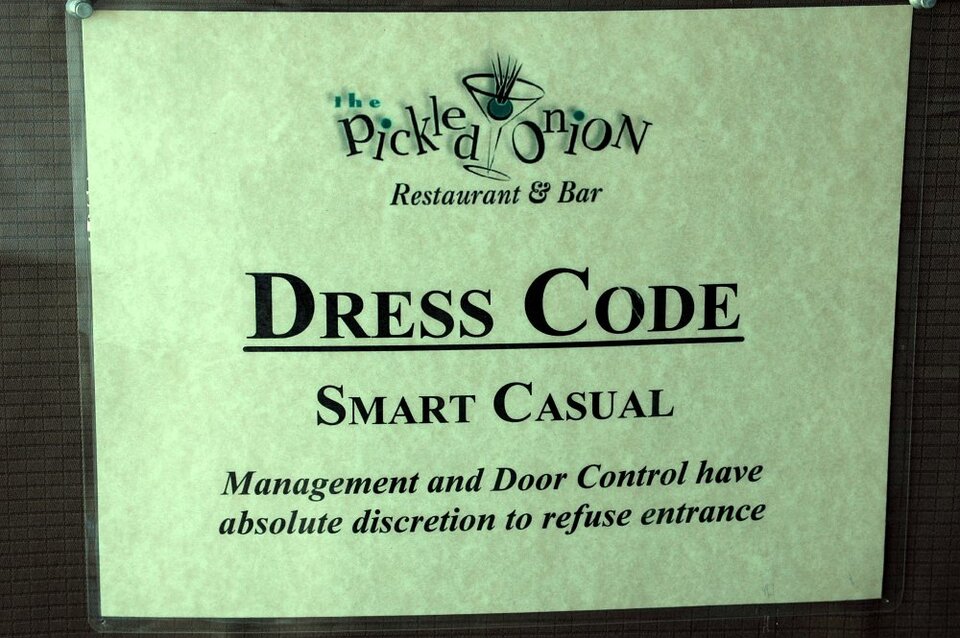
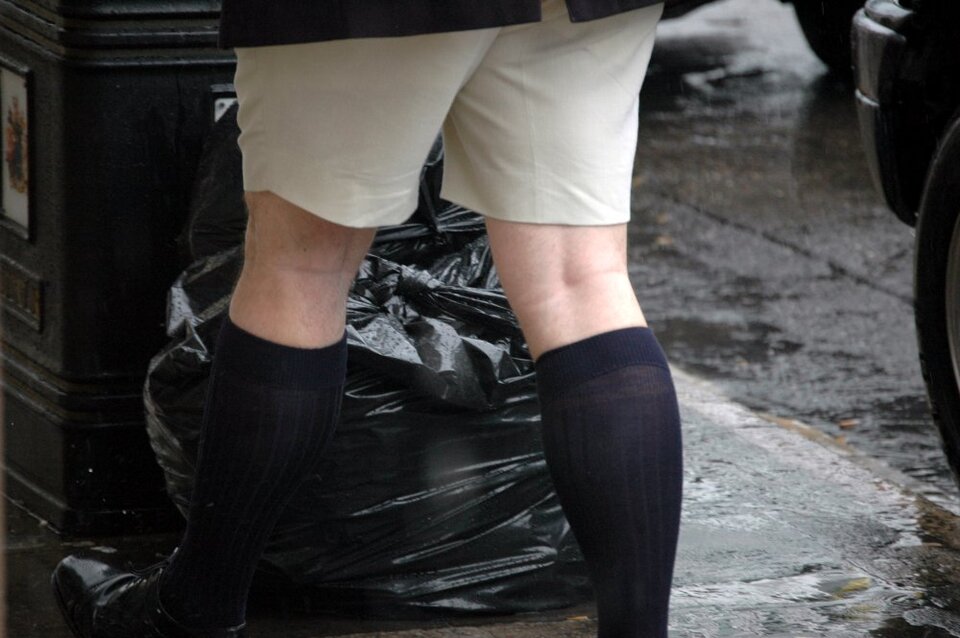
And of course, no one who is somewhat fashion-savvy wears the typical Bermuda shorts for men with long black knee socks. The restaurant whose sign in illustration 14 requires "smart casual," which in our opinion meant something like leather shoes and a polo shirt, let me in without any issues in my typical outfit of a gangster rapper T-shirt and software developer cargo shorts.
The prices in Bermuda are really adventurous. It's not uncommon for a main course in a relatively normal restaurant to cost $30. Compared to that, even San Francisco is inexpensive! The food didn't really blow us away, although some of the restaurants recommended in the travel guide were quite good. Additionally, the waiter adds a 15% tip to the bill without asking, which is particularly unpopular with Americans.
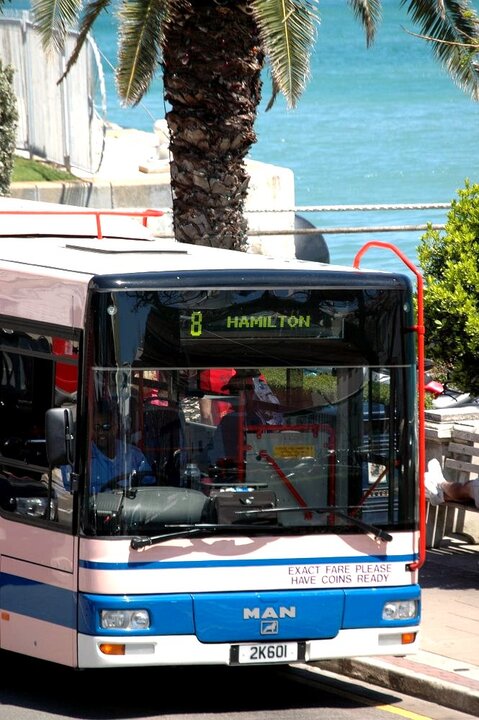
Angelika Bermuda comes across as quite British. Michael already mentioned the left-hand traffic and the dress codes. Our landlady also warned us right away that we wouldn't get anywhere in Bermuda if we didn't display British politeness. Simply throwing a "Excuse me, is this the bus to the Dockyard?" at the bus driver would be considered rude. No, it must first be "Good afternoon. How do you do?" before you can get to your actual request. Michael, of course, rebelled a bit against this stiff formality, as he has spent 10 years in laid-back California.
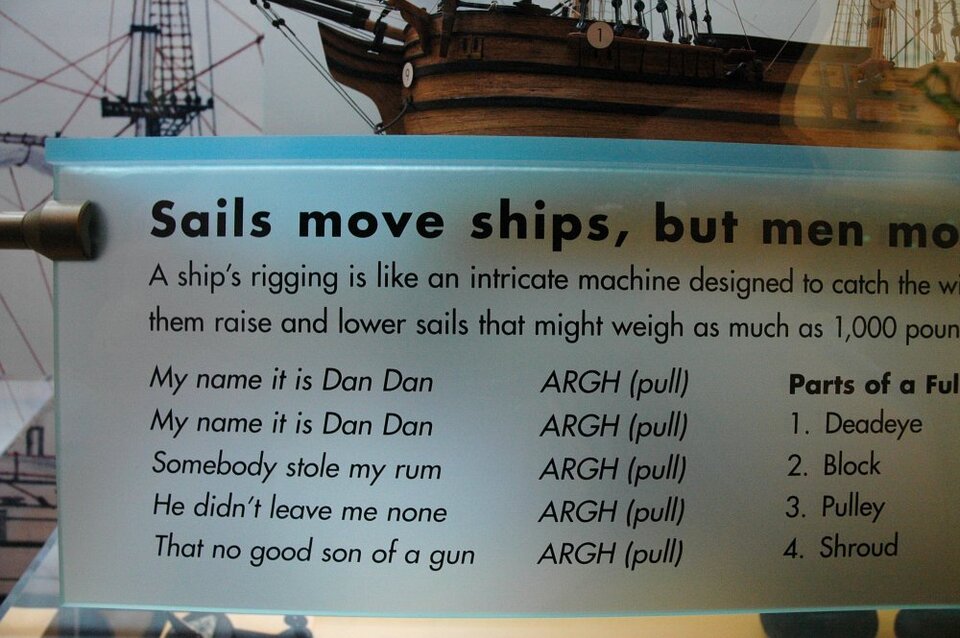
How did the English even manage to discover Bermuda? The Spanish captain Juan de Bermudez, after whom the islands are named, sailed around there as early as 1503 but showed no interest in colonizing the uninhabited islands. In 1609, the English Admiral George Somers, who was sailing on behalf of the British "Virginia Company," ran his ship "Sea Venture" onto one of the reefs off Bermuda on his way to Jamestown, Virginia. He and his crew had to stay on Bermuda to build new ships and left a few men behind when they set off again for North America. The "Virginia Company" liked the idea of claiming the hitherto uninhabited Bermuda and sent 60 settlers there in 1612. However, the British pound did not establish itself as the currency. There is the Bermuda Dollar, which is traded at a 1:1 rate with the American Dollar. The US Dollar is an equivalent means of payment, as we were able to use our green American bills everywhere. It is common to receive both Bermuda Dollars and US Dollars as change. This is also the practice among the island's residents. Only the ATM exclusively dispenses Bermuda Dollars.
Bermuda is an expensive place because, as is common on islands, everything has to be brought in from far away. Additionally, Bermuda imposes high tariffs on imported goods. Most of the groceries in the supermarket come from the USA. However, we also found British products, which often seemed cheaper due to the lower tariffs on certain products from England. Irish butter, for example, was surprisingly affordable.
Living space is scarce and in high demand in Bermuda due to the lack of space. Rents, as various taxi drivers informed us, are extremely high, easily comparable to those in San Francisco. Additionally, every wealthy individual builds fancy vacation homes (or rather villas) in Bermuda, which remain empty for most of the year. For example, Michael Douglas and Catherine Zeta-Jones have a house on the island. Since Bermuda is a tax haven for companies, many have their nominal headquarters here. Despite the high cost of living, the standard of living is high, as everyone proudly tells you.
Michael We made the most of our one week of vacation and flew out on Friday evening at 10 PM. The next morning (with a four-hour time zone difference), we were on the island. We returned just over a week later, on Sunday, and the next day we were back at work with a nice tan. Oh yes, we already miss the German vacation conditions ...