
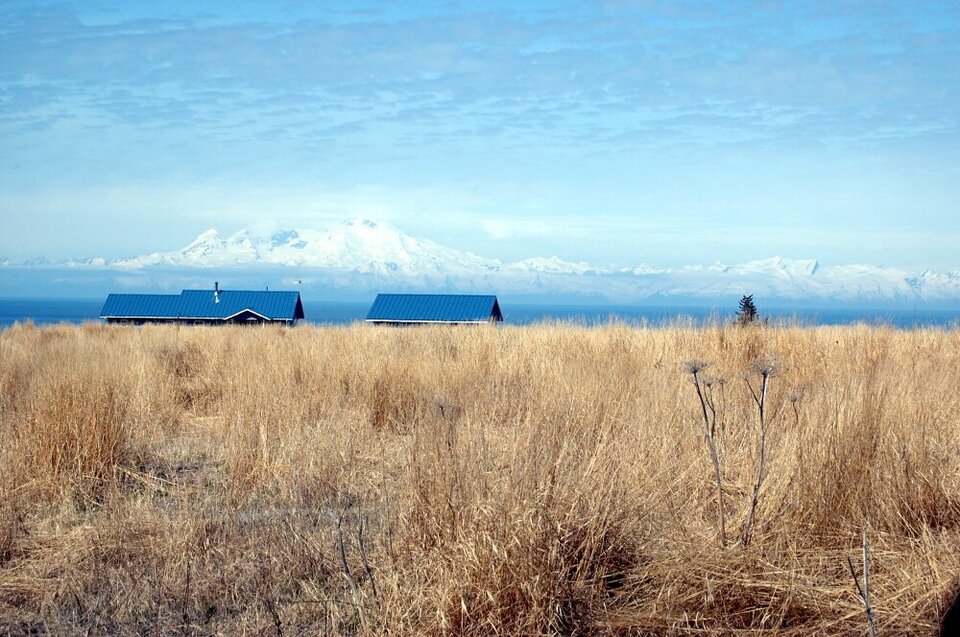
Angelika As we paddled around in our kayaks in the waters of Kachemak Bay, we noticed that here and there small, quite rustic cabins appeared behind the treeline. Naturally, we immediately thought of summer cottages, but we learned from our kayak guide Alison that some of them were originally built as part of what is known as "homesteading."
To settle the western United States, Congress under President Abraham Lincoln decided in 1862 that every American who was at least 21 years old could claim 160 acres of land for a fee of 18 dollars. The goal was to make the land usable. After five years, the settler could call the land their own. They only had to prove that they lived on the land, had built a cabin, and cultivated the land.
The program was finally discontinued in 1976, with only Alaska receiving an extension until 1986. Despite this generous land allocation, only 1% of the land in Alaska is privately owned. 60% belongs to the federal government (e.g., the national parks), 20% to the state of Alaska, and the rest was returned to the indigenous people in 1971.
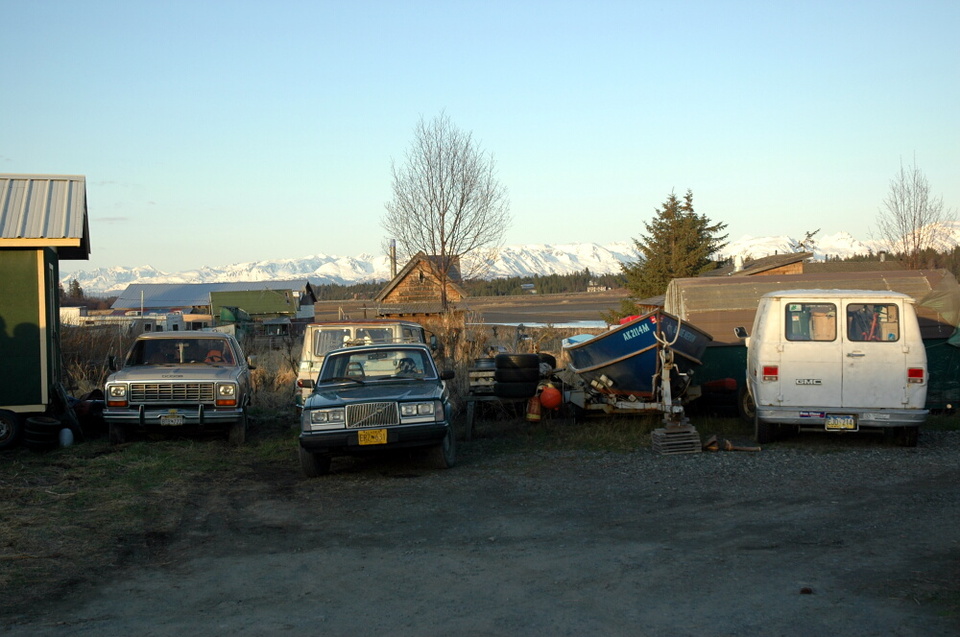
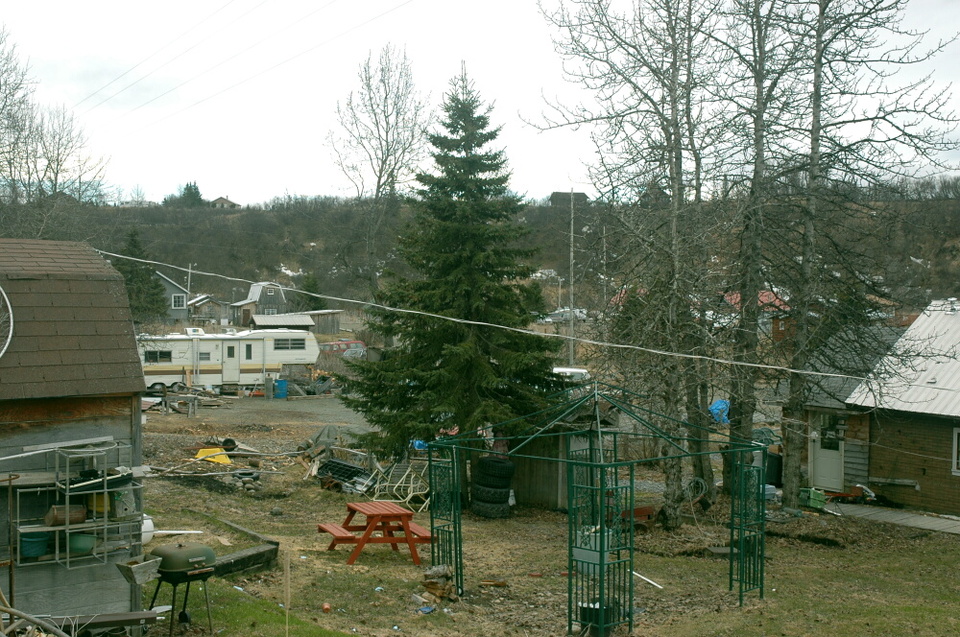
We noticed that the scattered little houses along the country roads all have one thing in common: The property around the house looks like a mess. Scrapped cars, old refrigerators, and washing machines. One gets the impression that it is customary to set up a spare parts depot in the garden when acquiring a new device or vehicle.
Unfortunately, even in the more populated areas of Alaska, there is no escape from the obligatory "McDonald's," "Safeway," and "Starbucks." Apparently, no one can resist the relentless American desire to place an unsightly shopping center in even the most breathtaking landscapes.
On the other hand, you encounter individualists in Alaska like in no other American state, who want to fulfill their dream of living in the last remaining wilderness. That's why Alaska is also known as the "Last Frontier." Our kayak guide Alison, for example, was originally from New York City and now lives somewhat off the beaten path from Homer in a house without running water, which can only be reached on foot by a half-hour walk. During our kayak tour, we asked her what vacation means to her, since she already does for a living what others seek as an adventure during their time off. She replied that she likes to rent a room in a good hotel in Anchorage to take a full bath.
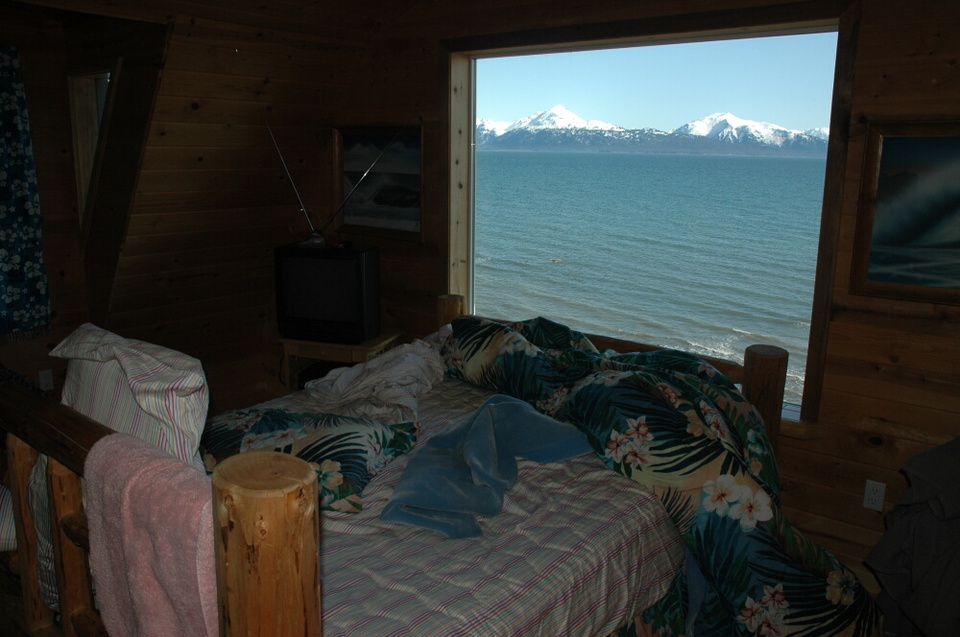
Another interesting story we heard from the landlady of our little house in Seward: Many years ago, she worked in a candy store in New York City and came across a postcard that showed Alaska. She said that from that moment on, she knew she would live there one day. After separating from her first husband, she packed her things and, with her dog in tow, drove endless roads all the way to Alaska. She immediately liked the area around Seward, so she decided to use her private retirement savings (the so-called 401k, Rundbrief 08/2003) to start investing before retirement, buying land and setting up log cabins on it, which she now rents out to tourists. The man who built the cabins for her also became her new love. By the way, when she moved to Alaska with all her belongings, she was already over 40! Only in America.
However, romantic notions about the wilderness of Alaska can certainly also lead to disaster. There are always people who are afflicted by the Robinson Crusoe syndrome and believe that a hermit's life beyond any civilization in the wilderness would be easy to manage.
The majority of locals in Alaska consider these guys to be rather crazy and don't speak well of them. If you want to read a very interesting book on this topic, you should check out 'Into the Wild' by Jon Krakauer. Krakauer tells the true story of Christopher McCandless, who hiked alone into the Alaskan wilderness in 1992 and whose body was found by hunters after several months.