
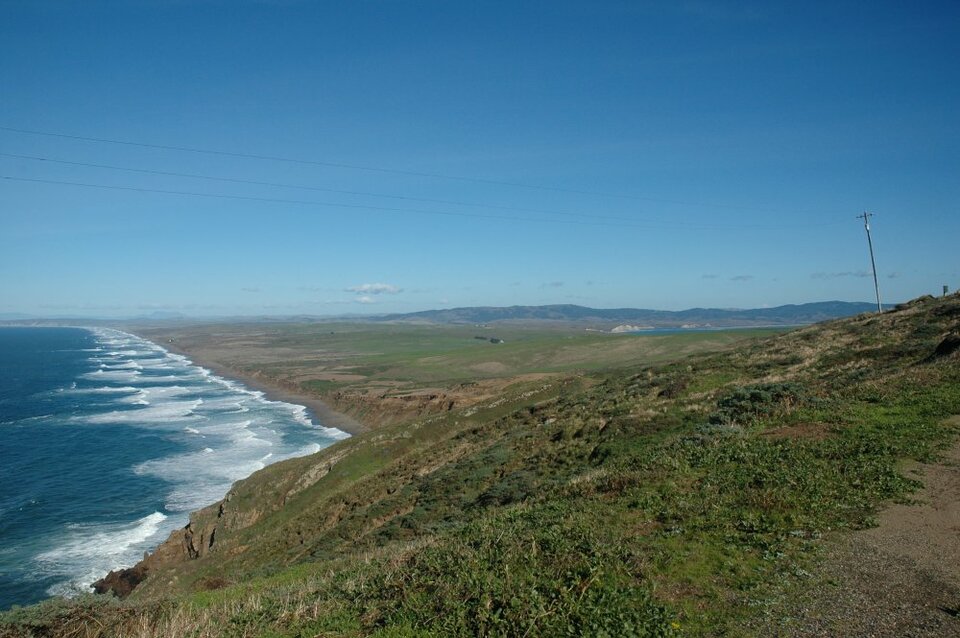
Angelika One of the unbeatable advantages of San Francisco is its location. While other people go on vacation and spend hours on a plane to get there, we can drive there in just a few hours. California is known for its size and diversity, and many tourists don't have the time to deviate from the classic routes. Most people drive along the "Highway 1," known as America's dream road, from San Francisco heading south along the coast, which is certainly not to be underestimated, but they sadly neglect the north coast. As far as I'm concerned, it can stay that way, as we don't want to be stuck behind lines of cars during our trips. The stretch between San Francisco and Eureka definitely makes my heart beat faster. There's nothing more beautiful than driving the winding road on a cozy sunny day and enjoying the breathtaking views of the sparkling Pacific. The north is rougher, perhaps a bit sleepier, and you encounter more of the type of people I like to call sea dogs. That's where my North German soul feels at home. Sigh!
If I long for steep cliffs, for deserted beaches where the wind whistles and the waves crash onto the shore with roaring force, for hiking trails that offer breathtaking views of the sea, then we set off for Point Reyes. "Point Reyes National Seashore" is a peninsula-like nature reserve located about 30 miles north of San Francisco, reaching 10 miles into the ocean. We have mentioned Point Reyes in our newsletter before, mostly because we often encounter some wildlife there, such as snakes or whales. To reach the peninsula, you have to leave Highway 1, which is why tourists usually speed past Point Reyes. Additionally, the motto there is: Get out of the car and put on your hiking boots. We owe it to former President John F. Kennedy that this coastal strip was protected in 1962.
The dramatic landscape, as is often the case in California, is closely connected to a fault line. This is the San Andreas Fault, the same fault that runs through San Francisco. The ground here is constantly moving: the peninsula shifts approximately 2 inches further north each year, always along the San Andreas Fault. This is why seven million years ago, Point Reyes was about 80 miles further south and underwater. And since the Pacific and North American plates are rubbing against each other at the San Andreas Fault, there are frequent tremors felt in Point Reyes as well.
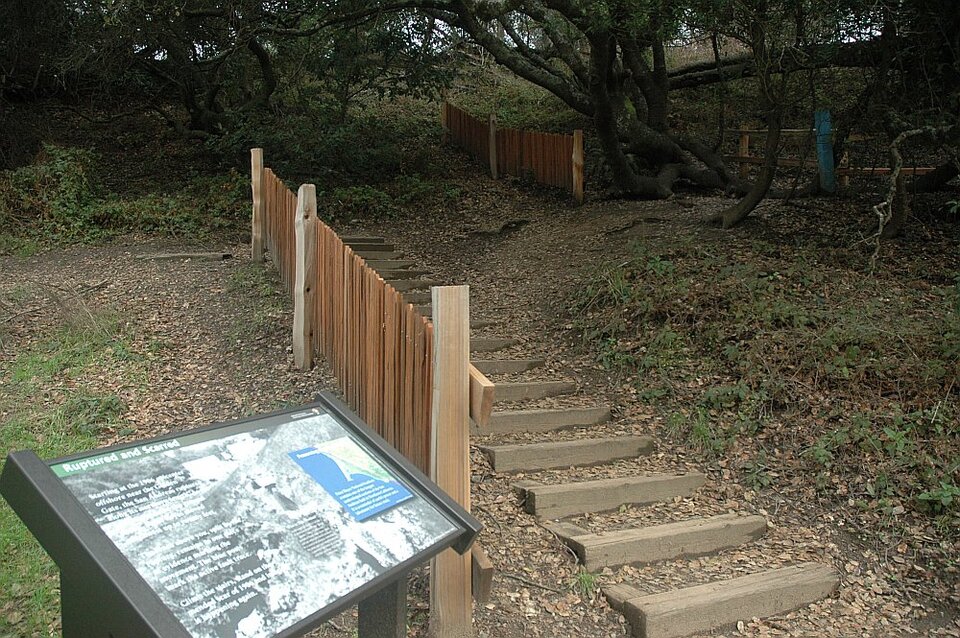
Just this week, various celebrations were held in San Francisco to commemorate the devastating earthquake that occurred 100 years ago, on April 18, 1906. The friction along the San Andreas Fault was responsible for that earthquake, as well as for the "Loma Prieta" earthquake in 1989. A short, quite amusing loop trail ("Earthquake Trail") near the visitor center in Point Reyes explains the events at this fault line, with the added thrill that the walker is practically moving along the San Andreas Fault. A split fence demonstrates how far the surface was torn apart by the 1906 earthquake--more than 15 feet, as shown in illustration 3!
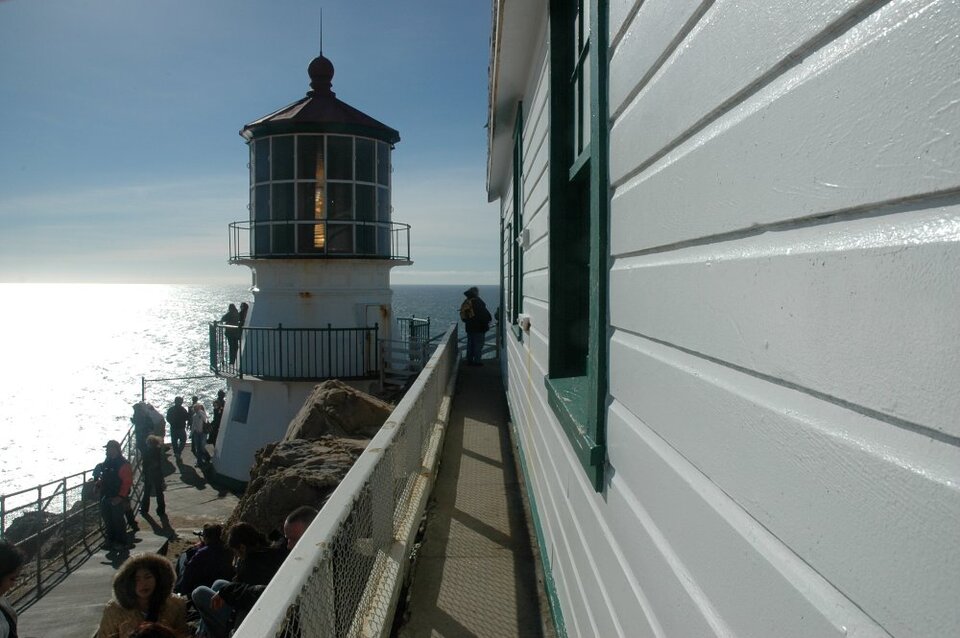
For dedicated lighthouse enthusiasts, it is recommended to drive all the way to the tip of the peninsula. The lighthouse sits on the last rock before the open sea and can be reached by descending down stairs with 300 steps. During whale season, the area around the lighthouse is considered the best vantage point for observing the migrating California gray whales, which swim south from Alaska to Baja California (Mexico) in mid-January and make the return journey north in mid-March.
Whale watching is so popular in Point Reyes that visitors must use a bus from the parking lot at "Drakes Beach" to reach the lighthouse on weekends and holidays between the end of December and mid-April. One weekend in January, Michael and I were able to see for ourselves that the system works excellently. Although we didn't see any whales, even though supposedly a handful were spotted that day by others, we did see elephant seals with their young.
And if you've had enough of nature or are hungry, you can drive to the town of "Point Reyes Station" to the "Station House Cafe." The restaurant has a huge outdoor seating area that almost resembles a beer garden. However, in nice weather, it's a real challenge to snag a spot outside. And the servers in the place are the slowest in North America. By the way, you'll find oysters on the menu everywhere around Point Reyes. This is because there are four businesses in the greater Point Reyes area that farm oysters. It doesn't get any fresher than that!