
Angelika Our visitors from Germany are always surprised that recycling is also done in San Francisco. America simply has a reputation for packaging mania and a throwaway mindset. And for the most part, that's true; Americans are still far from recycling as progressively as the Germans do. For example, at larger private parties, most people still find it quite normal to eat from paper plates and use plastic cutlery. Or just think about how many paper coffee cups the coffeehouse chain Starbucks hands out daily.
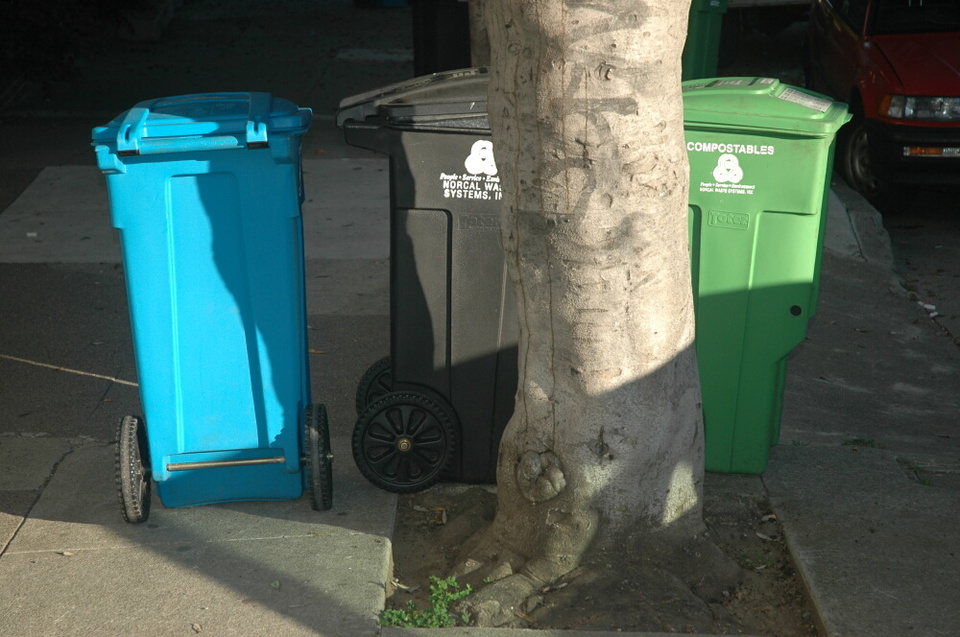
However, there is waste separation in San Francisco, but it works differently here. Paper, cardboard, glass, aluminum, and plastic: everything goes together into a large blue trash bin or box, which is to be placed on the street on a specific day. The sorting is done by the waste facility. They want to make it as easy as possible for the customer. Only any compost that may be generated is placed separately in a green bin.
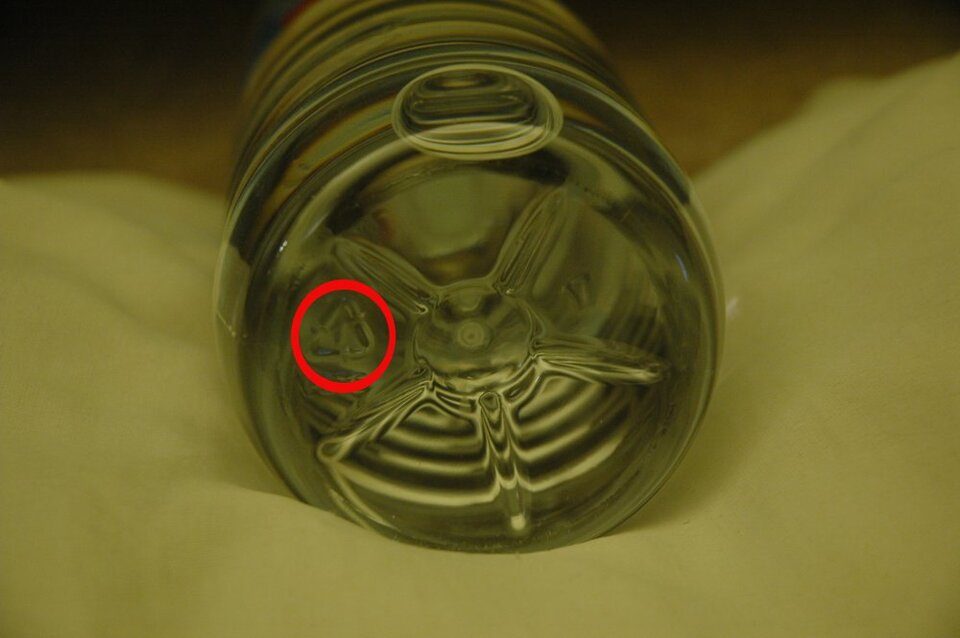
Things made of plastic, on the other hand, are also a science in themselves here. Only plastic bottles with the numbers 1 to 7 and plastic cups and lids with the numbers 2, 4, 5 go into the blue bin. The number is stamped on the bottom of the bottle or cup--similar to the German "green point" recycling symbol. The water bottle in illustration 2, for example, has the number 1 in the stamped recycling triangle at the bottom of the bottle. Into the bin it goes!
Lids for glass or plastic bottles, as well as metal bottle caps, are not being recycled, which Michael still hasn't understood, even though there's now a large poster on our fridge showing the items that can go into the blue bin. Recycling is becoming increasingly popular in America. Many cities have similar blue bin programs like San Francisco. In more remote areas, you often have to take matters into your own hands and bring paper, glass, and cans to designated containers. During our last vacation on Kauai, we drove around the island for miles with a pile of old glass bottles until we finally found the island's only glass recycling container.
Green bins, intended for compostable waste, are also appearing more frequently in front of houses in San Francisco. Many restaurants and hotels participate in the city's composting program. Organic waste is processed into compost by the company Jepson Prairie Organics. Wineries in Napa and Sonoma spread it between their vines so that the fine grapes for California wine can thrive. And speaking of greenery: even Christmas trees are recycled in San Francisco. We just have to place the undecorated tree outside our door at the beginning of January.
Even though recycling is no longer a foreign concept in America, California/San Francisco often takes a leading role when it comes to protecting the environment. For example, at the beginning of February, a law came into effect in California that prohibits the disposal of old batteries, neon tubes, mercury thermometers, and so-called electronic waste (cell phones, printers, computer monitors, televisions, VCRs) in household trash. This may not seem particularly groundbreaking to you, but the law is considered one of the most far-reaching in the USA. Additionally, starting in July, stores that sell cell phones will be required to take back old ones. For a change, we are aligning ourselves with European regulations.