
Moving in the USA
Angelika: We have been living in San Francisco for almost 8 years now and have never moved apartments. This was partly due to the unaffordable rents in San Francisco and partly because of Michael's refusal to move--he dreaded all the work involved. Way back in Munich, I managed the move to America all by myself, as Michael had left seven weeks before me, armed with only two small travel bags!
We were also very attached to our old apartment. The view was priceless, and it was our first place in San Francisco. However, the space in the two-room apartment (called a "one-bedroom" in America) became extremely tight due to the clutter accumulated over the years. Michael insists that he must own every Perl book on the planet, and I'm not far behind with my thousand and one boxes filled with my photos.
But anyone who moves naturally wants to improve their situation, so we created the following list of requirements: three rooms (called "two-bedroom"), with a balcony and a fantastic view, as well as a garage (indispensable in the parking crisis area of San Francisco). We wanted to live on the top floor of the building so that in the event of an earthquake, the neighbor wouldn't fall on our heads.
The "stomp factor" is also not to be underestimated in American buildings in this regard. Due to the lightweight wooden construction, normal walking already sounds like elephants trampling. When we stay in a two-story motel, we always make sure to stay on the upper floor. The new apartment had to face the back, not the street, and be located in our beloved neighborhood of "Noe Valley." We also needed the so-called "Rent Control." It ensures that the rent remains stable, as it did once before in our previous location (Rundbrief 08/2000).
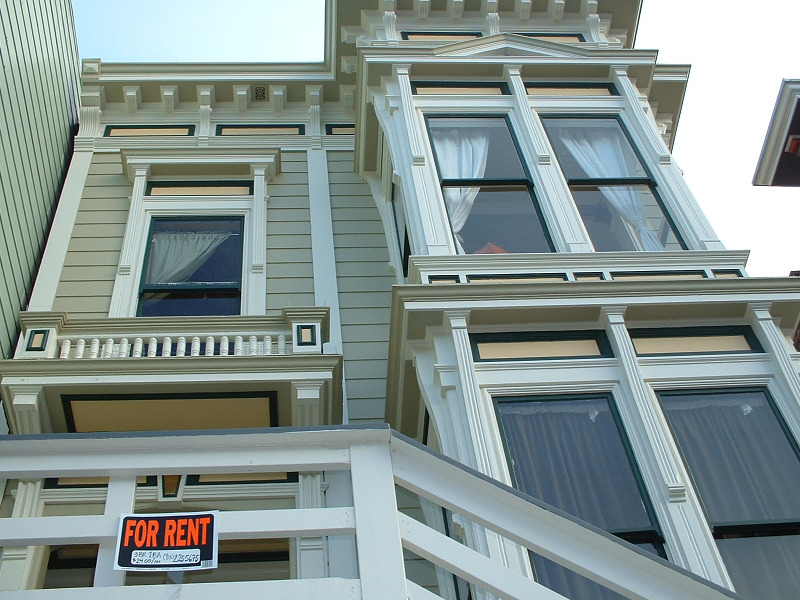
For a long time, we had dismissed this list as completely unrealistic, and, consequently, weren't even looking for a new apartment. But in recent months, "For Rent" signs have been appearing more frequently on doors and windows in our neighborhood. This doesn't mean that rents have dramatically decreased, but the situation in San Francisco is no longer as crazy as it was during the dot-com boom. You no longer have to pay a fortune for a rat hole.
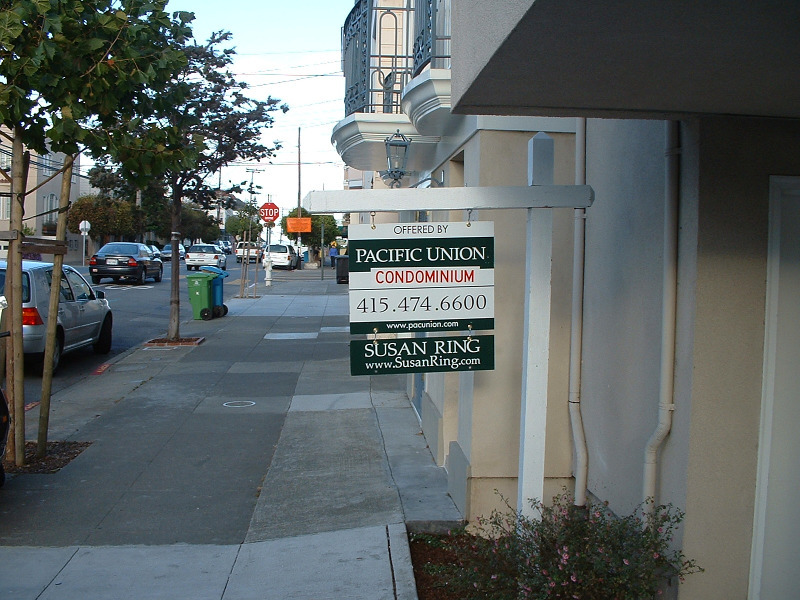
The principle of the "For Rent" sign is, by the way, a popular method here to rent out an apartment. The sign usually displays a phone number that prospective tenants can call to learn more about the apartment and arrange a viewing appointment. This works particularly well in busy areas with a lot of foot traffic. Some apartments and houses are also available for sale, and there are signs for that as well.
And then, of course, there is "Craigslist" in San Francisco, a true institution that is known by everyone who wants to sell something, is looking for a job, or wants to make connections. Every landlord and apartment seeker also knows the website address "www.craigslist.org" by heart.

Like a newspaper, the website lists, among other things, housing offers. Craigslist, by the way, started in 1994 in San Francisco when a certain Craig Newmark (hence the name) began sending listings of events in and around San Francisco via email to his friends and acquaintances. The list became very popular and kept growing, so that now 15 permanent employees work for Craig. The newspaper "San Francisco Chronicle" recently published an interesting article about it and featured Interview with the local hero. 'Craigslist' is now available in 45 cities in the USA, with branches in Canada and England. The internet company makes money by charging companies and employers $75 (in San Francisco) to list a job offer, everything else is free of charge.
One afternoon in May, we were strolling down 24th Street in our neighborhood and saw a "For Rent" sign. Since the sign advertised the apartment's spectacular view, I quickly picked up the phone and scheduled a viewing. And lo and behold: The apartment met all our requirements and even boasted an open fireplace. This convinced even Michael, who is usually reluctant to move, because he is known to love playing with fire. Additionally, the new apartment was already an old acquaintance: We had been able to see it for years from our old apartment.
Since we were seriously interested in the apartment after the viewing, we filled out the customary "Application." Typically, you provide your employer, monthly income, Social Security Number, and driver's license number on it. The landlord has the right to verify the information and check the credit report (see Rundbrief 05/2004). Some landlords also require the potential tenant to bring the credit report to the viewing appointment. By the way, the credit report almost became Michael's downfall when we set out to rent our first apartment. Freshly arrived from Germany, it was just a blank sheet of paper. Thankfully, the only competing applicant had a cat, and cat-less Michael therefore outshone him. This time, everything went smoothly, and we eventually signed the lease agreement.
In San Francisco, it is common to commit to renting an apartment for a year, after which a monthly notice period applies. A security deposit is also paid, typically amounting to one and a half to two months' rent. As in Germany, the landlord may retain the deposit if the tenant damages the apartment or falls behind on rent. Over the years, the tenant earns interest on the deposit amount. The municipal Rent Board sets the annual interest rate in the process.
When you move, you naturally also submit a forwarding request for your mail in America. The United States Postal Service is very modern in this regard, as the address change can be done online for a fee of $1. However, if you submit the request directly at the post office, there is no charge. Most mail is forwarded to the new address for free for one year. For magazines and newspapers, this is limited to 2 months. And, lo and behold, the mail forwarding even works, but that's thanks to our great mail carrier George, who has been working in our neighborhood for over 20 years (an absolute record by American standards) and continues to be responsible for us. Hooray!
Everyone knows that America does not have a registration law. However, in California, you must inform the Department of Motor Vehicles (called DMV) of your address change within 10 days. And Green Card holders like us (as well as visa holders) should not forget to send their new address to the immigration authorities -- also within 10 days.
The latter, by the way, should not be taken lightly. Although this regulation has existed for ages, the immigration authorities did not pursue charges in this regard. However, after the terrorist attacks on September 11, 2001, people were suddenly arrested for not sending the address change form to the immigration authorities, as the authorities used this violation as a pretext to detain people.
This led, in turn, to all foreigners suddenly reporting their address changes like crazy, and the immigration office was completely inundated with forms. I sent everything by registered mail with a return receipt to ensure that we could prove that we had sent the letter on time.
It's a good thing the internet exists because anyone can download the required forms from the immigration authority's server. Hats off, most American authorities are really on the ball in this regard.
Michael After almost eight years in the USA, we thought nothing could shock us anymore. You get used to a lot of things: nothing here is reliable. It's the exception when something actually works as promised. Whenever someone confirms something to me, I've made it a habit to make a note in my calendar. A week later, there's an entry reminding me to check if what was promised actually happened. In 90% of cases, it didn't work out, and then I have to do the so-called "follow-up."
When reminding someone, you must remain friendly, because no one wants to be reminded of their own sloppiness. So instead of saying, "Why wasn't this done?" you should say, "Have you had the opportunity to address XY?" "Not yet? Hmm, do you think you could get to it this week?" You need the patience of a saint for this. Those who can't handle it and lose their temper will end up frustrated and won't make any progress, as people will become stubborn.
What happened during the move, however, knocked us both out: Two weeks earlier, we called the local telephone company "SBC" to request that the land line be moved one street over while keeping the same number. "No problem, we'll take care of it!" they said, and I became suspicious. Why is it so easy? "I really won't need to do anything else for the line to be switched in fourteen days?" "No, you're all set!" I didn't quite want to believe it, but okay.
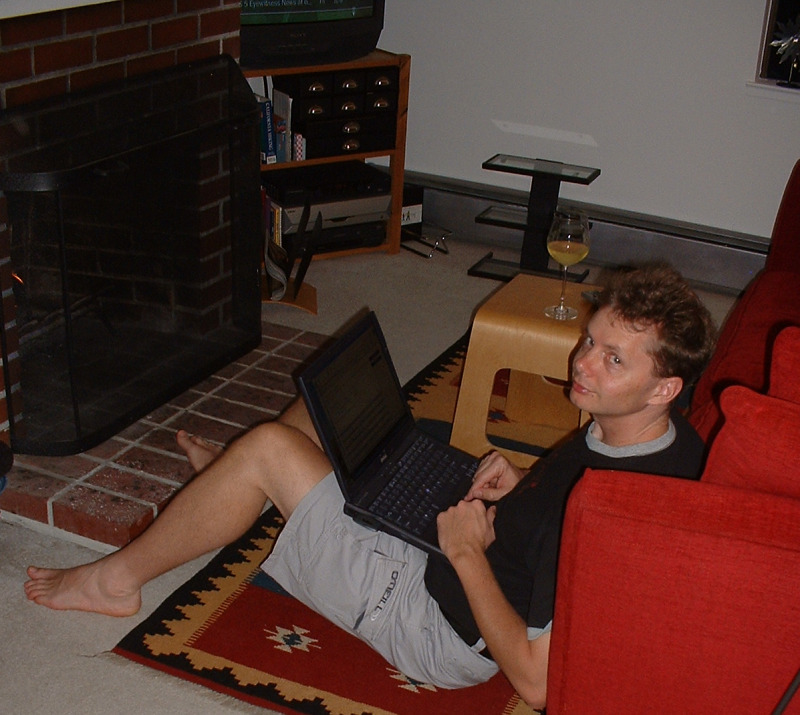
The next morning, our phone line was dead. I called the local telephone company on my cell phone. Yes, the line had been switched. "But the agreed date was the 29th -- today is the 15th." "Hmm, yes, you're right, today is not the 29th." "Can you fix it?" "Sure, no problem, where can we reach you -- at your registered phone number?" "No. That's why I'm calling." "Oh, I see." Good grief.
It continued like this. In the new apartment, neither the phone nor the DSL connection worked. I had to call two different companies for both and keep arguing for hours on end that it wasn't my phone or my DSL router that was defective, but rather that the line simply wasn't working: "We know this, it's usually the phone." "I've had this phone for seven years, and it has always worked perfectly." "It could still be broken." "I have a second, identical phone. That one doesn't work either." "Alright, we'll send someone over, but if it's your fault, we'll charge you." Madness. Dealing with the customer service of the local telephone monopoly "SBC" feels like being in East Germany.
But thanks to the thick skin developed over many years by your two protagonists, we have managed to clean up the chaos step by step. During the cleanup, unnecessary furniture was also given away or sold. Slowly, normality is returning. But I guarantee that I won't be moving again in the next twenty years.