

Angelika Scene change: Recently, I was once again strolling up 24th Street in our neighborhood and ran into a schoolchildren at every street corner selling cookies or chocolate. I never understood what that was all about. But after our neighbor's kids also knocked on our door to sell their chocolate, I got the idea. Those kids aren't trying to help the chocolate industry; no, they are raising money for their school by marking up bars that cost 60 cents, selling them for $2.00, and donating the difference for a good cause. This is called "fundraising" in America.
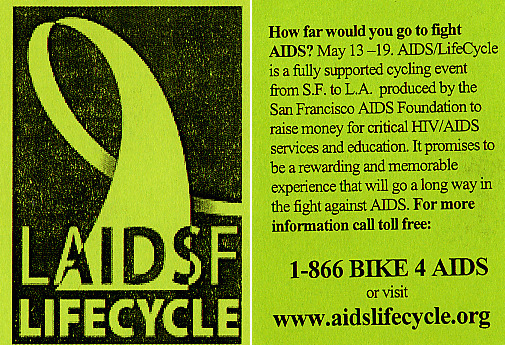
For example, our neighbor's school needs new computers. The kids aren't collecting money because their school is in dire straits. Fundraising is a quintessentially American principle. It runs like a red thread through the life of every American. Since the American government only helps when there's no other option, American non-profit organizations rely on donations. Americans are not only world champions in donating but also extremely creative when it comes to raising money. There are marathons and ballroom events where participants gather sponsors to pay high entry admissions (sometimes amounting to several thousand dollars), which then go to the good cause. People cycle from San Francisco to Los Angeles, and kids sell lemonade on the sidewalk. On weekends, we often see teenagers waving signs to direct cars into a parking lot, where they then wash the cars for a contribution that goes to their charity. Donations are made on a large scale: entire museums and universities have been created this way. In such institutions, you will usually find at least one employee whose sole purpose is to solicit donations from the industry and wealthy citizens.
Additionally, it is a societal obligation in the USA to engage in volunteer work. I know people here who work full-time, more than 40 hours a week, have children, and still dedicate several hours a week to voluntary community service. Working for the welfare of the community is instilled in Americans from an early age. In the Tenderloin, for example, we often have schoolchildren who work with us for an entire week without pay. The school organizes this. It is not intended for career exploration, but rather that children learn to do something for the community ("give back to the community").
The possibilities for volunteering are limitless. A well-known program in America is called "Big Brothers, Big Sisters." In this program, you act as a mentor to a child. You go on outings, help with academic difficulties, and so on. By the way, San Francisco has an organization that coordinates volunteer activities (the "Volunteer Bureau of San Francisco"). Organizations announce there when and for what they need helpers. Interested individuals can view this information and then decide where they would like to volunteer. By the way, I found the Tenderloin Childcare Center through this bureau, where I have been volunteering twice a week for four and a half years now. Oddly, European politicians forget this aspect of private willingness to help (donations and volunteer work) when they blindly try to transplant elements of American minimal social policy to Europe.
Let's go back once more to our neighborhood children selling cookies. The chocolate sale was not exactly voluntary. Every student had to sell two large boxes. Practice makes perfect ...
Clear the way for Michael!