
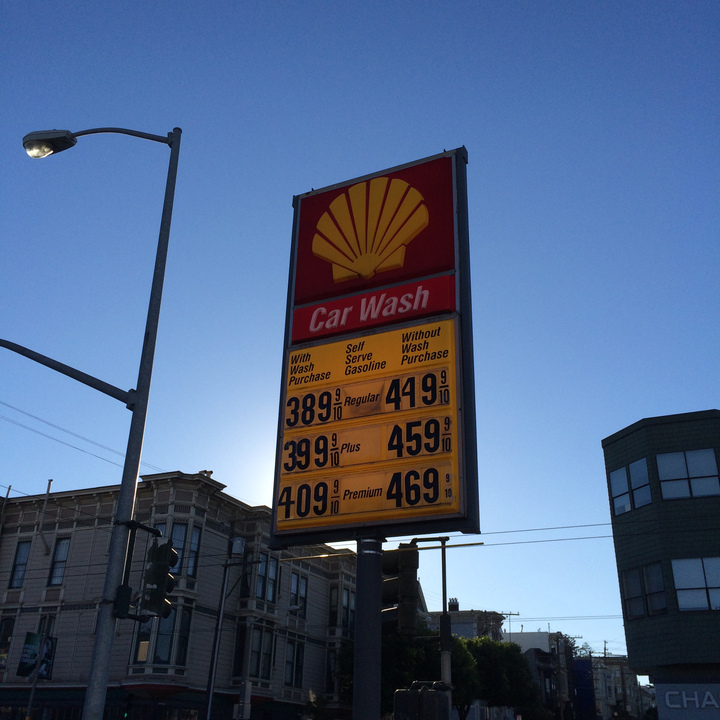
Michael Anyone who is used to the fact that gasoline in Germany might cost 10 cents more directly on the highway than elsewhere will be shocked in America when one gas station charges $3.74 per gallon and the next one, just a kilometer away, charges only $2.55. What, you say, that's not possible? But it is, as you can see from Figure 2 with the gas price app "GasBuddy." At the corner of Valencia and 24th Street, right on the border of our upscale neighborhood Noe Valley, a gallon of regular gasoline costs $3.74, and just a kilometer away, at the corner of Castro and Market, it's only $2.55.
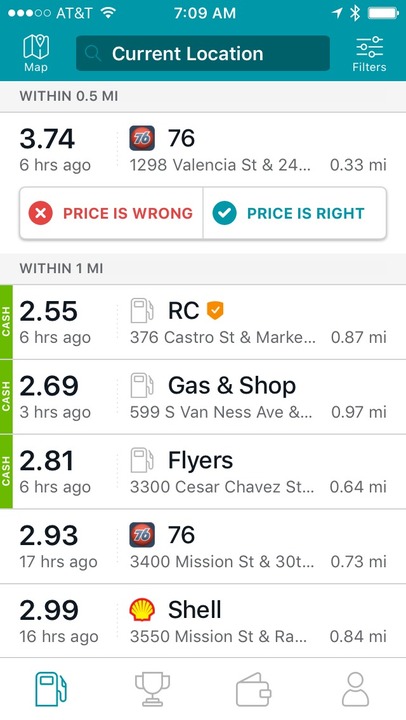
Call me a stick-in-the-mud or a (Bavarian) Swabian, but I would rather drive 10 kilometers than pay even 10 cents more for gas. Angelika can tell horror stories about how, during our last vacation in Germany, I drove off the highway to reach a rural gas station that promised cheap fuel according to an app, but then, surprisingly, it was closed on Sunday, and we almost ran out of gas in the middle of the desolate North German Plain!
A gallon is 3.785 liters and the euro is currently at 1.07 dollars, so you get the euro price per liter of gasoline if you divide the displayed American price by about 4. At the more expensive gas station mentioned above, a liter of regular gasoline costs 0.93 euros, while the cheaper one only charges 0.64 euros.
However, it should be noted that certain gas station chains only accept cash and not credit cards, or they charge an additional fee for card payments. Instead of cash, you can also pay at these discount gas stations with debit cards and a PIN, but I never do that for security reasons. If someone skims the PIN and empties the bank account, the bank shifts responsibility onto the customer, whereas credit card companies assume full liability. Additionally, customers with a good credit score receive credit cards that offer cash back when they use them for payments. I'm not talking about some bonus miles that some people use to book time-consuming, uncomfortable flights, but actual cash back, where the card company refunds the customer an impressive 4% of the gas price, in cash, also known as "money," "mula," or in Bavarian, "Diri-Dari."
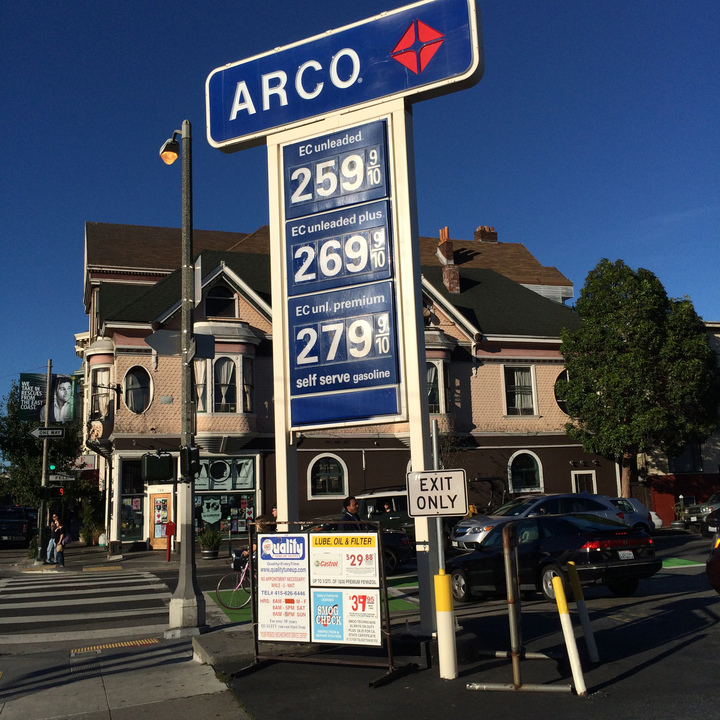
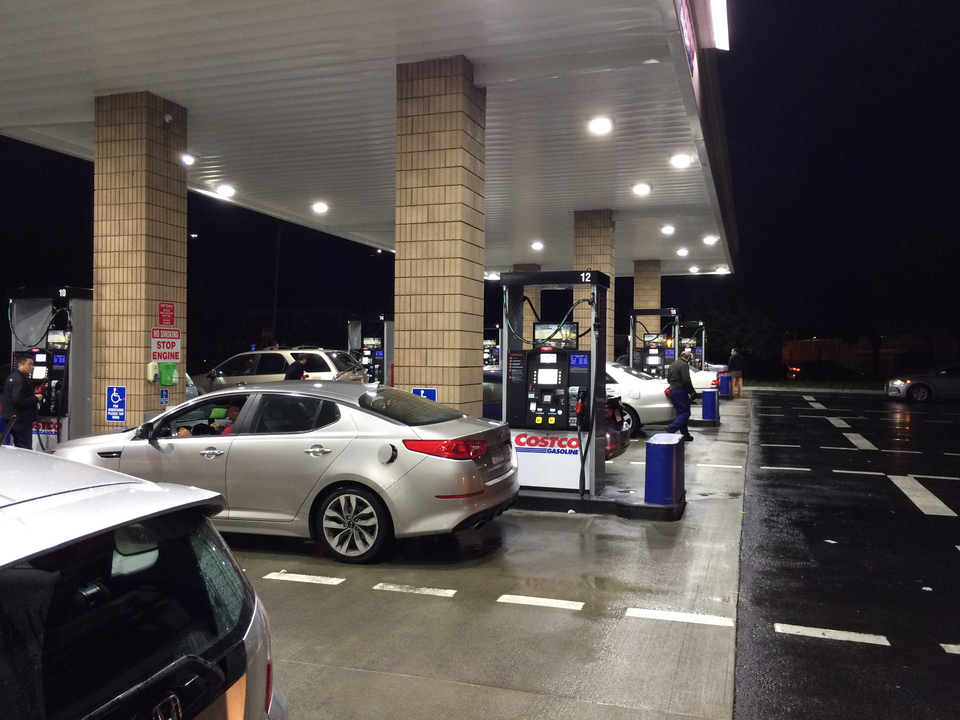
Chains like "Arco" or "Rotten Robbie" don't accept credit cards, so the penny-pincher has to weigh the options: If the gas station across the street offers gas with card payment for $2.66 and the cash-only station for $2.55, I would fill up across the street because I would get the 4% difference refunded by the card company and wouldn't have to go through the hassle of going into the gas station booth to prepay, as is customary in America, and then return for change. Or if at the mega-discount store Costco, there are ten cars with running engines lined up at each of the ten pump pairs, I don't queue up behind the last Valley lemming with too much free time and wait 20 minutes; instead, I pay 10 cents more elsewhere, because time is money.
By the way, diesel is generally more expensive than regular gasoline in America. Often, it is not even listed on the large price boards, and some gas stations in remote areas do not carry it at all. This is further proof that demand dictates price, not production cost. Gas stations typically offer gasoline in three different octane ratings: Regular (87), Mid-Grade (89), and Premium (92-93). Our small but feisty Honda Fit is satisfied with "Regular," while our Acura "Rocket" Integra guzzles an inordinate amount of "Premium" gasoline. Mid-Grade is usually 10 cents more expensive than Regular, and Premium is another 10 cents more than Mid-Grade. However, this pricing structure also varies; for example, the hipster gas station around the corner from us charges 3.74, 3.88, and 3.97 for the different grades, which means 14 cents more for "Mid-Grade," but then only 9 cents more for "Premium," probably to avoid crossing the 4-dollar mark, because even the dumbest hipster would notice they are being ripped off.
Greetings from the center of the capital:
Angelika und Michael